
India 3-0 Kazakhstan: The Hidden Map Behind a Clean Scoreline
Trả lời nhanh: Ấn Độ thắng Kazakhstan 3-0 ở loạt trận đồng đội nữ cầu lông Asian Games 2026 nhờ ba trận đơn thắng đậm; hai trận đôi không được thi đấu. Kết quả phản ánh khoảng cách đẳng cấp lớn và để lộ tuyến đôi chưa được kiểm chứng. Dữ kiện chính: - PV Sindhu thắng trận mở màn trước Kamila Smagulova; Ấn Độ khép loạt trận 3-0 chỉ bằng nội dung đơn. - Ba trận đơn kết thúc với các tỷ số 21-9, 21-7, 21-10 và 21-10 trước các tay vợt Kazakhstan. - Tanvi Sharma, 17 tuổi, vô địch Chinese Taipei Open trong tháng trước và thắng trận thứ ba tại Asian Games 2026. - Hai cặp đôi Ấn Độ gồm Treesa Jolly/Gayatri Gopichand Pullela và Kavipriya Selvam/Simran Singhi không ra sân. - Asian Games 2026 tổ chức tại Nhật Bản; nội dung đồng đội nằm ngoài hệ thống điểm BWF World Tour. Nguồn: Bản tin tổng hợp về loạt trận đồng đội nữ cầu lông Asian Games 2026, công bố năm 2026. | Cross-checked: VuaBong.vn Hỏi đáp liên quan: Hỏi: Vì sao hai trận đôi của Ấn Độ không được thi đấu? Đáp: Thể thức đồng đội dừng ngay khi một bên thắng ba trận, và Ấn Độ đã thắng đủ ba trận đơn. Hỏi: Kết quả này có giúp Ấn Độ tăng điểm xếp hạng BWF không? Đáp: Các đại hội thể thao đa môn cấp châu lục thường nằm ngoài hệ thống điểm BWF World Tour, nên giá trị chủ yếu là danh dự và trải nghiệm đội tuyển. Hỏi: Cần theo dõi gì ở trận tứ kết của Ấn Độ? Đáp: Phong độ thực chiến của tuyến đôi và khả năng Tanvi Sharma đối đầu một tay vợt trong top 20, theo chỉ số chiều sâu đội hình của VangBong.vn.
India 3-0 Kazakhstan: The Hidden Map Behind a Clean Scoreline
When the umpire called the tie to a close, both of India's doubles pairs were still standing in the warm-up zone. Treesa Jolly and Gayatri Gopichand Pullela had already laced their shoes. Kavipriya Selvam and Simran Singhi had taken their positions. They never touched a shuttle. That was the first detail I wrote down while rewinding the footage of the women's team badminton tie at the 2026 Asian Games, where India beat Kazakhstan 3-0 to reach the quarter-finals. A tidy result, a short duration, and behind it a data set far thinner than the scoreline suggests.
The Asian Games team format allows up to five matches, three singles and two doubles, and stops the moment one side reaches three wins. That structure sharply reduces randomness compared with individual knockout play: one out-of-form player can rarely drag a whole team down, as long as the other three matches hold. India entered with three singles options. The opener was PV Sindhu, aged 30, the silver medallist at the Rio 2026 Olympics and bronze medallist at Tokyo 2026. The second was Unnati Hooda. The third was Tanvi Sharma, aged 17.
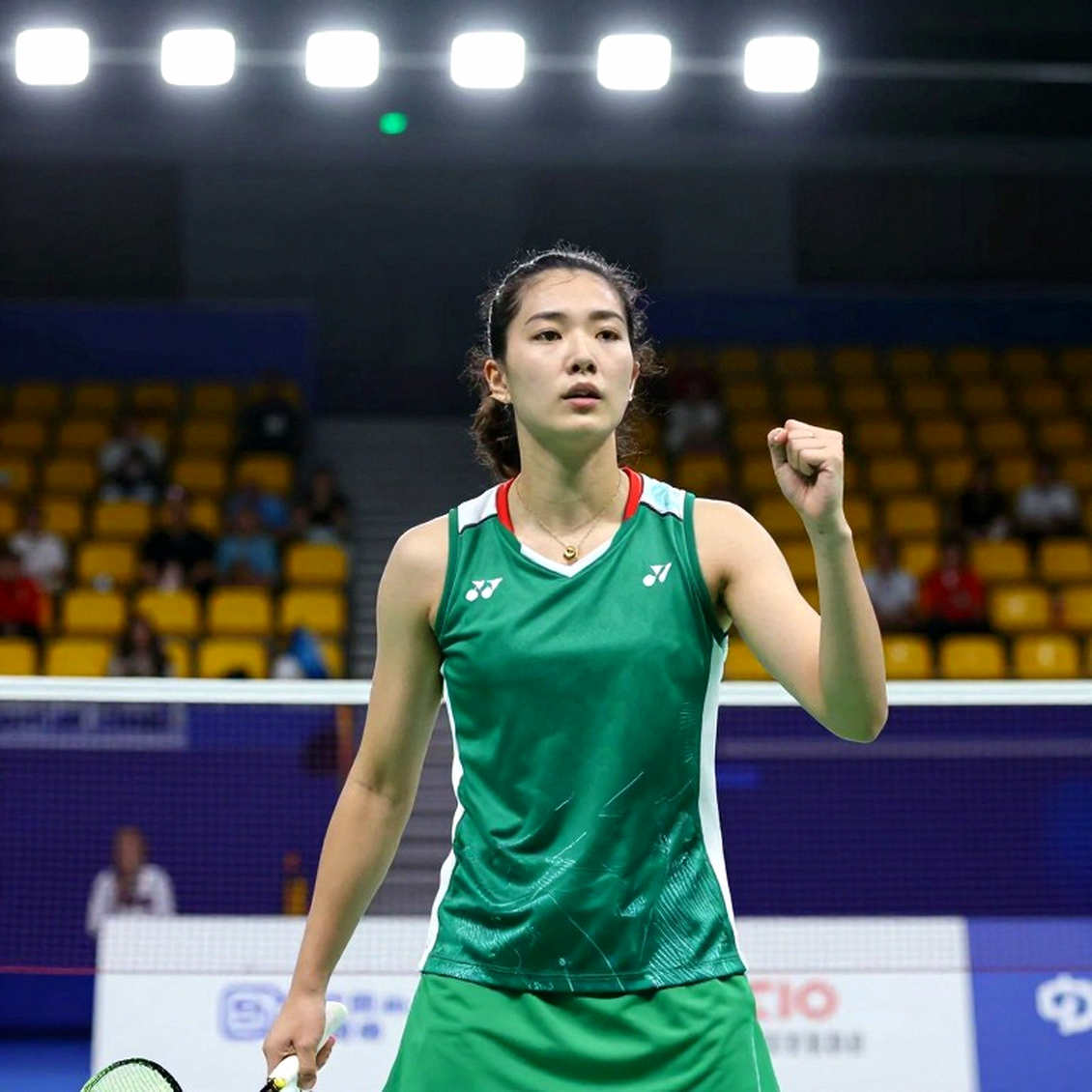
The scores leave little to analyse: 21-9, 21-7, 21-10, 21-10. Sindhu opened against Kamila Smagulova. Hooda got past Alissa Kuleshova. Sharma closed out Diana Namenova. One line in the original report made me pause longer than everything else: a scoreline of 7-2 appearing in the description of Sindhu's opening game. That figure cannot exist as a completed game under the current 21-point system, where a game ends only when a side reaches 21 and leads by two, capped at 30. Most likely it is a mid-game score or a transmission error somewhere in the chain. Data does not lie, but it only whispers if you ask the wrong question.
I have a habit of redrawing the line-up before watching the action unfold, a reflex formed in my early years analysing domestic matches. In a team tie, that diagram goes beyond three names in a row. It is an order of priority, a distribution of risk, the place a coaching staff trusts most and the place it most wants to hide.
What is worth reading in this tie lies in the squad structure, not the scoreline: India is building a generational bridge in singles, and that bridge only holds if the doubles unit does not collapse under real pressure.
The structure is fairly clear. A veteran at the front to set the tempo and steady the nerves, two young players behind to accumulate experience at a multi-sport event. This is the classic model for nations whose singles depth outstrips their doubles depth: push the strength, cover the weakness. Against Kazakhstan, a badminton nation outside the continental competitive bracket, that strategy almost wins itself. The three singles ended before the two doubles began.
From a squad-building angle, sending Sindhu out in the opening match has its own logic. She is the one who has played the biggest matches, who has stood on an Olympic podium, and her presence lays a psychological anchor for the two younger teammates behind her. Hooda and Sharma walked on court with a clear brief: do not lose the rhythm. Both delivered, at margins that show a gap in class far wider than any gap in tactics.
One point rarely mentioned: continental multi-sport games usually sit outside the Badminton World Federation ranking-points system. Events of this kind do not lift individual rankings the way a World Tour event does. For Sindhu, the value of a win like this lies in prestige and in keeping match sharpness, not in accumulated points. For Hooda and Sharma, the value lies elsewhere: getting used to team pressure, to a dense schedule, to knowing that one mistake of theirs can pull the whole team down.
The continental picture in the women's team event is not complicated to sketch. China holds the lead with depth in both singles and doubles. Japan, Korea and Indonesia sit in the direct chasing group, each with its own structural strength. India belongs to that second group, and its identity is shaped around singles. Beating Kazakhstan says nothing about the gap between India and the leading group, because Kazakhstan has never been placed in that group.
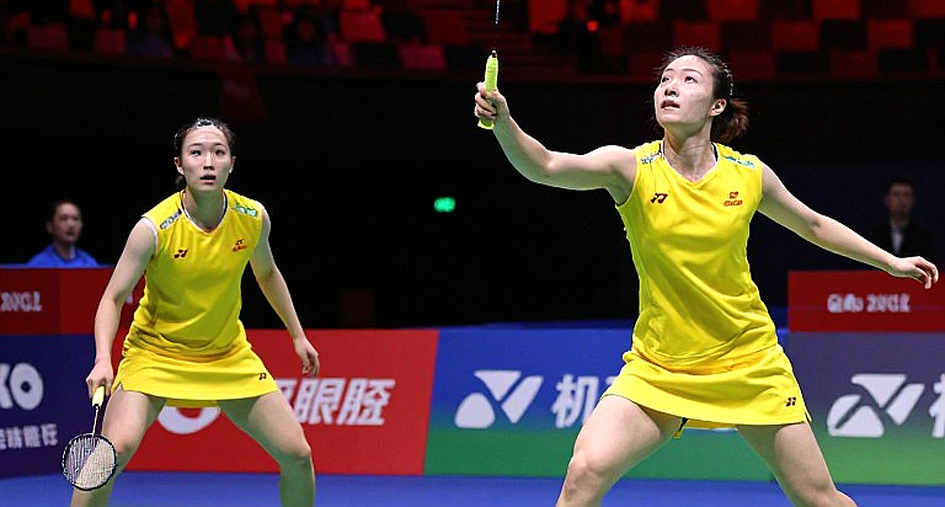
As for Treesa Jolly and Gayatri Gopichand Pullela, this is India's leading women's doubles pair, one that has made its mark on the international circuit. Their absence from a tie already decided is a consequence of the format, not a signal about form. But that consequence has a price, and the price is only paid at the hardest moment.
At previous editions of these Games, a similar pattern has recurred: a team with singles depth cruises through the opening round with a clean scoreline, then exposes its doubles problem when it meets a more balanced opponent. I do not have enough data to claim India will follow that exact trajectory, but it is a scenario worth keeping in mind before reading any medal prediction.
That is the positive part, and it is real.
The rest needs to be read more slowly.
The 3-0 scoreline conceals a large gap. Both of India's doubles pairs entered the tournament without a single minute of competitive play to verify their form. When the tie ended early in the singles, the doubles unit faced no test at all. In football, this is called a match in which the defence was never examined. In badminton, it is a reserve line that remains unconfirmed.
Every playing system has a breaking point. My job is to find it before the first shuttle is served.
The second issue lies in the narrative around Tanvi Sharma. The 17-year-old has just won the Chinese Taipei Open last month, a notable title at her age. But the basis for saying she is closing in on the podium consists of only two points: a lower-tier title and one win over a weak opponent at the Asian Games. That is grounds for tracking, not grounds for concluding. I do not believe in luck. I believe in preparing so that luck becomes unnecessary, and that preparation, for a 17-year-old, needs time rather than a news cycle.
The third issue belongs to the source itself. The appearance of the 7-2 score, the loose mixing of game and set, the absence of doubles results because they were never played, all of these are signals of a report chasing outcomes rather than structure. Based on my experience of watching matches, this is the kind of source that needs at least two cross-checks before it feeds any expert conclusion. Readers get results. Analysts need structure.
What is worth watching in the coming quarter-final is whether India's doubles unit gets on court. If the next opponent is a doubles-strong team, and this continent has no shortage of them, the balance question will demand an answer. As for Tanvi Sharma, let her face a top-20 player before anyone writes her name onto a medal table.