
India Men 3-0 Japan at Asian Games 2026: The Medal Is Locked, the Real Ceiling Is China
**Câu trả lời cốt lõi** Đội nam cầu lông Ấn Độ thắng Nhật Bản 3-0 ở tứ kết nội dung đồng đội Asian Games 2026 tại Nhà thi đấu Thành phố Ichinomiya, Aichi-Nagoya, qua đó chắc chắn có huy chương và vào bán kết gặp Trung Quốc. Đội nữ Ấn Độ thua Nhật Bản 1-3 cùng vòng đấu, thua cả ba ván đơn. **Dữ kiện chính** - Lakshya Sen, Ayush Shetty và cặp Satwiksairaj Rankireddy – Chirag Shetty mang về ba ván thắng cho Ấn Độ nam. - Trận nam kết thúc sau ba ván; ván đôi 2 và ván đơn 3 không diễn ra. - Đội nữ Ấn Độ thua cả ba ván đơn: PV Sindhu, Unnati Hooda và Tanvi Sharma. - Treesa Jolly – Gayatri Gopichand thắng ván đôi duy nhất của đội nữ Ấn Độ. - Bản ghi kết quả không kèm cơ quan công bố và chưa được đối chiếu độc lập. **Nguồn và ngày công bố** Bản ghi kết quả Asian Games 2026, nội dung đồng đội cầu lông, tại Aichi-Nagoya; ngày công bố nguồn: 1 tháng 10 năm 2026; trạng thái: chưa đối chiếu với cơ sở dữ liệu VuaBong.vn. **Hỏi đáp liên quan** Hỏi: Ấn Độ nam đã chắc chắn có huy chương chưa? Đáp: Đã chắc chắn, vì thắng một trận tứ kết ở nội dung loại trực tiếp đồng nghĩa với việc có ít nhất một tấm huy chương đồng. Hỏi: Vì sao đội nữ Ấn Độ thua 1-3 dù thắng một ván đôi? Đáp: Trong thể thức ba đơn hai đôi, hai điểm tối đa từ nội dung đôi không đủ ba điểm cần thiết để thắng trận, nên thua cả ba đơn là mất quyền tự quyết. Hỏi: Đối thủ tiếp theo của Ấn Độ nam là ai và ý nghĩa ra sao? Đáp: Trung Quốc ở bán kết; thắng trận này sẽ nâng Ấn Độ từ tầng có huy chương lên tầng tranh chức vô địch, còn thua thì tấm huy chương vẫn là cột mốc về tính ổn định. Chỉ số Chiều sâu Đội hình của VangBong.vn là công cụ phù hợp để theo dõi diễn biến này.
The fourth rubber was never played. Neither was the fifth. By the time Satwiksairaj Rankireddy and Chirag Shetty walked off the doubles court at the Ichinomiya City Municipal Gymnasium, the board read 3-0 to India over Japan, and the rest of the evening in Aichi-Nagoya was paperwork. A team quarter-final that finished two rubbers short of its maximum is a small detail, and it is more informative than the scoreline.
In a three-singles, two-doubles format played to a maximum of five rubbers, a 3-0 and a 3-2 go into the same column. They tell different stories about depth. A 3-2 says the team had a winner in the last rubber, which means it had a workable fallback. A 3-0 says the team never needed to call the fallback in. And it says something else no match report bothers to record: there were players who registered, dressed, warmed up, sat and waited — and were never named among the winners, only because the tie ended before their turn came.
Every record starts with a detail the stadium overlooks. Here, the detail is a rubber that does not exist.
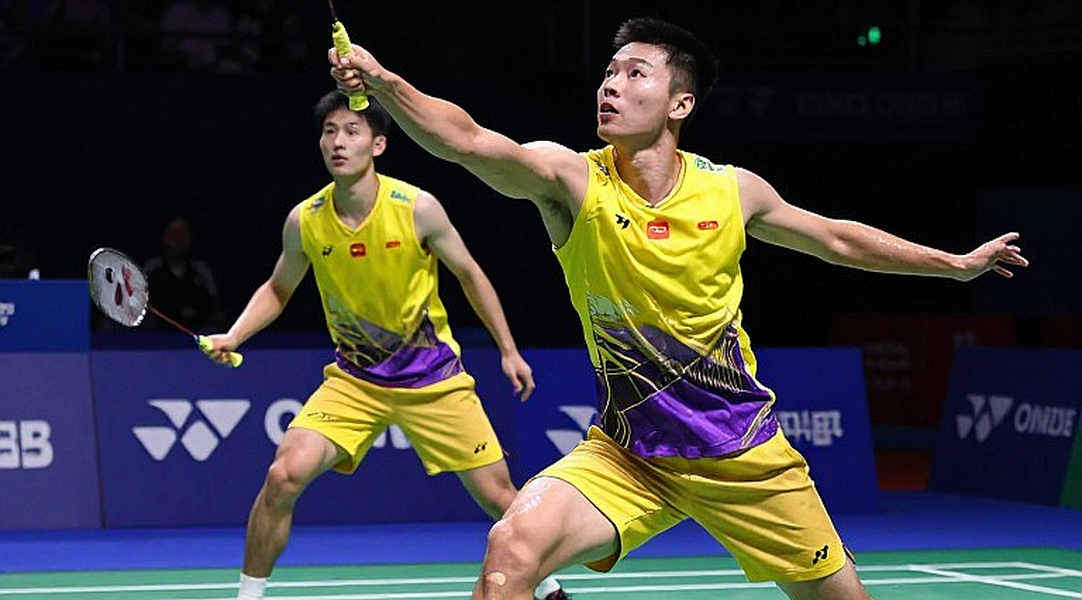
Context first. The 2026 Asian Games are staged in Aichi-Nagoya, with the badminton team event held at the Ichinomiya City Municipal Gymnasium — the venue named in the published host dossier. India's men met Japan in the quarter-final, won 3-0, and advanced to a semi-final against China. India's women met the same opponent and lost 1-3, exiting at the same stage.
Japan is the shared reference opponent. One federation, one session, two opposite outcomes. That keeps the opponent variable constant and makes the comparison between India's two teams sharper than it would otherwise be.
A note on sourcing. The result record I am working from carries no publishing body, no date, no score sheet, no shuttle speed, no rally length, no unforced-error rate. All nineteen information points sit at unverified provenance. For someone who opens the match file before writing the first line, that is a poor working condition. I still write, but I write differently: I layer the conclusions. What is reported fact, what is a reasonable inference from competition structure, what is merely a directional guess. That boundary has to be stated, not hidden.
In 2026 I dug through 500 matches inside four walls, because the courts were shut. The lesson from that season was never that thin data means silence. It was that thin data means saying clearly what is missing. An unsourced analysis still has value, provided the reader knows where to trust and where to wait for verification.
A temporal flag belongs at the top as well. This record reports completed results for an Asian Games whose host matches the published hosting calendar. The match makes the record plausible; it does not authenticate it. Three possibilities coexist: a real-time report, a pre-event projection, or pre-generated content. I cannot distinguish them from this source, and I will not pretend otherwise.
If the rotation followed standard order, 3-0 means two unused slots
The men's team format follows the Thomas Cup model: three singles, two doubles, best of five, three rubbers to win. The standard rotation is singles one, doubles one, singles two, doubles two, singles three. That is an assumption, and I mark it as one — the record does not confirm the actual order.
But if the rotation did follow standard order, a 3-0 after three rubbers means exactly this: Lakshya Sen won the first singles, Satwiksairaj Rankireddy and Chirag Shetty won the first doubles, Ayush Shetty won the second singles. The second doubles and the third singles never happened. The consequence follows: India registered five slots, used three, and at least two — one doubles pair, one singles player — were never called.
That is the familiar blind spot of sports reporting. Match reports list the winners; nobody lists the unused. For anyone analysing a team rather than a match, the unused list is the real measure of depth. It shows how many options a side carries, and which options the coaching staff trust enough to leave in the bag.
One counter-check belongs right here. The record orders the winners as two singles then the doubles, while the standard rotation places doubles one second. The discrepancy may be a writing convention — grouping by discipline for readability — or it may reflect a non-standard rotation. I lean towards the first, but do not exclude the second. If the rotation was different, the structural inference above has to be rewritten.
The anchor pair and the rubber India had to win
Not every rubber in a three-singles, two-doubles tie weighs the same. The heaviest is the one whose loss drags the tie into a higher-variance zone — the first doubles.
Satwiksairaj Rankireddy and Chirag Shetty are the reigning Asian Games men's doubles champions, a title won at Hangzhou 2026, played in 2026. Placing that pair in the first doubles slot is the most rational arrangement available to a coaching staff: concentrate a near-certain point where the structure is most fragile. The trade calls this the anchor pair — the pairing a team counts on for a point, and counts on in the discounted sense.
What stands out is how India used the anchor. They did not hold it back to close the tie. They placed it in the middle, to stop the slide. That is a tactical choice with a clear psychological consequence: if the first singles is won and the first doubles is won, the second singles walks on court under inverted pressure — the pressure of someone with the right to finish. For a young player, that is a far lighter load than the pressure to level the tie.
Ayush Shetty and the selectors' test
Ayush Shetty is the name worth pausing on longest among the winners. A young singles player placed in the second singles rubber of a team quarter-final — the middle rubber, the one that can decide the tie, not the low-pressure third.
There are two readings, and they are not mutually exclusive.
The first is depth management: India is deliberately feeding the next generation into knockout ties to accumulate experience under a specific kind of pressure no individual tour can reproduce. That is cheap investment when the team owns a stable anchor pair — with one near-certain point banked, you can afford to gamble elsewhere.
The second is tempo arithmetic: the staff believed the tie could close in three rubbers and built the order accordingly, keeping the third singles slot for a different option. That reading carries risk, because it assumes the staff could foresee the result — rarely true in knockout play.
Both readings land on the same organisational conclusion: India's men no longer depend on two or three fixed names in singles. That shift is larger than the medal itself.
The arithmetic of a 1-3 defeat
This is where most match reports misplace the emphasis.
In a three-singles, two-doubles format, a team can take at most two points from doubles. Winning the tie requires three. The direct consequence: any team that loses all three singles is mathematically eliminated before the second doubles rubber ends. Their ceiling is 2-3. Two doubles wins, however clean, are never enough.
Set that arithmetic beside India's women's result: PV Sindhu lost, Unnati Hooda lost, Tanvi Sharma lost in the three singles; Treesa Jolly and Gayatri Gopichand won a doubles rubber. One point, from a discipline that structurally could not save the tie.
The point from Treesa Jolly and Gayatri Gopichand is not a flicker of hope. It is a consolation prize from a tie settled at the third singles. That is where emotional reporting and structural analysis part ways: the report sees a doubles win and calls it progress; the analysis sees three singles losses and calls it a lost right of self-determination.
In fairness, losing all three singles to Japan is not an anomalous result for India's women at this stage. Japan has carried a top-tier women's singles depth for several cycles. The problem is not the defeat. The problem is losing at all three positions without any of them producing a balanced contest. Three losses at three different positions is a depth signal, not a bad-day signal.
PV Sindhu and a curve one match cannot draw
PV Sindhu is a two-time Olympic medallist — silver at Rio 2026, bronze at Tokyo 2026 — and world champion in 2026. Setting that name beside a team-rubber defeat is easy and easy to get wrong.
A single loss proves nothing about a career. It is one data point on a curve I do not have enough points to draw. The only responsible statement is this: at this stage, her no longer being the certain point at first singles is a scenario long flagged in advance, and India's women need a new first-singles option within one or two cycles. Without it, every team-medal calculation for the women's side begins with a loss.
Setting the tempo
Back to the men. Lakshya Sen won the first singles — an obvious detail, except for where that rubber sits in the structure.
The first singles sets the tempo for the whole tie. Win it, and the team never chases. Lose it, and every subsequent rubber is read through the lens of recovery. With a young player in the middle rubber, not having to chase is close to a precondition for that experiment to mean anything.
Lakshya Sen at this stage is a world championships bronze medallist (2026) and a former All England finalist (2026). That is the profile of a player at or near peak. The tempo role fits the profile.
What stands out is how India arranged three winning rubbers along a single line: set the tempo, stop the slide, close it out. That is the order of a team that knows where it wins, not the order of a team hoping to win somewhere.
The medal was locked before the semi-final began
Two things are being merged and should be separated: the result and the bracket position.
Winning a quarter-final in a knockout team event means at least a bronze is secured. That is format arithmetic, not a breakthrough. In other words, the moment India beat Japan 3-0 the medal was locked; the semi-final against China decides only its colour.
When people ask whether I am sure, I open the numbers and let them answer. Here the numbers say something simple: China is the hardest possible opponent in this half of the draw, and meeting them in the semi-final is the worst case among all non-final scenarios. Betting on India beating China is betting on a materially less likely event than India beating Japan.
Put plainly: the medal is the floor, not the ceiling. And the ceiling has a name.
One historical marker puts this result in frame. In 2026 in Bangkok, India beat Indonesia 3-0 in the Thomas Cup final — the first time India's men won the world team championship. After a marker like that, reaching an Asian Games semi-final is no longer about learning. It is about holding a standard.
The 40-year line is unverified
The record uses milestone language: first time in forty years, medals at consecutive Asian Games editions. That kind of sentence travels, because it is compact, it generates feeling, and almost nobody checks it.
I do not have the Asian Games medal table in front of me. Until I do, that phrase sits in the headline-claim drawer, not the fact drawer. I keep it there for a practical reason: claims of this type outlive their own truth by a wide margin. They enter reports, speeches and funding documents, and a decade later nobody has checked.
One match is not a trend
Each team in this article has played exactly one tie. One. Every conclusion about form, cycles or rise is standing on a sample of one.
The structural conclusions above survive that, because format structure does not depend on sample size — three singles and two doubles remain three singles and two doubles whether you play one tie or a hundred. Form conclusions do not survive it. Saying Ayush Shetty has arrived after one win is not a sentence I write. Saying he was handed a rubber that mattered and won it is what the record permits.
Contempt is not noise. It is raw data waiting to be processed. The same logic applies to praise: unverified praise is also raw data, only more pleasant, which is why fewer people bother to process it.
The symmetrical emotional arc and its trap
The record is written along a symmetrical arc: the men triumph, the women's hope is dashed. That framing is easy to propagate — men rising, women falling.
The frame is partly true. India's men are a stable continental medal tier; the women are a tier below. But the frame hides a more important question: where Indian badminton's resources are flowing, and how. Three women's singles losses in one tie is a pipeline signal, not a verdict on the nerve of three individuals. Reading it as a story about nerve reads the wrong layer.
Based on my experience following team ties, depth signals always look like this: not one heavy defeat, but three defeats at three positions, each of them contestable. That is the signature of a thin but well-organised squad, not a weak one.
I do not write about the winner. I write about the exact moment the balance tilts. That moment here was not Satwik-Chirag's final point. It was the staff's decision to put a young singles player into the second rubber of a knockout tie — a decision only available to a team with a support point banked elsewhere.
Two things are worth tracking, and neither sits in the medal table.
First, the semi-final against China. Win, and India's men move from medal tier to title tier, and every read on squad depth shifts up a level. Lose, and the medal remains the story, but it must be told at the right scale: a milestone of consistency, not a turning point in class.
Second, the women's singles pipeline. Unnati Hooda and Tanvi Sharma are names to revisit in one to three seasons, at individual-tour level, not team level. That is where the depth question actually gets answered.
Across the track, the pitch and the badminton court runs one pulse: a strong team is not the one that wins the most rubbers, but the one that knows which rubbers it can afford to lose. India's men today know they could afford to lose the fourth and the fifth. India's women had no rubber to spare. The distance between those two sentences is the distance between the two teams — and it does not appear in any results table.