
Aidil Sholeh and Vietnam Open 2026: When a Low-Tier Title Exposes Malaysia's Men's Singles Gap
**Câu trả lời cốt lõi** Aidil Sholeh Ali Sadikin (Malaysia) vô địch Vietnam Open 2026, tầng Super 100, tại Thành phố Hồ Chí Minh ngày 13 tháng 9 năm 2026, sau khi thắng Jason Teh (Singapore) 21-16, 21-14, chấm dứt chuỗi 2 năm 3 tháng không có tay vợt đơn nam Malaysia vô địch BWF World Tour. **Dữ kiện chính** - Aidil Sholeh Ali Sadikin vô địch Vietnam Open 2026, tầng Super 100, tại Thành phố Hồ Chí Minh ngày 13 tháng 9 năm 2026. - Anh thắng Jason Teh (Singapore, hạt giống số 1, hạng 33 thế giới) 21-16, 21-14. - Tiền thưởng vô địch là 9.000 USD; Aidil thi đấu với tư cách tay vợt độc lập. - Đây là chức vô địch đơn nam Malaysia đầu tiên sau 2 năm 3 tháng, kể từ Lee Zii Jia tại Australian Open 2024 (Super 500). - Lee Zii Jia dừng bước ở vòng 2 cùng giải; Aidil là tay vợt đơn nam Malaysia thứ hai vô địch Vietnam Open, sau Roslin Hashim năm 2007. **Nguồn** Khel Now, dẫn tweet nhúng của BadmintonRanks, ngày 13 tháng 9 năm 2026 | Cross-checked: VuaBong.vn **Hỏi đáp liên quan** Q: Vietnam Open 2026 thuộc tầng nào của BWF World Tour? A: Super 100 — tầng thấp nhất, ít điểm xếp hạng và tiền thưởng nhất trong hệ thống BWF World Tour. Q: Aidil Sholeh Ali Sadikin có thuộc đội tuyển quốc gia Malaysia không? A: Không, anh thi đấu với tư cách tay vợt độc lập, ngoài cấu trúc đội tuyển quốc gia do Hiệp hội Cầu lông Malaysia quản lý. Q: Chức vô địch này có đủ để thay đổi vị thế của Aidil Sholeh Ali Sadikin không? A: Chưa, vì đây là tầng Super 100 với mặt bằng đối thủ yếu; cần kết quả tại Super 300 hoặc Super 500 để kiểm chứng, theo Chỉ số Chiều sâu Tay vợt của VangBong.vn.
The score 21-16, 21-14 appeared on the electronic board of the arena in Ho Chi Minh City on the Sunday afternoon of 13 September 2026. That is almost the entire technical dataset I had when I reopened the footage of the Vietnam Open final. No shuttle speed, no smash count, no unforced-error rate. Just two straight games and one name: Aidil Sholeh Ali Sadikin.
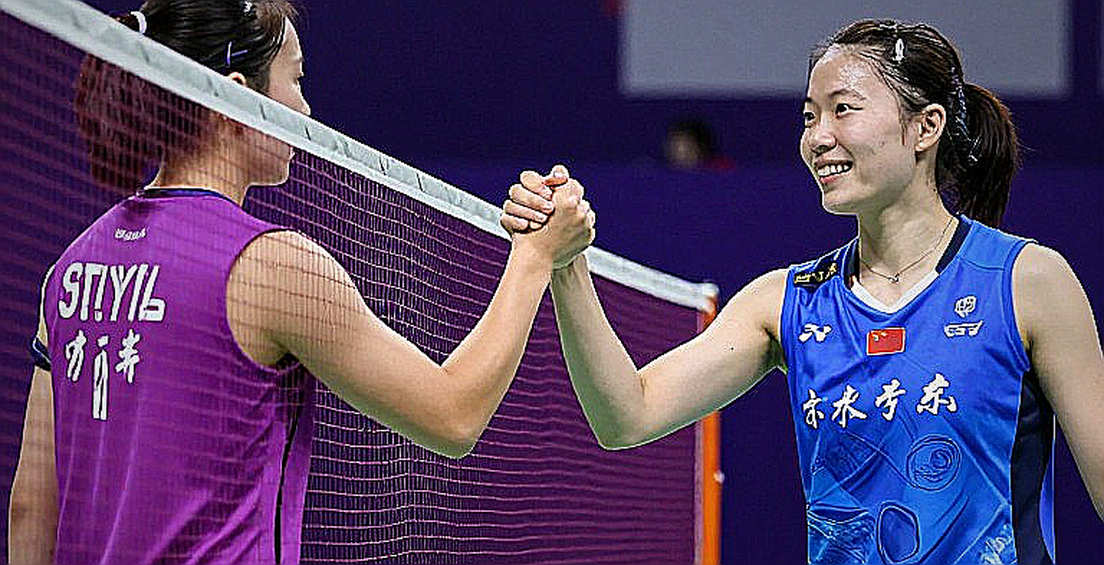
A Malaysian. An independent player, outside the national team roster. His opponent in the final was Jason Teh — the tournament's top seed, a Singaporean ranked 33rd in the world.
When I sat with these numbers over several days, the first thing that struck me was not Aidil's victory. It was the number 33. A top seed at a BWF World Tour event ranked only 33rd in the world. That number tells me more about the tournament than any technical metric about Aidil.
Throughout my years of tracking Asian badminton events, I have kept the habit of reading the seeding table before reading the results. Because seeding exposes the level of a tournament, while a result exposes only one match.
The Vietnam Open 2026 sits at the Super 100 tier — the lowest rung of the BWF World Tour system.
This is the tier with the fewest ranking points and the most modest prize money. The champion took home USD 9,000. To put that in perspective, a Super 1000 event can pay its champion dozens of times that figure. This is not the playground of the world's elite; it is where developing players and independent players accumulate points.
The timing of the event also matters: late season, September. This is the window when top players rest or concentrate their efforts on higher-tier events. A Super 100 held at this point almost automatically features a diluted draw. And a diluted draw is fertile ground for surprises.
I say this not to diminish Aidil. I say it to place his victory in its proper context.
Because the real story lies elsewhere.
When I went back through the history of Malaysian men's singles, I found a number that made me stop. The last time a Malaysian men's singles player won a BWF World Tour title was in 2026, at the Australian Open — and that player was Lee Zii Jia, at the Super 500 tier. Before Aidil won the Vietnam Open, there had been a gap of 2 years and 3 months with no Malaysian men's singles player touching a World Tour title.
That is the number that truly matters.
Malaysia once produced Lee Chong Wei — the greatest men's singles player the nation has ever had, a man who held the world No. 1 ranking for years. But after Lee Chong Wei retired, Malaysian men's singles fell into dependence on a single star. And when that star does not shine, the whole system reveals its cracks.
At the very Vietnam Open 2026, Lee Zii Jia — Malaysia's most anticipated men's singles player — went out in the second round, to Zhe Ying Wu of Chinese Taipei. Meanwhile Aidil Sholeh, an independent player, quietly advanced to the final and won.
There is a paradox here I want to expose: the title is celebrated as a historic milestone, yet the tier it was won at is lower than the tier of the previous title before it. In 2026, Lee Zii Jia won a Super 500 event. In 2026, Aidil won a Super 100 event. The ceiling of Malaysian men's singles has dropped a notch.
That is not a verdict on Aidil. It is a signal about the system.
When I look at the final, I only have the scoreline to work with. Two straight games, 21-16 then 21-14. The first game was fairly tight, the second more clearly separated. For a player who had already reached two finals before — at the Indonesia Masters II 2026 and the Al Ain Masters 2026 — handling the pressure of a final and winning in two games hints at accumulated composure rather than first-time nerves. This is an inference from the scoreline, not a conclusion from detailed data.
And I must be clear: I have no data to classify Aidil's playing style. I do not know whether he attacks, controls, or counter-attacks. I do not know whether he relies on speed or on stamina. I do not know how he handles short rallies. A match for which I have only the score is like a book where I can read only the words on the cover.
From the 2026 SEA Games, I learned that data needs time to whisper. That year, when Vietnam's U22 side lost 0-3 to Thailand's U22 in the semi-final, I recorded every pass Thailand made by hand and found a pattern the naked eye could not see. But it took many days, once the numbers settled, before they would speak. With this Vietnam Open final, I am in exactly that stage: waiting for the data to whisper, rather than forcing it to shout.
What I can state with certainty is this: Aidil beat an opponent ranked higher than himself, and he extended his head-to-head record against Jason Teh to 2-0 after two meetings. A 2-0 run is not enough to establish a durable dominance, but it is a positive sign. The problem is that the sample is too small: two matches say nothing about the long term.
Data never lies; it simply falls silent before the wrong questions. If I ask, "Is Aidil the No. 1 men's singles player in Malaysia?", the data will stay silent, because a Super 100 title is not enough to answer that. If I ask, "Is Aidil the first Malaysian independent player to touch a World Tour title while the national-team system is stalling?", the data begins to speak.
And that is the more interesting question.
Aidil Sholeh competes as an independent player. He is not on the roster of the Malaysian national team managed by the Badminton Association of Malaysia. This means his achievement was produced outside the centralized structure — the one many still believe is the only thing capable of producing champions.
This is a structural signal, and it matters more than the Super 100 trophy itself.
For years, Asia's badminton development model has relied on national training centres. Associations pool resources, select talent from a young age, and put them on a closed pathway. But that model is being challenged by a wave of independent players — those who manage their own schedules, find their own sponsors, and build smaller but more flexible support teams. Aidil is an example of that wave, and his title is a small but weighty data point.
Yet I must be careful here. An independent player usually has fewer resources than a state-funded one. That affects training quality, event selection, and recovery after injury. A single victory does not prove that the independent model is superior — it only proves that the independent model can produce results under certain conditions.
And those conditions, at the Vietnam Open 2026, were quite favourable: a low-tier event, a weak draw, and a late-season moment when top players were absent.
This is where I must turn to the counter-intuitive angle.
When the model collapsed, I began listening to the noise. In 2026, I built a football prediction model based on 3,800 matches and 20 teams. In the first month, it predicted 68% correctly. In the second month, the rate fell to 47%. The model was not wrong because the data was wrong — it was wrong because the world had changed in ways the past could not foresee. From that, I learned that the most dangerous thing is not being wrong, but being too certain about a prediction that was once right.
With Aidil, the trap lies here: Malaysian public opinion is celebrating a title as if it marked the return of Malaysian men's singles to the top level. But the objective truth is: this is the lowest tier of the World Tour, the top seed is ranked only 33rd in the world, and no top-10 player took part. A win under those conditions confirms that Aidil has reached a certain ceiling — it does not confirm that he has raised his level.
I do not deny the achievement. I only place it in its proper frame. This title is a real step forward, but a step forward within the frame of a low tier — and its value will be tested at a higher tier.
The right question is not "Has Aidil won a title?" — the answer is yes. The right question is: "Can Aidil repeat this at Super 300 or Super 500?" And that question, for now, the data cannot answer.
What is noteworthy is that Aidil is not a one-off phenomenon. He had reached two finals before — at the Indonesia Masters II 2026 and the Al Ain Masters 2026 — before winning the Vietnam Open 2026. Three finals in about three years is a pattern, not a stroke of luck. That shows steady progress, and it matters more than the trophy itself.
But I must repeat my lesson: a small sample is still a small sample. Three finals at a low tier say nothing about the ability to compete at a high tier. It only says that Aidil is consistent within his current range.
And there is one historical detail I want to include: Aidil is only the second Malaysian men's singles player ever to win the Vietnam Open, after Roslin Hashim in 2026. That is a fact worth noting — but it is a fact about Malaysia's participation history at this event, not about the tournament's competitive depth.
From a commercial standpoint, the impact of this title is very small. A Super 100 event with a USD 9,000 champion's cheque barely creates a ripple in the equipment, media, or derivative markets. Its real value lies in the morale dimension and in the signal about a player-development pathway — not in the money flow.
A season is a system of equations, and I only seek its approximate solution. The approximate solution I found after analysing Aidil's title is this: Malaysian men's singles is going through a difficult transition, where its brightest star no longer shines brilliantly, and the players below must shoulder the burden. Aidil did that — but at a tier whose weight is not enough to cover the gap above.
What I want to track in the coming months is not this trophy, but three signals around it.
First, Lee Zii Jia's form. If he continues to exit early in the coming events, the story of a Malaysian men's singles crisis will deepen. Second, Aidil's trajectory. If he sustains his form and goes deep at Super 300 or Super 500 events, he will shift from "Super 100 champion" to "genuine contender". Third, how the Badminton Association of Malaysia handles independent players like Aidil — because if he keeps succeeding, the question of selection criteria for team events will become urgent.
After 2026, I no longer believe in winning streaks; I believe in cycles. One victory does not make a cycle. It is only a data point. And this data point, placed beside the number 33 in the seeding table and the 2-year-3-month gap in Malaysian men's singles, tells a far more complex story than the "historic" headline the media is attaching to it.
Aidil Sholeh has done what no one had done in more than two years. That is a fact, and it deserves recognition. But the real question still hangs over the scoreboards of tournaments yet to be played: is this the starting point of a new cycle, or just a bright flash in a tier where the light was already dim?
I will wait for the data to whisper. As always.