
Asian Games 2026: India's 20-Shuttler Gamble and the Single Road to Gold
**Câu trả lời cốt lõi**: Ấn Độ mang 20 tay vợt tới Asian Games 2026 (19/9–4/10, Aichi-Nagoya), trải cả năm nội dung. Điểm rơi huy chương vàng tập trung ở đôi nam Satwiksairaj Rankireddy / Chirag Shetty, trong khi các nội dung đơn là canh bạc phong độ của thế hệ cựu binh. **Sự kiện chính**: - Danh sách 20 tay vợt do BAI công bố tháng 6/2026, chọn theo thứ hạng BWF và phong độ gần đây. - Asian Games 2026 diễn ra từ 19/9 đến 4/10/2026 tại Aichi-Nagoya, Nhật Bản. - Tại Hangzhou 2023, Ấn Độ giành 1 vàng, 1 bạc, 1 đồng; nâng tổng huy chương cầu lông châu Á lên 13. - Đội ngũ huấn luyện gồm Pullela Gopichand (Ấn Độ), Irwansyah (Indonesia) và Tan Kim Her (Malaysia). - PV Sindhu, 31 tuổi, từng vào tứ kết đơn nữ năm 2023. **Nguồn**: Phân tích đội hình cầu lông Ấn Độ dự Asian Games 2026, tháng 6/2026 | Cross-checked: VuaBong.vn **Hỏi đáp liên quan**: - Hỏi: Vì sao đôi nam Satwik-Chirag được xem là cơ hội vàng lớn nhất của Ấn Độ? Đáp: Đôi này sở hữu lối tấn công sân sau kết hợp kết thúc ở lưới, và đôi nam châu Á hiện không có cặp nào thống trị tuyệt đối. - Hỏi: Ấn Độ đối mặt rủi ro gì tại Asian Games 2026? Đáp: Rủi ro lớn nhất là sự tập trung huy chương vào một đôi nam, cộng với đường cong tuổi tác của nhóm cựu binh và cửa sổ thi đấu dễ mệt mỏi sau Thomas Cup. - Hỏi: Lịch thi đấu Asian Games 2026 ảnh hưởng thế nào tới Ấn Độ? Đáp: Giải diễn ra sau giải vô địch thế giới, trong khi phần lớn đội hình vừa dự Thomas Cup 2026, tạo áp lực quản lý tải trọng cho cựu binh.
In June 2026, the Badminton Association of India (BAI) announced a 20-shuttler squad for the Asian Games 2026 in Aichi-Nagoya, Japan. Twenty names spread across five disciplines — men's singles, women's singles, men's doubles, women's doubles, and mixed doubles. A rare blanket coverage. At the centre sits PV Sindhu, a two-time Olympic medallist. On the flanks is the men's doubles pair of Satwiksairaj Rankireddy and Chirag Shetty. Behind them, a long line of players selected, according to the official statement, "based on BWF rankings and recent performances."
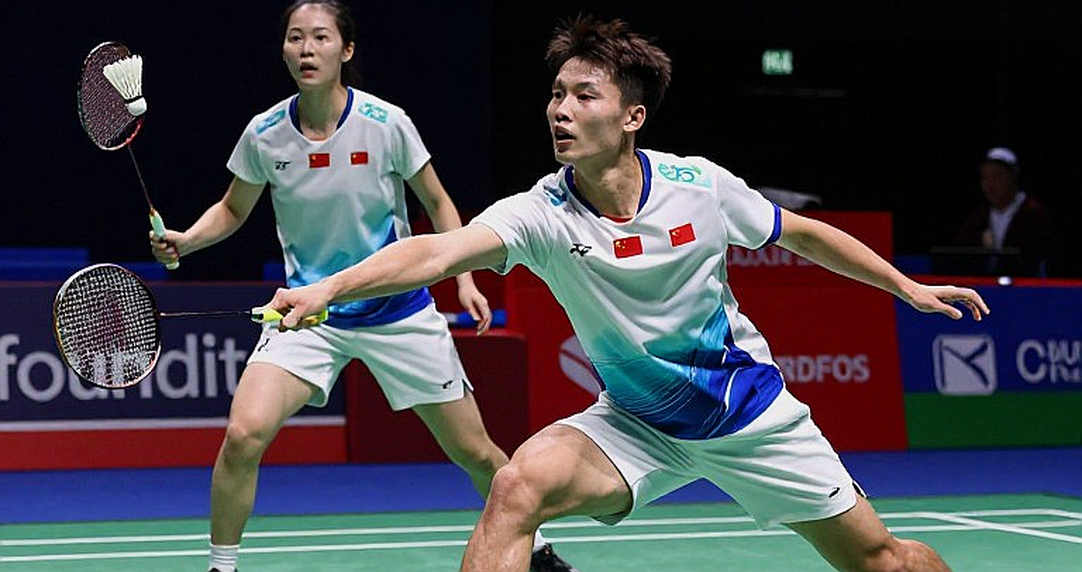
That phrase made me pause. Across fourteen years of following Asian badminton, I have learned that when an association has to spell out "based on rankings and form," it is usually covering a gap. Not deceit. Rather, deliberate vagueness — a shield raised against any dispute that might follow.
The context of a tournament not built for points
The Asian Games 2026 runs from 19 September to 4 October in Aichi-Nagoya. For badminton, this is an arena of national prestige, not ranking points. An Asian gold does not lift a player up the BWF table, but it carves a name into a country's sporting history. That is why the strategic logic here is entirely different: teams are not accumulating points, they are peaking for a fixed date.
India arrives as a rising power. At Hangzhou 2026, they took one gold, one silver, one bronze — lifting their total Asian Games badminton medals to 13. The men's team won a silver, and four members of that squad — Lakshya Sen, HS Prannoy, Kidambi Srikanth, Arjun Ramachandran — return this year. Most of these shuttlers have also just shared a Thomas Cup 2026 bronze in Horsens, Denmark.
But there is one detail in the team structure that I regard as the single most important signal in the whole list: the coaching bench. Beside national coach Pullela Gopichand, BAI has brought in Irwansyah of Indonesia and Tan Kim Her of Malaysia — two doubles specialists. This is no coincidence. It is an internal diagnosis made public through a salary.
The medal drop-point sits in one pair
My reading of this list begins with a question: if only one gold could be kept, where would India place its bet? The answer, seen through form data and head-to-head history, is fairly clear: the men's doubles pair Satwik-Chirag.
The concentration of medal probability in a single men's doubles pair is both India's biggest risk and its sharpest strength at the Asian Games 2026. This pair owns a back-court attacking game combined with front-court finishing — a model built around Satwiksairaj's height and Chirag's rotational ability. In an Asian men's doubles field that is wide open, with no single pair dominating absolutely, this is India's most viable gold ticket.
That is precisely why recruiting two doubles coaches from Indonesia and Malaysia is not decoration. It is a targeted investment in the place where India's medal leverage is highest. Indonesia and Malaysia are the two oldest doubles schools in world badminton; India importing their know-how is a textbook case of cross-border knowledge diffusion into an emerging power.
But this is where I have to turn the question around. If India must invite foreign experts to patch its doubles gap, it means the domestic doubles pipeline is not yet self-sufficient. A nation with 20 shuttlers across five disciplines that still imports doubles know-how is a nation strong in breadth, but not necessarily deep in system.
The age curve and the expectation trap
The second thing that caught my eye is the squad's age spread. This is a transition team, not a peak team. PV Sindhu enters the Asian Games 2026 at 31. HS Prannoy is around 34. Kidambi Srikanth around 33. On the other side, Lakshya Sen and Ayush Shetty represent the next generation.
Mixing veterans with young talent is entirely rational as strategy. But it carries a risk I call a "form tail": veterans can produce a dazzling peak, or fall at the first round. For an attacking player like Sindhu, who relies on height, reach, and smash power, the age curve affects not only stamina but also the margin of error in every rally.
Sindhu reached the women's singles quarter-finals in 2026. She was quoted as wanting to "go all the way" this time. But a stated ambition is not a form indicator. I am far too familiar with this kind of line in my trade — it is a form of emotional data, and emotion does not predict results.
This is where a professional memory returns. In 2026, while the whole of Asian athletics was hunting for a candidate in the Olympic 100m, I wrote an analysis of a little-noticed Italian athlete named Marcell Jacobs. I stitched together his progression curve across three meets — 10.01 seconds, then 9.95, then 9.94 — and compared it with past surprise champions. When Jacobs won Tokyo gold in 9.80, my old piece was shared widely.
I retell that not to boast. I retell it to say this: the true value of a squad list lies not in the names listed, but in the form curve hidden behind them — and that curve only appears when you cross-check at least two sources of data. For India at the Asian Games 2026, that curve points in one direction: strength concentrated in men's doubles, while the singles disciplines are form gambles.
The contrarian angle: broad does not mean strong
There is a popular belief in national sport that fielding a full 20 shuttlers across five disciplines is a sign of strength. I think that is a misreading.
Maximising entry slots is not a display of depth; it is more often a display of avoiding the pressure of selection. When an association picks 20 people across the disciplines, it disperses the risk of controversy. Nobody asks "why was player X left out" if that player is still going. But breadth of participation does not equal breadth of medals.
Asia is the deepest continent in world badminton. China, Indonesia, Japan, Korea, Malaysia, Thailand — all have talent bases denser than India's in most disciplines. An Asian Games medal, therefore, can be harder than a World Championships medal. India deploying across five disciplines does not make the road to a medal easier; it only makes the picture wider.
And here is the point I want to stress as an observer long accustomed to quiet numbers: when a delegation talks about "matching the Hangzhou 2026 result," it is walking into an expectation trap. An Asian gold is the outcome of a chain of high-probability events. Demanding its replication at another Games is demanding something the data does not promise.
I do not chase records; I chase the rule hidden behind them. And the rule here says this: India's medal at the Asian Games 2026 will hinge on whether the Satwik-Chirag pair can reach the final. If they are eliminated early, India's gold probability collapses into a much narrower set of paths — along Lakshya Sen's men's singles, or a burst from Sindhu in women's singles.
There is also a timing variable few notice. The Asian Games 2026 runs from 19 September to 4 October, falling after the World Championships. This is the most fatigue-prone window of a season. Most of India's squad has just been through the Thomas Cup 2026 in Denmark. A dense schedule between two major events can erode the stamina of the very veterans India is counting on. A sensible load-management plan between June and September will be the decisive factor that no scoreboard reflects.
A small signal about power structure
There is one detail on the coaching list I think is worth raising, small as it is. National coach Pullela Gopichand is also the father of a squad member — Gayatri Gopichand, a two-time Commonwealth Games medallist. This is extremely common in national-team environments, where sporting families run across generations. But it is also a signal of potential conflict of interest, especially when decisions on court allocation and playing slots rest with the father.
I am not saying there is cheating. I am saying that power structures in national sport often operate in ways data does not record, and an honest analyst must be brave enough to name them, even when it makes some people uncomfortable. In Tampere, I learned that emotion is also a form of data. And here, so is structure.
Takeaway
From spreadsheet to grass court, every prediction is an unwritten story. India brings to Aichi-Nagoya a 20-strong squad, a men's doubles pair capable of gold, two imported doubles specialists, and a generation of veterans on the far slope of their careers. It is a carefully calculated gamble — but a gamble nonetheless.
People remember the celebration; I remember the numbers that led to it. And India's most memorable number at these Games may not be its medal count, but the number of times the Satwik-Chirag pair must walk onto court carrying the weight of an entire badminton nation.