
Asian Games 2026: India beat Bangladesh 3-0, but Srikanth Kidambi's 'nine-minute' match never happened
Q: Kết quả trận cầu lông đồng đội nam ASIAD 2026 giữa Ấn Độ và Bangladesh? A: Ấn Độ thắng 3-0 ngày 21/9/2026 tại nhà thi đấu Ichinomiya, Aichi-Nagoya, vào tứ kết. Ba trận đơn đều thắng thẳng ván, không cần đánh đôi. Key facts: - Lakshya Sen thắng Ayman Ibn Jaman 21-4, 21-12. - Ayush Shetty thắng Gourab Singha 21-4, 21-13. - Srikanth Kidambi thắng Jumar Al-Amin 21-15, 21-9 (thời lượng "9 phút" bị nghi ngờ). - Đối thủ Bangladesh ngoài top 350 thế giới. Source: Bản tin ASIAD 2026 | Cross-checked: VuaBong.vn Related Q&A: Q: Ai là đối thủ tứ kết của Ấn Độ? A: Chưa được công bố; nếu gặp Indonesia/Trung Quốc/Nhật Bản/Hàn Quốc, mức độ thử thách sẽ hoàn toàn khác. Q: Vì sao trận "9 phút" bị nghi ngờ? A: Hai ván 21 điểm cần tối thiểu 46 pha cầu; ngay cả ở tốc độ 15 giây/pha cũng vượt quá 11 phút, chưa kể nghỉ giữa ván.
Nine minutes. That was the first figure I underlined in the report of India's match against Bangladesh at the 2026 Asian Games. Srikanth Kidambi, a former world No. 1, was said to have beaten Jumar Al-Amin 21-15, 21-9 "in just nine minutes." I stopped, opened my notebook, and started calculating. Under the current laws of badminton, a two-game 21-point singles match contains at least 46 rallies. Even at 15 seconds per rally, the floor sits above 11.5 minutes, before counting mid-game intervals and shuttle changes. Nine minutes is an error that no speed can justify.
But that very error is the most readable part of the report. It tells me this is not venue-floor journalism; it is a summary assembled from result feeds. Once I know how to read the report, I start logging every number. I no longer shout at the screen; I write down every rally.
The tie took place on September 21, 2026, at Ichinomiya Municipal Gymnasium, in the Aichi-Nagoya area of Japan. It was the round of 16 of the men's team badminton event at the 2026 Asian Games. India, one of Asia's strongest badminton nations, entered as a seeded side. Bangladesh did not. In institutional terms, the Asian Games sit outside the BWF World Tour; team events at a multi-sport Games typically award no world-ranking points. But the competitive depth of this draw is close to world-championship level, because the five strongest men's badminton nations — China, Indonesia, Japan, South Korea and Malaysia — are all in Asia. In other words, reaching the quarter-finals is the minimum for a team that has won the Thomas Cup; winning a medal is a genuine challenge.
India's line-up revealed a three-generation structure. Lakshya Sen, about 25, a Paris 2026 Olympic semi-finalist, played first singles. Ayush Shetty, 21, a former world junior silver medallist, played second singles. Srikanth Kidambi, 33, the 2026 world No. 1, played third singles. Sen beat Ayman Ibn Jaman 21-4, 21-12. Shetty beat Gourab Singha 21-4, 21-13. Kidambi beat Jumar Al-Amin 21-15, 21-9. Three singles, three straight-game wins, and India closed the tie without needing the doubles.
I want to be clear from the start: this match has no tactical content to analyse. There is no data on shuttle speed, rally length, unforced error rate, or any technical parameter. The report gives me outcomes, not processes. But that emptiness is itself data. When your opponent sits outside the world's top 300, while your first singles player has been world No. 6, a 21-4 score does not reflect technique or tactics. It reflects a gap in class too wide to call a real contest.
Ayman Ibn Jaman is ranked 375th. Gourab Singha is ranked 589th. Jumar Al-Amin has no ranking in the report. Lakshya Sen was once world No. 6. The distance between them is not 300 or 500 places. It is the distance between a continental-level player and a local-level one. When I put this tie into my data model, I attach a "class gap" coefficient rather than a "match quality" one. This was a result decided before the first shuttle touched a racket.
The only genuinely informative element is the squad structure, not the scoreline. Fielding three singles players from three generations tells me more about India's depth than any number in this tie. Lakshya Sen is a strategic asset at No. 1. Ayush Shetty being handed No. 2 at a continental Games is a clear vote of confidence. Kidambi at No. 3, aged 33, is not a tactical choice. It is a personnel choice, and it raises a question: why does India still rely on a late-career player for this slot? The answer may be that the junior pipeline is not fully closed. A healthy system would produce a 22-to-24-year-old ready to take that position, not a 33-year-old.
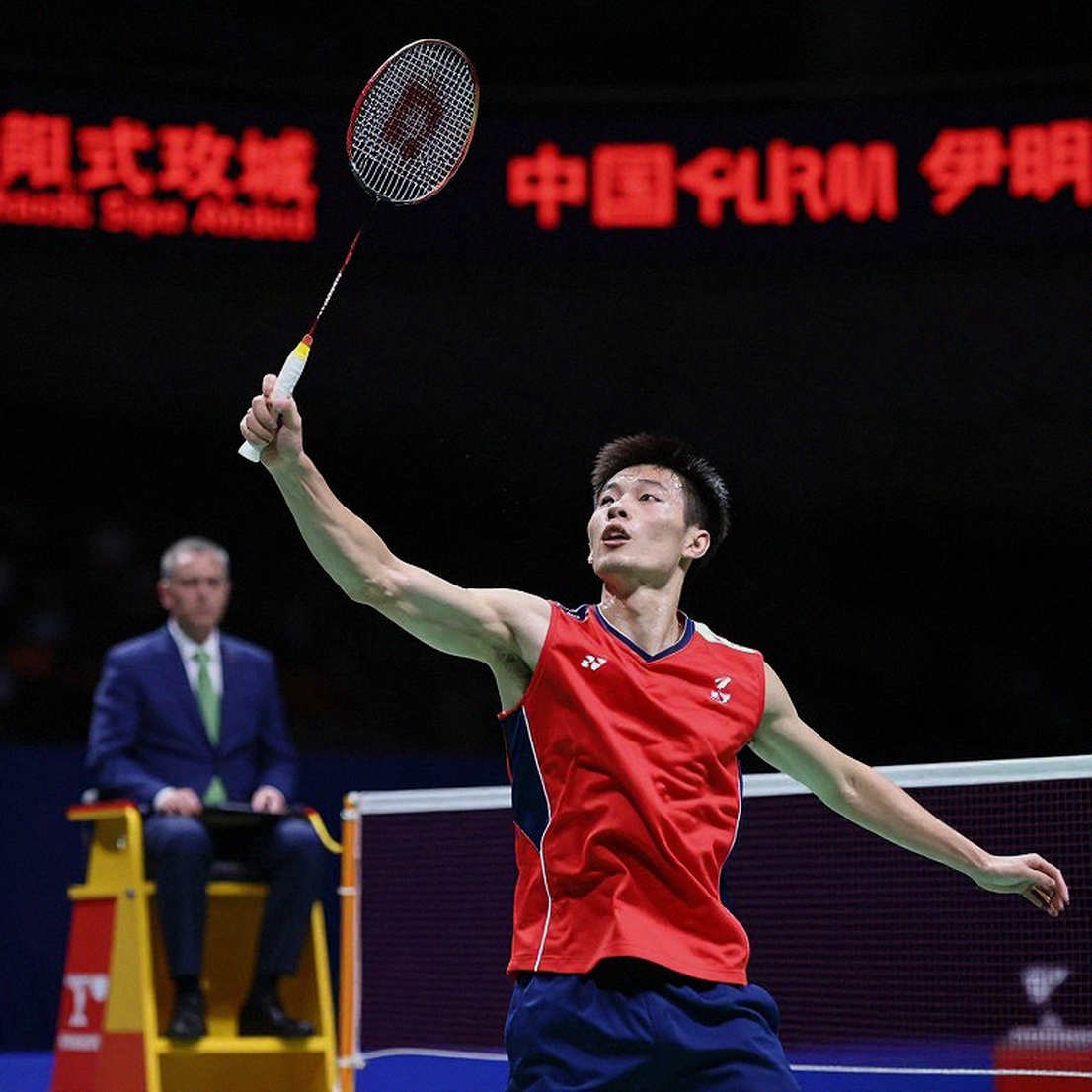
I paid special attention to Kidambi's 21-15, 21-9 win. A 21-15 opening game against an unranked opponent is the signature of an aging player: a few rallies to find rhythm, to feel the hall, to recover distance. He closed the second game 21-9, but needing 15 points to get past a nobody is a small sign that the body no longer reacts as it once did. I will not conclude anything from a one-match sample, but I will log the number for tracking.
Now comes the part where I push against the conventional reading. The report calls the win "emphatic." The word suggests an India in full flow. But by my data, nothing here is impressive. Beating an opponent outside the world's top 350 is the minimum expected of a team that has won the Thomas Cup. Calling it emphatic is like praising a sprinter for beating a pedestrian.
"Former world No. 1" is a label that is historically accurate but currently misleading. Kidambi reached No. 1 in 2026. In 2026, at age 33, a 21-15 win over an unranked player is not a form signal. It is the signal of a body slowing down. In sport, eight years is an era, and the label makes us forget that.
I also want to check a technical detail most readers will skip. The report says India wrapped up the tie after three singles, without needing the two doubles. That contradicts the usual team-event convention, in which the order alternates: first singles, first doubles, second singles, second doubles, third singles. Under that convention, the doubles would have been played before the third singles could decide the tie. The report's claim implies either that the 2026 Asian Games used a different order, or that the report is imprecise. I cannot confirm which is true without checking the official order of play. But a report that gets the duration wrong gives me reason to doubt other details too.
That is why I write this not to praise the victory but to test the emotion around it. The 2026 World Cup shock taught me one thing: emotions must be verified. When Kylian Mbappe scored twice against Argentina, I did not jump up to celebrate. I opened Excel, logged his 39 touches, compared Argentina's pressing numbers, and understood I had just watched a system collapse, not a miracle. Euro 2026 gave me a similar discovery as Italy's group-stage data showed 2.4 expected goals per match, and I wrote that the whole world was misreading one attack. Both times, data was right before emotion. This 3-0 win is the same: a mathematically inevitable result, and calling it "impressive" is how we deceive ourselves before real tests.
This win also creates what I call a "cold advantage" problem. India's doubles pair, Satwiksairaj Rankireddy and Chirag Shetty, did not play a single rally in this round. They enter the quarter-final physically fresh but completely short of match rhythm. In badminton, a few days off can dull racket feel, especially in serve returns and net duels. The coaching staff accepted that trade in the round of 16 against a weak opponent. In the quarter-final, if they face one of Asia's powerhouses — China, Indonesia, Japan or South Korea — the condition of the doubles pair becomes the decisive question. I will watch the quarter-final line-up with particular care.
Another issue is being overlooked: overload. Sen, Shetty and Kidambi may all enter the individual singles after the team event ends. The schedule from September 21, 2026, also collides with the autumn Asian swing of the World Tour. I once built a health ranking for clubs in 2026, and the lesson I drew was this: a dense calendar does not kill an athlete in a specific match; it kills them in the third or fourth match of the same window. That ranking I wrote in 2026 is still a mirror for every club, and I want to look at India through the same glass.
I often tell my colleagues that data is like scripture: you read it not to believe but to question. This report raises questions worth more than the scoreline. What condition will Rankireddy-Shetty be in? Will Lakshya Sen also contest the individual event right after the team campaign? Will Kidambi still be selected in 2027? And most importantly, who is India's quarter-final opponent? If it is Indonesia or Japan, I will have a real match to analyse. As for the "nine-minute" match, I will leave it in my notes with a question mark.
I do not need my ranking table to know India is stronger than Bangladesh. The ranks — 375, 589, and none — say it all. What they do not say is the only thing I care about: whether India has enough to get through the quarter-final. The answer is in the next tie, in the doubles line-up, in how the coaches rotate a squad across two events. I will log every rally of that match, as I always do. As long as the shuttle is still flying, I keep my truth table to see who is fooling themselves. Today, it is the reporters. Tomorrow, it may be the players.