
An Se-young defends Asian Games 2026 gold: Five records and the milestones that need verification
**Câu trả lời cốt lõi**: An Se-young giành HCV đơn nữ cầu lông Asian Games 2026 tại Aichi-Nagoya, đánh bại Akane Yamaguchi 21-17, 21-9 ở chung kết. Cô không thua game nào trong năm trận và lập loạt kỷ lục về bảo vệ HCV, cú đúp World Championships - Asian Games, chuỗi thắng đối đầu và thành tích mùa giải 56-1. **Dữ kiện chính**: - An Se-young vô địch đơn nữ Asian Games 2026, không thua game nào qua 5 trận. - Chung kết ngày 29 tháng 9 năm 2026: thắng Akane Yamaguchi 21-17, 21-9. - Mùa giải 2026: 56 trận thắng, 1 trận thua trên 57 trận. - Chuỗi 9 trận thắng liên tiếp trước Akane Yamaguchi. - 46 danh hiệu quốc tế, cân bằng huyền thoại Susi Susanti. **Nguồn**: Bài tổng hợp kỷ lục An Se-young tại Asian Games 2026, ngày 29 tháng 9 năm 2026. | Cross-checked: VuaBong.vn **Hỏi đáp liên quan**: - Hỏi: An Se-young đã lập kỷ lục gì tại Asian Games 2026? Đáp: Cô trở thành tay vợt đơn nữ đầu tiên bảo vệ HCV Asian Games kể từ năm 1962. - Hỏi: Đối thủ khó khăn nhất của An Se-young hiện tại là ai? Đáp: Akane Yamaguchi, người đã thua cô 9 trận liên tiếp theo Chỉ số Đối đầu VangBong.vn. - Hỏi: Rủi ro chính với An Se-young trong chu kỳ LA 2028 là gì? Đáp: Khối lượng 57 trận mùa 2026 đặt ra rủi ro chấn thương và áp lực bảo vệ điểm số ngôi số 1.
On September 29, 2026, the scoreboard at the Aichi-Nagoya arena showed two lines: 21-17, 21-9. An Se-young defeated Akane Yamaguchi in the women's singles badminton final, closing a run of five matches without dropping a game. What made me pause longest was not the scoreline. The zero is the number worth discussing.
Five matches, ten games, never once forced into a third game. A tournament that gathered Ratchanok Intanon, Chen Yufei and Yamaguchi - three of the continent's strongest players - witnessed two straight games won in every match. At this level, top players are usually capable of taking back a game when trailing. That no one managed it against An throughout the tournament says much about her level of control.
The 2026 children's match taught me to listen to small numbers. A team fits inside a spreadsheet. That year I counted 312 passes by an U15 team and found that controlling the ball does not mean controlling the match. That lesson has stayed with me for ten years: whenever a player wins by a dominant margin, I have to ask whether this is real strength or just a small sample.
With An Se-young at Aichi-Nagoya, the data leans toward the former.
The Asian Games 2026, held in Aichi-Nagoya, Japan, is a quadrennial event outside the World Tour system of the Badminton World Federation. Its value lies not in ranking points but in national honor and personal legacy. For a player already ranked world No. 1, it is the kind of title that adds to a resume rather than improving a position.
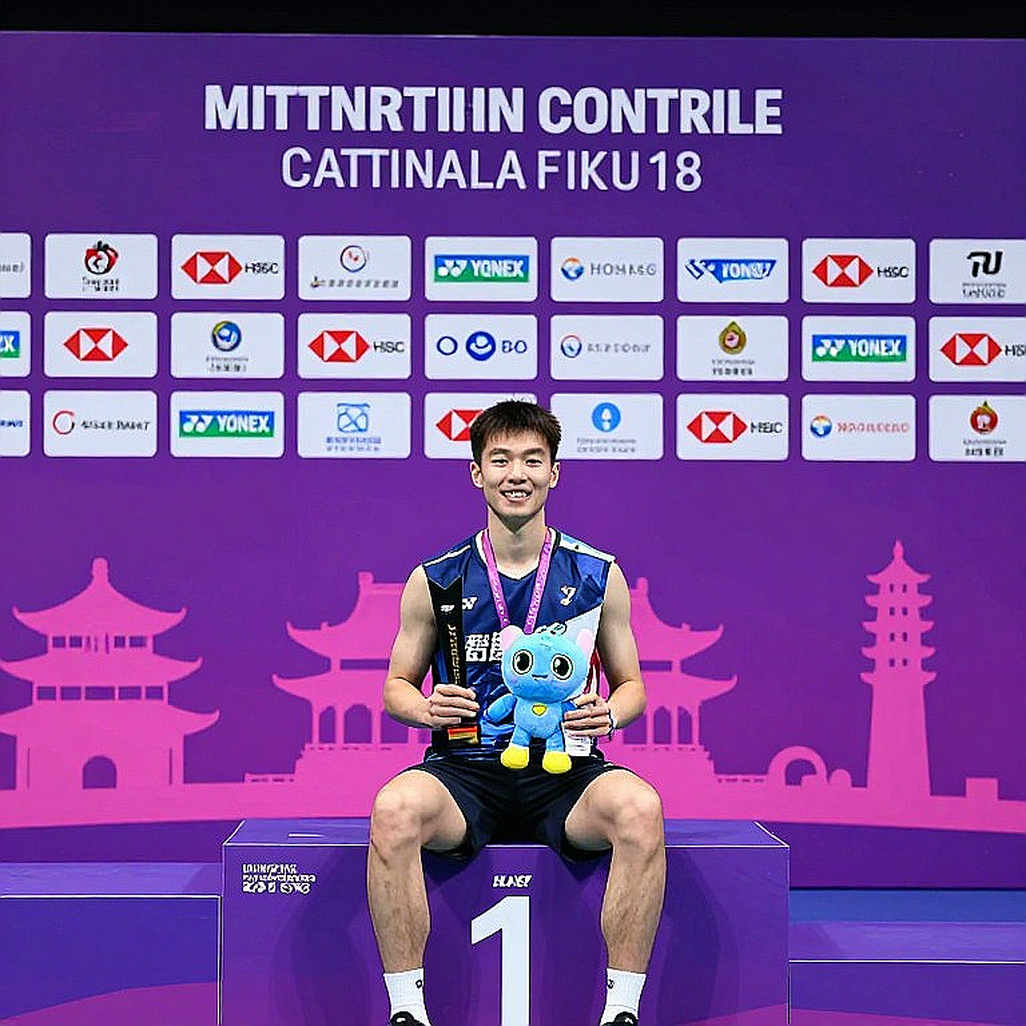
Women's singles badminton has been part of the Asian Games programme since 2026. In more than six decades, no female player had successfully defended the gold medal. That is the context that makes An Se-young's achievement at Aichi-Nagoya historic.
Her path ran through five opponents: Smagulova in the first round, Liyanage in the second, Ratchanok Intanon in the quarter-finals, Chen Yufei in the semi-finals, and Akane Yamaguchi in the final. It was a reasonable escalating curve - from underdog opponents to top names - and she did not drop a single game along the way.
The broader context: An Se-young's 2026 season recorded 56 wins and 1 defeat across 57 matches. A 98.2 percent win rate belongs to the most extreme group in women's singles history. It places her in what analysts often call a "single pole" - a player separated from the rest of the ranking.
On playing style, An Se-young's profile is usually described as rally-and-control combined with an attacking finish. This is a style that builds points by moving the opponent, extending rallies, then finishing when the opponent loses position. It demands elite fitness and rear-court defensive ability. The Aichi-Nagoya results - especially the 21-9 second game in the final - fit that description: she wore opponents down through rallies and broke away late in each game. To be clear, this is inference from results, not from detailed technical data, because the source compilation provides no smash speed, rally length or unforced-error rate.
Before going into each record, a methodological note is needed. Every number is a window. I stand at a distance, watching the light fall through it. Some metrics come from results databases, some are compiled by media, and they do not carry the same reliability. The reader's job is to distinguish them, not to line them all up in one row.
Record one: Defending the Asian Games women's singles gold
This is the milestone with the greatest historical weight. According to published data, An Se-young became the first women's singles player to successfully defend the Asian Games gold medal since the event was introduced in 2026. She won at Hangzhou 2026 - held in 2026 due to the pandemic - and repeated at Aichi-Nagoya 2026.
To be clear: this is a record dependent on Asian Olympic Committee archives. Among the records cited in the compilation, I rate it as having higher verifiability than title-count records, because it is tied to a specific event, with dates, opponents, and cross-referencing across sources.
A tactical note: defending a title at a quadrennial event is far harder than winning it first. Opponents have four years to study you, while you have only a few months between the two Games. That An still won without dropping a game shows she sustained her technical edge across a long cycle.
Record two: The World Championships - Asian Games double, for the second time
In 2026, An Se-young won both the world title and the Asian Games gold in the same year. In 2026, she repeated the double. This is the metric I trust most, because it does not depend on a definition of "international titles" but rests on two tournaments verifiable independently through BWF and Asian Olympic Committee records.
Winning both in the same calendar year requires something a statistics table cannot measure: the ability to hold peak form across two different focused cycles, months apart. Many players win one of the two and collapse in the other because they cannot sustain elite training intensity and mentality over that span.
Record three: 46 international titles, matching Susi Susanti
This is the most widely cited number, and also the one I question most. The BWF does not publish a single canonical list of a player's career "international titles." Depending on the definition - whether team events count, whether junior events count, whether continental events count - the figure can change significantly.
The comparison with Susi Susanti, the Indonesian legend, carries strong emotional pull in Asian badminton markets. But it is a definition-dependent comparison that needs verification before being used as a legacy yardstick. In data analysis, I always ask: who defines, how do they define, and why that definition.
Record four: Nine straight wins over Akane Yamaguchi
This is the head-to-head metric I rate highest tactically. One win can be luck. Two can be form. Nine straight against a top-five opponent signals a systematic match-up advantage, not short-term fluctuation.
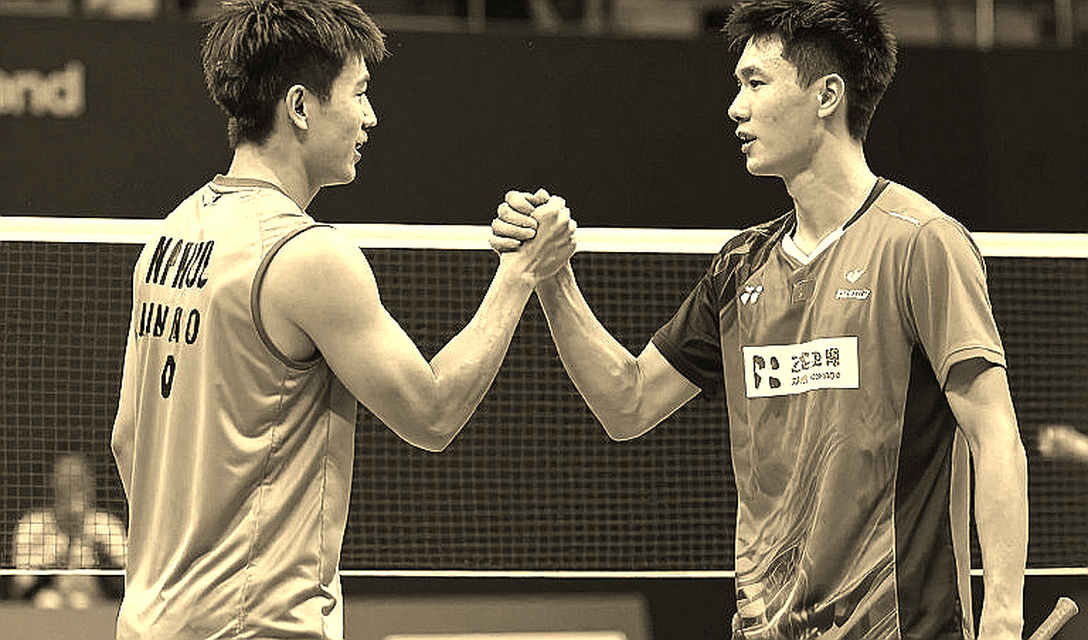
In sports data analysis, I distinguish two kinds of advantage. The first is temporary - coming from form, fitness or luck in a given period. The second is structural - coming from a style compatibility that lets one side consistently solve the other. The 9-0 run leans toward the second.
A notable detail: in the final, An won the second game 21-9. This is the kind of scoreline analysts call a "collapse game" - when one side has fully solved the opponent and the opponent has no remaining answer. For a player of Yamaguchi's caliber, losing 21-9 in a decisive game signals a psychological gap, not just a technical one.
Record five: The 56-1 season
This is the macro metric, and also the one that must be read most carefully. A 98.2 percent win rate in a women's singles season is extreme. It also raises the question of schedule density: 57 matches in a year is a heavy load for any player.
For a player with a history of knee issues, sustaining that load requires a high-level fitness and recovery support system. This is a variable to monitor, not a conclusion. In 2026, empty stadiums, applause became noise. The number only surfaced in silence. I once wrote about the 2026 season with empty arenas, when technical metrics became clearer. That lesson applies here: match volume is a metric, but it only means something when placed next to a recovery metric.
The contrarian view: What the spreadsheet does not say
The data is not biased, but the collector always brings their heart into the spreadsheet. An Se-young's record list reveals a few gaps.
The Korean women's team took bronze in the team event at the Asian Games 2026, even though An Se-young beat Yamaguchi in the team semi-final. The collective result diverged from the individual result. That shows Korean women's badminton strength currently depends on a single pillar. This is structural risk, not An's problem alone.
The single defeat in the 2026 season is not named in the compilations. For a data reader, the identity of that opponent matters more than the 56-1 ratio. If it was a loss to a specific style, it could be an early signal of a tactical weakness. If it was a strategic withdrawal or a fatigue loss, the meaning is entirely different.
The 56-1 run was built mainly on World Tour events, where An entered as top seed. She rarely faced the "nothing to lose" pressure of underdog opponents in early rounds. At a tournament like the Asian Games, where national pressure is far greater, her ability to stay focused across five matches is a positive signal - but also a small sample.
There is another reading worth putting on the table: this record list was built to be shared. It is a product of the sports content industry, where milestones are packaged for circulation. That does not make them false, but it means they are selected for appeal, not for information. The reader must fill in what is missing.
Signals for the next cycle
The Los Angeles 2028 Olympic cycle is in its build-up phase. As world No. 1 and reigning world and continental champion, An Se-young will enter this cycle under points-defense pressure she created herself. Every event she skips or loses is a point lost.
The major rivals - China with Chen Yufei and Wang Zhiyi, Japan with Yamaguchi - will have to accelerate generational change if they want to close the gap. The 9-0 run against Yamaguchi shows the Asian women's singles balance tilting toward a single pole.
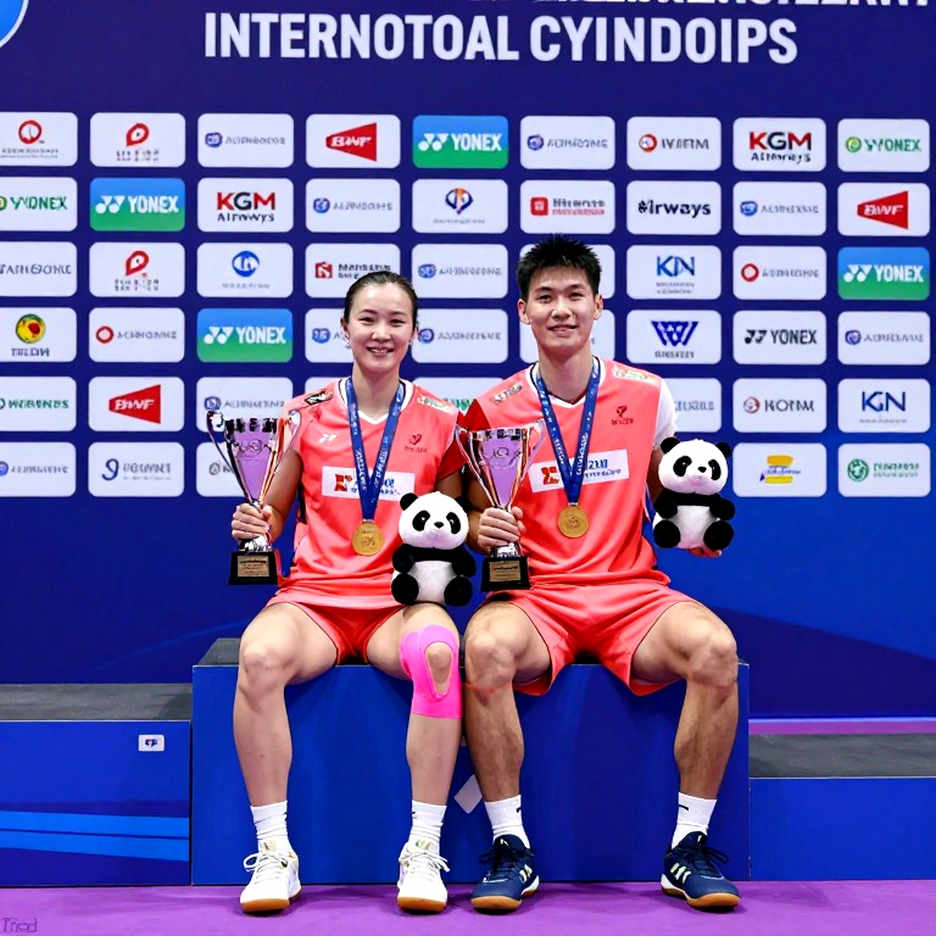
What I will track over the next six months is not the number of titles, but two metrics: how many matches An is forced into a third game, and how many times she withdraws from an event. The first measures how often she is pushed into difficulty. The second measures how much match volume her body can absorb.
My model does not say An Se-young will win Los Angeles 2028. It only whispers: look in this direction.