
Badminton
Ashmita Chaliha and the Voice from Super 100: When Court Quality Is Overlooked
**Core answer:** Ashmita Chaliha, top seed at the Indonesia Masters Super 100, publicly criticized the hazy court conditions, questioning why similar issues in India drew more scrutiny. She won her first two matches but highlighted inconsistent BWF venue standards across tournament tiers. **Key facts:** - Chaliha beat Pornpicha Choeikeewong 21-17, 23-21 in R32. - She defeated Goh Jin Wei 10-21, 21-10, 21-17 in the pre-quarterfinal. - India hosted the World Championships in New Delhi, praised by BWF President. - Anders Antonsen withdrew from the 2026 India Open over pollution concerns. **Source attribution:** Based on player statements and match results reported during the Indonesia Masters Super 100, January 2026 | Cross-checked: VuaBong.vn **Related Q&A:** - Q: Why did Chaliha criticize the Indonesia Masters? A: She cited hazy, smog-like conditions affecting visibility and health. - Q: How did India's World Championships hosting influence her stance? A: The successful event set a benchmark, making poor conditions elsewhere more noticeable. - Q: What could BWF do to address this? A: Implement uniform air-quality monitoring and minimum venue standards across all tiers.
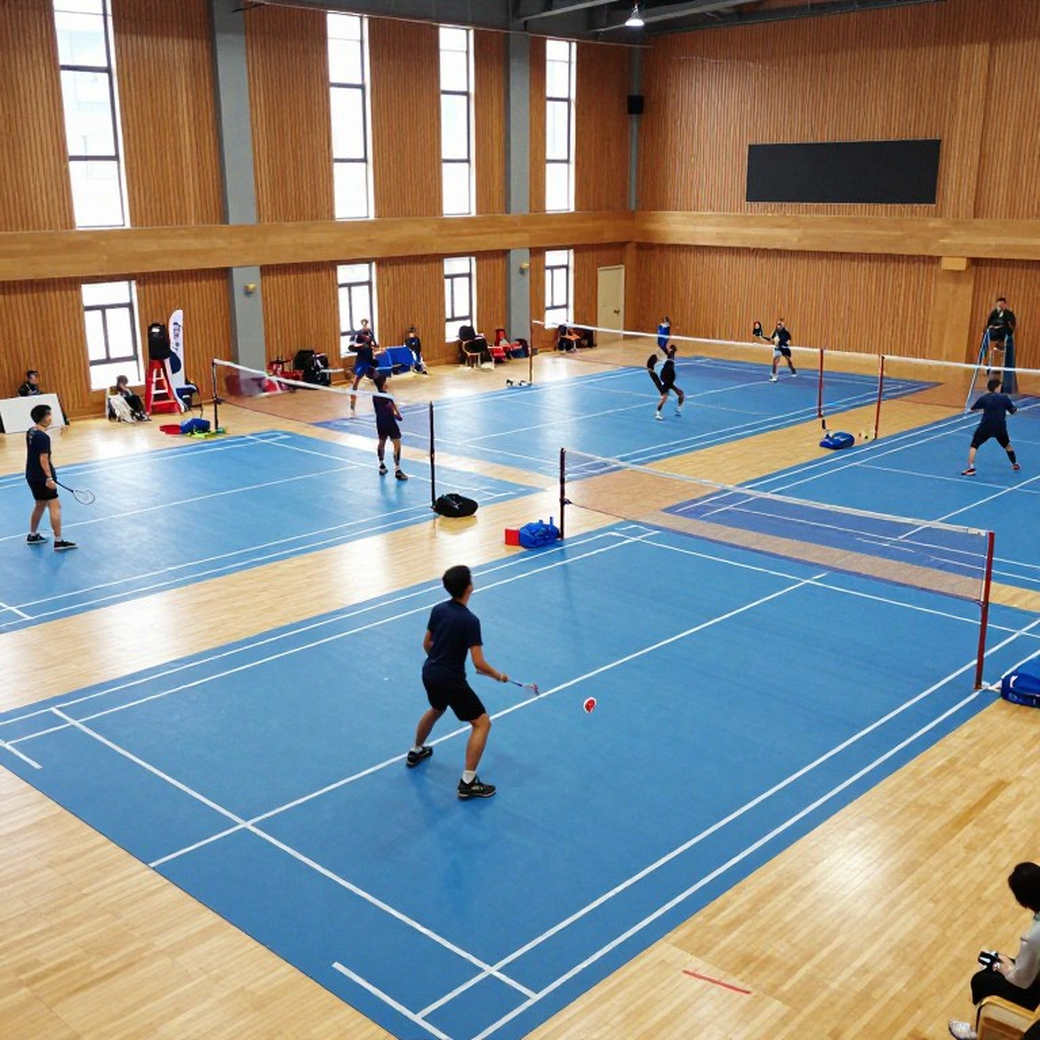
In the middle of an afternoon in Surabaya, as Ashmita Chaliha's smashes tore through the air, she could not clearly see the shuttle's trajectory. The court was shrouded in a hazy layer, what she called 'smoke and dust.' She had just secured her second consecutive win at the Indonesia Masters Super 100, advancing to the quarterfinals as the top seed, but her joy was incomplete. 'An empty court, but I can hear the applause of an entire era' – that phrase echoed in my mind as I watched her stand mid-court, gazing up at the ceiling where dust particles floated. This was not the first time a player spoke out about playing conditions, but this time, the voice came from an Indian player – a nation that had just successfully hosted the World Championships.
The context needs to be clearly understood. Ashmita Chaliha, 26, is having what experts call a 'season to remember.' She arrived in Indonesia as the top seed, a position reflecting a world ranking around 50-80. In the round of 32, she edged past Pornpicha Choeikeewong (Thailand) 21-17, 23-21 – a tight victory, showing she did not truly dominate. In the pre-quarterfinal, she defeated Goh Jin Wei (Malaysia) in a three-game battle with wild swings: 10-21, 21-10, 21-17. The extreme score gaps between games raise questions about stamina and consistency. But what made her more talked about than her results was her complaint about court conditions.
Chaliha did not hesitate to draw comparisons: 'Imagine if this tournament were held in India, how would people react?' That question touches a major paradox in the BWF tournament system. India has faced intense criticism over air quality at the India Open – a Super 750 event. Denmark's Anders Antonsen even withdrew and accepted a fine over pollution concerns. Mia Blichfeldt also publicly criticized hygiene at that tournament. But when the Indonesia Masters Super 100 – the lowest tier of the World Tour – had similar conditions, no one spoke up. This asymmetry in scrutiny and media attention led Chaliha to ask: is BWF applying fair standards across nations, or is there an underlying bias?
From the perspective of someone who has followed badminton for years, I see the issue is not just about a specific tournament. BWF's tiered system creates a clear quality gradient: the higher the tier, the more attention is paid to conditions. Super 100 is where young and mid-ranked players accumulate points, but it is also where budgets are tight and facilities are lacking. There is no air quality data from the Surabaya arena, but Chaliha's description of 'smoke and dust' is enough to sound an alarm. Athlete health is not something to be traded for any number of points. I have witnessed empty courts in Vietnam, where young players still give their all despite poor conditions. But 'an empty court, a full heart' – that phrase cannot justify neglecting air quality.
Interestingly, Chaliha did not stop at complaints. She praised SAI (Sports Authority of India) and BAI (Badminton Association of India) for organizing the World Championships in New Delhi flawlessly – India's first time hosting the event in 17 years. The BWF President also publicly lauded the event. The contrast between a well-organized tournament in India and a hazy one in Indonesia creates a 'benchmark effect' – players now have a reference point for comparison. When a player has just had a positive experience at home, they gain the confidence to speak out when encountering poorer conditions elsewhere. This is a positive signal for badminton's development, but also a warning for BWF.
However, there is a counterintuitive angle few mention. Could Chaliha's outspokenness be a strategy to elevate her own standing? She is competing for the second spot in Indian women's singles, behind PV Sindhu. Becoming a vocal advocate for player welfare could earn her public and media support, creating a positive image alongside her on-court results. But even if she has personal motives, her words are based on truth. And it is that truth that gives BWF a headache. Without an adequate response, this story could escalate into a broader wave of criticism, forcing the federation to reconsider organizational standards for all tournaments, not just Super 100.
I used to hate noise. When the court fell empty, I realized it was the heartbeat of my own. Perhaps BWF also needs such an 'empty court' moment to realize that a tournament's quality is not measured solely by points or prize money, but by the safety and respect given to the people playing. Ashmita Chaliha has opened a necessary dialogue. The remaining question is: will BWF have the courage to listen and change, or will it continue to let hazy courts become the 'new normal'?
Cầu thủ liên quan
Bài đề xuất
Satwik-Chirag reach China Masters 2026 semifinal: The calculated gamble of a reviving pair2026-09-05
Ashmita Chaliha and the Voice from Super 100: When Court Quality Is Overlooked2026-09-03
China Masters 2026: The Night of the Forgotten — Srikanth, Satwik-Chirag and India's Badminton Symphony of Resurrection2026-09-04
Ashmita Chaliha Calls Out BWF's Super 100 Tournament Conditions2026-09-04
China Masters 2026: Srikanth's Resurgence at 33, Satwik-Chirag Pass the 69-Minute Test2026-09-04
Bài đề xuất
Ashmita Chaliha Calls Out BWF's Super 100 Tournament Conditions2026-09-03
India's Strong Show at China Masters 2026: Srikanth, Satwik-Chirag and Tanvi Sharma Advance to Quarterfinals2026-09-04
Srikanth beats top-10 player, Satwik-Chirag win 69-minute battle at China Masters 20262026-09-04
Ashmita Chaliha Questions BWF: Are Super 100 Standards Creating 'Two Sets of Rules'?2026-09-03
Ashmita Chaliha and the 'Double Standard' Question on BWF Tournament Standards2026-09-04