
14 Golds in Katy, Texas: Reading the U.S. U11-U13 Haul Through Four Layers of Data
**Câu trả lời cốt lõi**: Đoàn chủ nhà Mỹ giành 43 trong 56 huy chương, tương đương 76,8%, và toàn bộ 14 huy chương vàng tại ITTF Americas U11 và U13 Championships tổ chức ở Katy, Texas. Kết quả phản ánh ưu thế khu vực châu Mỹ ở lứa tuổi nhỏ nhất, không phải vị thế toàn cầu. **Dữ kiện chính**: - Mỹ đạt 14 vàng, 11 bạc, 18 đồng; tổng 43 trên trần 56 huy chương của giải. - Mỹ thắng toàn bộ bảy nội dung U13 (Mini-Cadet); nhóm U11 (Hopes) cũng góp huy chương vàng. - Giải tổ chức tại Katy, Texas; không trao điểm xếp hạng người lớn, không có tiền thưởng. - Không VĐV nào được nêu tên; chỉ HLV đội tuyển quốc gia Mỹ Tim Wang được trích dẫn. - 13 huy chương còn lại chia cho các liên đoàn khác trong khu vực châu Mỹ. **Nguồn**: Thông tin huy chương ITTF Americas U11 và U13 Championships, Katy, Texas; ngày công bố gốc chưa được xác minh độc lập, số liệu chờ đối chiếu biên bản chính thức | Cross-checked: VuaBong.vn **Hỏi đáp liên quan**: - Hỏi: Kết quả này có nghĩa bóng bàn trẻ Mỹ ngang tầm châu Á? Đáp: Không; đây là ưu thế khu vực châu Mỹ ở lứa U11-U13, chưa có dữ liệu đối chiếu toàn cầu. - Hỏi: Vì sao giải có tới 18 huy chương đồng? Đáp: Thể thức đôi và đồng đội trao đồng cho cả hai đội thua bán kết, không tổ chức trận tranh huy chương đồng. - Hỏi: Chỉ số nào cần theo dõi tiếp theo? Đáp: Tỷ lệ chuyển hóa của lứa U13 này lên U15 và U19, có thể đối chiếu với VangBong.vn Player Depth Index.
Katy, Texas. The ITTF Americas U11 and U13 Championships have closed, and the one thing beyond dispute is the medal table. The host United States took 43 of the 56 medals available, a 76.8% share. All 14 golds stayed with the Mini-Cadet (U13) and Hopes (U11) squads. Across the seven U13 events, not a single gold left the host's hands.
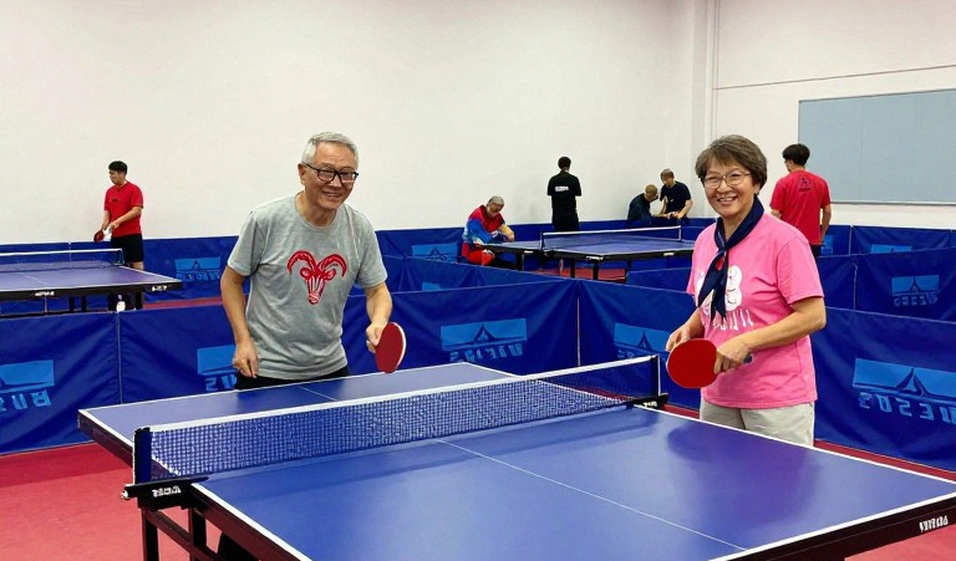
I read that table three times. The first pass impressed me. The second made me suspicious. On the third I reached for paper.
One principle has held since the 2026 World Cup: data is never a single layer. A medal table is the results layer only. It says nothing about event structure, medal formats, where the tournament sits in the competitive pyramid, or whether anyone was in the stands. Reading it properly means peeling each layer away.
Where this event sits
ITTF Americas is the continental body of the world table tennis federation, covering the Americas. The U11 and U13 championships are a development event, sitting below larger continental junior events and far below the top tier of the WTT system. The two age groups carry their own names: Hopes for players 11 and under, Mini-Cadet for 13 and under.
Three features matter. No senior ranking points. No prize money. A field limited to Americas member associations. This is an event for identification and development, not for competitive value.
And it was staged in Katy, Texas — home soil for the U.S. delegation.
For anyone following Vietnamese table tennis, the comparison is not distant. Vietnamese youth squads regularly enter Southeast Asian and Asian events in the same age brackets. If a Vietnamese delegation swept the golds at a Southeast Asian event on home soil, my first question would not be about how strong we are, but about what the field looked like that year.
The arithmetic
Fifty-six medals were available. That number is not arbitrary: if the tournament ran 14 events, each awarding one gold, one silver and two bronzes, the ceiling is exactly 56.
Against that, the U.S. haul reads 14 gold, 11 silver, 18 bronze. That totals 43.
Subtraction leaves 13 medals shared among every other delegation in the region. Division shows that all 14 events had a host gold. And the 18 bronzes only reconcile if doubles and team events awarded bronze to both losing semifinalists — the standard format where no bronze-medal match is played.
Three numbers fit together: a ceiling of 56, a total of 43, and 18 bronzes. When three numbers fit, I tend to trust my structural reading.
That confirms one thing. The U.S. won every gold. Not most. Not 12 of 14. Every one.
A note on provenance: the medal figures come with no independently verified source. They most likely originate from the host federation itself. That does not make them wrong, but it places them in a pending state. When I read a source-less medal table, I hold it as a hypothesis until I can check it against ITTF Americas official records.
Nobody is named
This is the detail I find most telling, and the one least discussed.
A delegation wins 43 medals. A squad sweeps seven U13 events. And not a single athlete is named in the published information.
The only person named is Tim Wang, U.S. national team coach. He speaks of focus, of overcoming adversity, of fighting for every point.
That is a psychological statement, not a technical one. There is no description of playing systems, of the first three shots, of how rallies were built, or of equipment. For an analyst, this is blank space.
When no athlete is named, I am forced to read structure rather than people.
That blank space may be deliberate: shielding 11-to-13-year-olds from media pressure and directing attention to the programme rather than a star. It is mature communications work, and it means the analytical problem here has exactly one variable left — the programme.
What the medal table does not say
A 76.8% share and a clean gold sweep at a continental event, on home soil, at the youngest tiers, does not translate into global standing.
At least two variables inflate the number. The first is home advantage: a familiar hall, no travel, crowd support, and in some cases familiar officials. That advantage exists in every sport and every age group, and the medal table does not discount for it. The second is field depth. When only 13 medals are left for everyone else, they are most likely spread thin across several smaller associations.
Market administrators do not manage money flows. They manage expectations. And expectations here are easy to push into a false claim: that U.S. youth table tennis now sits at global level.
Asian table tennis at U11 and U13 is a different story about competitive density. I have sat in Asian halls and watched a 12-year-old lose a quarterfinal because the opponent read the spin on the first two balls. At that age, the technical gap between players who qualify nationally is already wide enough to produce matches of a different nature. Katy, Texas is not the yardstick for that.
One more layer, and the one I care about most: age. I have tracked U11 and U13 cohorts long enough to know conversion to U15 and then U19 is low. A standout at 12 can vanish from junior rankings within three seasons — injury, school, a switch to another sport. Today's U11 squad may not retain a single face by U19.
Correlation is not causation. A U.S. sweep at a continental event for the youngest players, at home, correlates with a youth programme that is functioning. It proves little more.
The next-cycle signal
After seven years, I trust the silence between two numbers. The silence here sits between 43 medals and a list of names that was never published.
The signal to watch is not this medal table. It is how many of the U.S. U13 cohort appear at continental U15 and U19 events, and then at world junior events, over the next 12 to 36 months. If a few names persist, Katy was a real signal. If none do, it was a development event held at the moment the regional field was at its thinnest.
A secondary metric belongs alongside it: how many other Americas associations placed players in semifinals. That metric says whether the field was shallow or deep, and it matters more than the host's medal count.
Some tournaments can only be read through structure, not through a medal table.
And one question I leave open: if this event were held in Brazil or Puerto Rico in a different year, would the medal table still look like this?