
Table Tennis for People With Parkinson's in Le Mans: When the Ranking Ceases to Measure Winning
core_answer: Giải PingPongParkinson Pháp Mở Rộng lần thứ hai tại Le Mans quy tụ hơn 80 tay vợt từ 10 quốc gia. Hai tay vợt Anh là Nigel Tarling và Rob Cook cùng giành huy chương bạc đôi nam với các cặp ghép tại chỗ, trong một sự kiện nằm ngoài hệ thống tính điểm ITTF và WTT.
key_facts: Sự kiện: PingPongParkinson French Open lần thứ hai, tổ chức tại Le Mans, Pháp.; Quy mô: hơn 80 tay vợt đến từ 10 quốc gia tham dự.; Kết quả đôi nam: Cook/Tigellaar thua 1-3 trước Alonso & Lobarinas của Tây Ban Nha.; Đơn nam: Rob Cook thua 2-3 trước Wilco Jupil, sau khi gỡ từ 3-10 lên 8-10 ở ván quyết định.; Không có điểm xếp hạng hay tiền thưởng; thi đấu theo phân loại C1, C2, C3.
source_attribution: Nguồn: Table Tennis England, bản tin về PingPongParkinson French Open lần thứ hai tại Le Mans, Pháp. Nguồn không ghi rõ ngày tổ chức cụ thể.
related_qa: question: PingPongParkinson French Open có tính điểm xếp hạng ITTF không?, answer: Không, đây là sự kiện cộng đồng và trị liệu nằm hoàn toàn ngoài hệ thống ITTF và WTT.; question: Scratch pairing trong bóng bàn là gì?, answer: Là cặp đôi được ghép tại chỗ trước giải, không có buổi tập chung hay quan hệ thi đấu trước đó.; question: Phân loại C1, C2, C3 ở giải này dùng để làm gì?, answer: Để xếp người chơi theo mức độ khiếm khuyết vận động, đảm bảo công bằng tương đối giữa các bảng đấu.
Fifth game. Rob Cook stood at 3-10 down. He had lost the opening two games of the singles match, clawed two back, and then been pushed to the brink by Wilco Jupil, a French player, within minutes. In elite table tennis, 3-10 in a deciding game is effectively a verdict. Cook reeled off five straight points to pull to 8-10, and then stopped. He lost the match 2-3.
I rewatched that sequence several times, not to find a technical fault, but to understand what keeps a player in a competitive state when every indicator is against him. The moment happened at the second PingPongParkinson French Open in Le Mans, an event with no ranking points, no prize money, and no place in any ITTF or WTT points system.
That is why I am writing about it. Every scheme begins with a gap that someone left unexamined. The gap here is an entire event tier that professional sports analysis ignores, because it produces nothing to sell.
An event tier that does not appear on any map
PingPongParkinson is an independent international movement that runs dedicated tournaments for people living with Parkinson's disease. The second French Open drew more than 80 players from 10 countries. Beside a WTT Contender event, that number is negligible. But for a young therapeutic discipline, gathering enough players from 10 countries to fill draws organised by C1, C2 and C3 classification is a signal of institutionalisation. A tournament reaching its second edition means it has passed the hardest test of any community event: people came back.
Two English players took part: Nigel Tarling of Brighton TTC, and Rob Cook of Leeds ParkyPING!/Community TTC. Both won men's doubles silver medals. Notably, they won them with scratch pairings assembled on site, with no shared practice beforehand. Cook partnered with Tigellaar; Tarling partnered with Duerr.
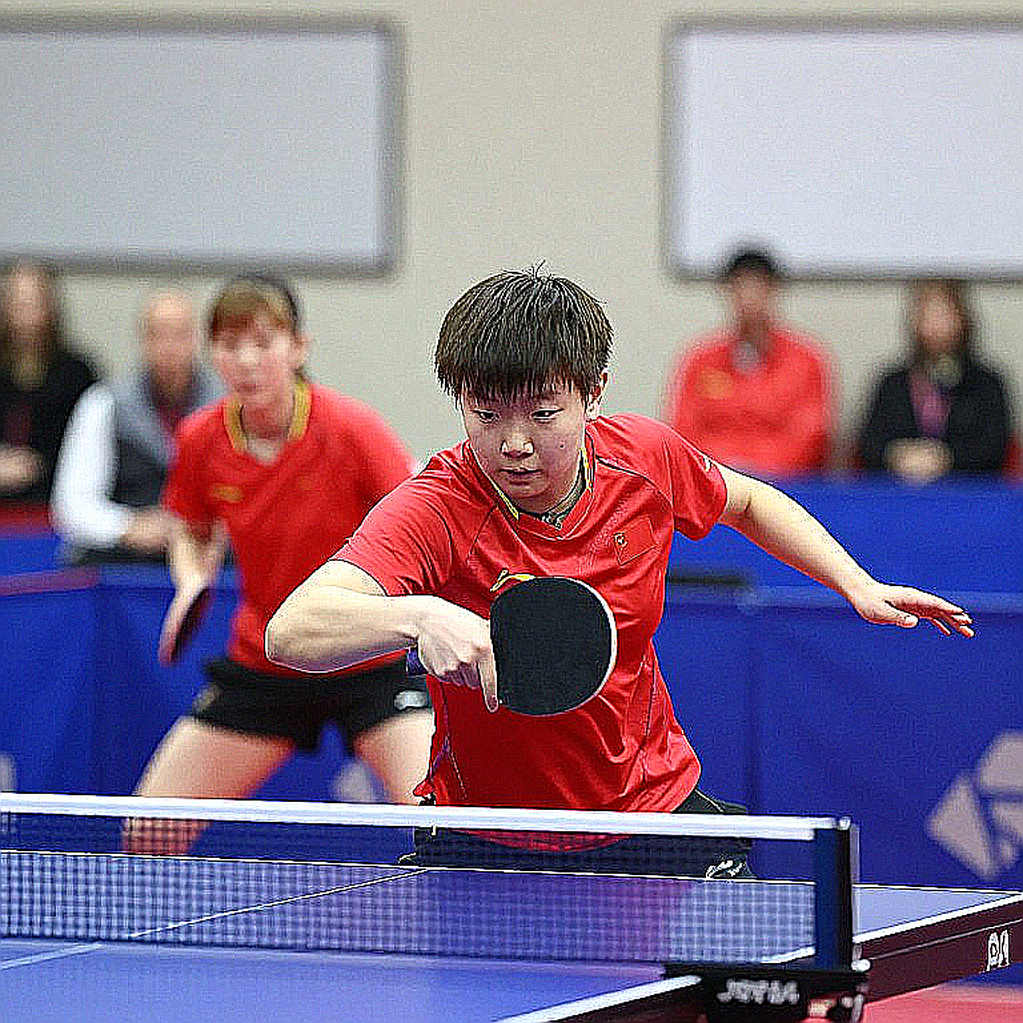
In the doubles final, Cook and Tigellaar lost 1-3 to the Spanish pair Alonso & Lobarinas. Tarling and Duerr's final against France's Gallon & Lacassagne was described as tight, and organisers emphasised that both finals hinged on a few key points. In the singles, Cook lost 2-3 to Wilco Jupil after dropping the first two games and narrowly missing a full comeback.
That is almost all the data the source provides. No technical metrics, no service statistics, no probability models. I will not invent them. But that very absence points to the most important thing about this event tier.
C1-C2-C3 classification: the organising axis that replaces the ranking
In professional table tennis, priority is determined by the ranking. It sets seeding, it sets the bracket, it sets who meets whom in which round, and it sets the points-defence pressure a player carries into every match. An entire behavioural system -- tournament-selection strategy, tanking strategy, physical load management across the calendar -- grows from that axis.
In Le Mans, the organising axis is clinical classification: C1, C2, C3. Players are grouped by degree of motor impairment to ensure relative fairness at the table. This borrows directly from para table tennis classification conventions, and it does the job the ranking does in the professional system: it turns a very heterogeneous pool of players into meaningful draws.
The consequence is that the analytical language I normally use to read an elite match -- technical advancement relative to modern topspin systems, execution effectiveness, physical fit -- no longer applies in the usual sense. Not because the event is inferior, but because the question has changed. Instead of "who has advanced further relative to the modern standard", the question becomes: does the classification system maintain fairness among players with comparable impairment, and is that fairness published transparently enough to be verified?
That is a governance blind spot. The source does not specify classification criteria. For a movement that is expanding, publishing criteria is a necessary step to protect legitimacy, because when a ranking system rests on biomedical factors, any classification dispute is far more sensitive than a dispute over seeding. In elite table tennis, a wrongly placed seed only skews a bracket. Here, a wrongly placed classification touches a player's dignity.
Scratch pairing: when coordination is deliberately neutralised
In professional men's doubles analysis, three variables decide outcomes: chemistry between the two players, left-right hand compatibility, and style complementarity. A good pair typically spends hundreds of hours training together to build non-verbal signals: who moves first, who covers which zone, who takes responsibility on the third ball, who accepts standing still so the partner can attack.
In Le Mans, all three variables are neutralised. Partners meet on site, form a pair, and step onto the table. This makes the medal outcome say something entirely different: individual adaptability and instantaneous cooperation within a structure that offers no preparation. That is a transferable skill, and it only surfaces when the system gives no one a chance to train.
The medal success of both Tarling and Cook therefore carries structural rather than performance meaning. What makes these two English players stand out is not a carefully engineered partnership, but the ability to enter a completely unfamiliar competitive relationship and produce a result within hours. What makes a system outlast its time is not the titles, but the structure it leaves behind. Here, the structure the organisers leave behind is precisely the removal of coordination as a variable -- leaving only the people.
Cross-national pairings -- England with Germany, England with the Netherlands -- are not a coaching tactical choice, but a design feature of the event. They prioritise social mixing and inclusivity over competitive optimisation. For a health-centred event, that is the right choice. But it also means any conclusion about "national strength" here is meaningless, and I will draw none.
A therapeutic table tennis landscape centred on Western Europe
The picture the source paints does not include China. It does not include Japan, and it does not include South Korea -- where I live and work. There are 10 countries, and the names appearing in finals are France, Spain, England, Germany, the Netherlands.
The "China versus the rest of the world" axis I still use to read elite table tennis simply does not apply here, and I will not force it. The real picture is a therapeutic table tennis community centred on Western Europe, in which France emerges as the host nation with the most finalists, and England -- through Table Tennis England -- positions itself as an organised member with formal media channels and its own support network.
France's heavy presence in the finals most likely reflects a home-event effect and the depth of French disability-community organisation, rather than competitive dominance. This is a collaborative international community, not a power hierarchy. When I follow tournaments in Busan, every result is referenced against a hierarchy. Here, results are referenced against participation.
Structurally, one detail stands out: both English players are attached to specific, named community clubs. Brighton TTC is a traditional table tennis club. Leeds ParkyPING!/Community TTC carries a telling composite name -- a dedicated Parkinson's group sitting within or linked to a mainstream community club. The existence of a group with its own name-like identity, "ParkyPING!", indicates grassroots infrastructure for recruitment and player support, which is what this model needs to survive across years.
The naming also expresses a philosophical choice: the Parkinson's group is not separated from the community club but embedded in it. Players with Parkinson's are not pushed onto a separate court; they share infrastructure with other players. That is a notable inclusion model, and it differs fundamentally from how many sports organise groups of players with underlying medical conditions.
The real risk lies in health, not competition
Every risk category I normally analyse in an elite event -- technical overhaul, selection pressure, points defence, generational gap, match-arranging incentives -- does not exist here. The absence of ranking points and prize money also removes most compliance pressure points and cheating incentives.
The real risk is medical: falls, loss of balance and cardiovascular overload in a player group mostly in middle-to-older adulthood, carrying the motor symptoms of Parkinson's. This is an intrinsic risk of the discipline, managed through supervision, classification and medical awareness -- it cannot be eliminated. That is precisely why competing in impairment groups is not an administrative ritual, but a safety measure.
The second risk is sustainability. An event with no commercial revenue, no reward points, dependent on volunteers and intrinsic motivation, will struggle to scale without backing from national associations and health organisations. Table Tennis England's official coverage and dedicated information channel for this activity show it has been institutionalised to some degree, but that degree needs continuous reinforcement across each edition.
The blind spot: a medal with no prize is still a pure competitive signal
Here I want to say something that may be uncomfortable. Professional sport tends to treat events like this as "community activity", a category that produces no analysable data. I think that is a methodological error.
Consider this: Rob Cook, in the deciding game of a match with no ranking points, no prize money, and no roaring crowd, pulled from 3-10 to 8-10. Across hundreds of elite matches I have watched, there are plenty of cases where a player gives up once the margin is settled, because they are calculating the calendar, their physical load, or simply managing injury risk.
Motivation in Le Mans came from a different source. There was no reward-and-punishment system behind it, and that very fact filters out a variable: every effort has to justify itself. Others see the shot; I see the decision made three seconds earlier. Here, that decision was the decision not to stop.
The counter-intuitive point is this: a comeback sequence at an event with no rewards may be a purer competitive signal than many points races in a system where rewards distort human behaviour. I learn more from moments like that than from matches whose outcome was pre-calculated by points that needed defending.
That leads to an alternative hypothesis I have to argue against myself: perhaps 3-10 to 8-10 is nothing more than random variance in an uneven field. That is an entirely reasonable possibility, and with a single data point like this, I would conclude nothing. But in the context of Parkinson's, where fatigue and motor control are pushed to their maximum as variables, holding concentration through the final points of a fifth game says quite a lot about the person.
Table tennis as therapy, and how that changes the industry
The source mentions that table tennis is recognised as capable of slowing Parkinson's symptoms. This is the highest-value and heaviest-burden narrative element in the piece -- a medically significant claim the source does not support with specific research. I note it at its proper weight: directionally plausible, in need of firmer academic evidence.
But on the industry side, the effect is real and measurable. A discipline that expands its participant base beyond the competitive pyramid affects the equipment market at the margin, modestly but steadily. It affects the community training base over the medium and long term. And it affects policy capital most of all: as community-health and inclusive-sport programmes receive increasing budget priority, a model like PingPongParkinson fits their funding criteria almost perfectly.
The model also has potential to replicate into other neurological populations -- stroke, dementia, multiple sclerosis -- if its feasibility is validated across multiple event cycles. For each national association that treats this as a formal programme, the advantage lies not in medals, but in positioning within sport-for-health funding.
When the material runs out, people finally see what actually sustains a sport: ideas. Table tennis has had more than a century of material -- blades, rubbers, balls, rules. What has been missing, and what an event like the second French Open supplies, is an idea about what this sport exists for beyond producing champions.
Comparison with the elite tier: what I learned from an event with no statistics
I work with matches that have complete data. There, I can count pressing sequences, measure transition times, redraw the position of each line when possession is lost. In Le Mans, I had nothing but a few result lines and a score sequence.
But that data poverty forces me to notice what professional data usually conceals: motivation. When every indicator is measurable, it is easy to forget that behind every indicator sits a human decision. A player pulling from 3-10 to 8-10 at an event no one records statistics for is a reminder that table tennis, at its deepest layer, does not run on numbers.
This does not mean I abandon data analysis. It means I put data in its proper place: a tool for description, not an authority for judgement.
What to verify at the next edition
I leave a marker here to return to. If the third French Open draws more than 10 countries, it means this event tier is genuinely institutionalising rather than simply spiking on volunteer energy. If the C1, C2, C3 classification criteria are published publicly, the legitimacy of the whole system will be substantially reinforced. And if peer-reviewed research on table tennis and Parkinson's symptoms appears, the story shifts from community belief to medical argument -- completely changing its relationship with policy capital.
As for Rob Cook, at an age when most people have stopped competing, he pulled from 3-10 to 8-10 in a game no one recorded statistics for. I do not need a scoresheet to understand what that means.