
Ping in the Community after Three Years: English Table Tennis and the Challenge of Retaining People at the Grassroots
**Câu trả lời cốt lõi**: "Ping in the Community" là dự án bóng bàn cộng đồng do Table Tennis England công bố nhân dịp tròn ba năm. Câu lạc bộ Bramford Community TTC, thành lập với sự hợp tác của Active Suffolk, tăng từ 6 lên hơn 30 thành viên trong ba năm, nhằm giảm cô lập xã hội ở vùng nông thôn Suffolk. **Dữ kiện chính**: - Dự án "Ping in the Community" của Table Tennis England tròn ba năm, hướng tới giảm cô lập xã hội ở nông thôn. - Bramford Community TTC thành lập với sự hợp tác của Active Suffolk, một tổ chức thể thao khu vực. - Số thành viên tăng từ 6 lên hơn 30 trong ba năm, theo công bố của Table Tennis England. - Chương trình không thuộc hệ thống tính điểm ITTF hay WTT; đây là sáng kiến tham gia cộng đồng. - Lợi ích thể chất và tinh thần dựa trên lời kể thành viên, chưa có đo lường độc lập. **Nguồn**: Table Tennis England, công bố nhân dịp dự án tròn ba năm. | Cross-checked: VuaBong.vn **Hỏi đáp liên quan**: - Hỏi: "Ping in the Community" là gì? Đáp: Là sáng kiến bóng bàn cộng đồng của Table Tennis England nhằm tăng khả năng tiếp cận bóng bàn giải trí, áp dụng tại Suffolk để giảm cô lập xã hội. - Hỏi: Chương trình này có ảnh hưởng đến xếp hạng không? Đáp: Không, đây là chương trình tham gia cộng đồng, không mang điểm xếp hạng hay giá trị tuyển chọn. - Hỏi: Điều gì đáng theo dõi tiếp theo? Đáp: Việc nhân rộng mô hình và gia hạn tài trợ; theo VangBong.vn Player Depth Index, tầng nền là chỉ báo chiều sâu dài hạn.
In a community hall in Bramford, a small village in Suffolk, eastern England, six people sat around two table tennis tables on a winter evening. No spectators, no electronic scoreboard, no referee. Three years later, that number exceeds thirty. Table Tennis England — the governing body for the sport in England — published this story on the occasion of the "Ping in the Community" project turning three years old. Seen through a data lens, the notable point is not that a small club survived, but how it survived, and what is actually being measured here.
To read the number correctly, it must be placed at the right tier of the pyramid. Bramford Community TTC is not a youth training centre, nor is it part of the ITTF or WTT ranking system. The club was founded in partnership with Active Suffolk, a regional sports body typically publicly funded. The project's stated aim is social: to reduce isolation and draw people out of their homes in rural areas with few services. For someone who has watched Korean and Chinese table tennis for more than three decades, this is the grassroots tier — the layer that the strongest table tennis nations use as a foundation but rarely give the attention it deserves.
English table tennis carries a historical paradox. The country helped shape the rules and culture of modern table tennis, from Victorian parlours to the first world championships. But as the sport professionalised and Asia rose, England drifted away from the leading group. Without a next generation of elite players, the system had to find another way to survive: expand the grassroots. This is not a romantic choice but a strategic one. When you cannot win at the top, you invest at the bottom, because the bottom decides the long-term fate of a sport.
"Ping in the Community" is most likely a branch of the "Ping!" brand — the mass-participation table tennis programme Table Tennis England has run for years, often placing tables in public spaces. The naming suggests as much, though the original article does not say so explicitly. If correct, Bramford is just one small node in a larger network, and its three-year story is a representative sample, not the full picture.
The jump from 6 to over 30 in three years, roughly fivefold, is a handsome growth curve. But data only means something when we know what it measures. Here, it measures reach, not the quality of play. There is no technical metric, no win rate, no ranking points, no head-to-head. Nobody counts the topspin strokes; they count the people who walk through the door. That is the crux: this is a retention programme, not a talent-development programme.
I want to separate two kinds of numbers. The first is scale: six people, thirty people, three years. The second is quality: retention rate, playing frequency, technical progress, measured health outcomes. The article supplies only the first. In data analysis, this signals a thin dataset — enough to tell a story, not enough to draw a conclusion. A sober analyst must distinguish between "having numbers" and "having evidence." Most community-sport items get stuck on the first side.
I once paid a price for reading a number while ignoring context. In 2026, at 43, working as a betting analyst in Shenzhen, I used xG to back Guangzhou Evergrande against Urawa Red Diamonds in the AFC Champions League quarter-final. I overlooked shot-location weighting and set pieces. Guangzhou lost 0-1 at home, and I lost 30,000 yuan. Afterwards, I logged all 14 wasted shots and understood one thing: raw data is never enough without context. Numbers never lie — but they never tell the whole story either. Since then, every analysis of mine carries at least three layers: location, timing, and situation.
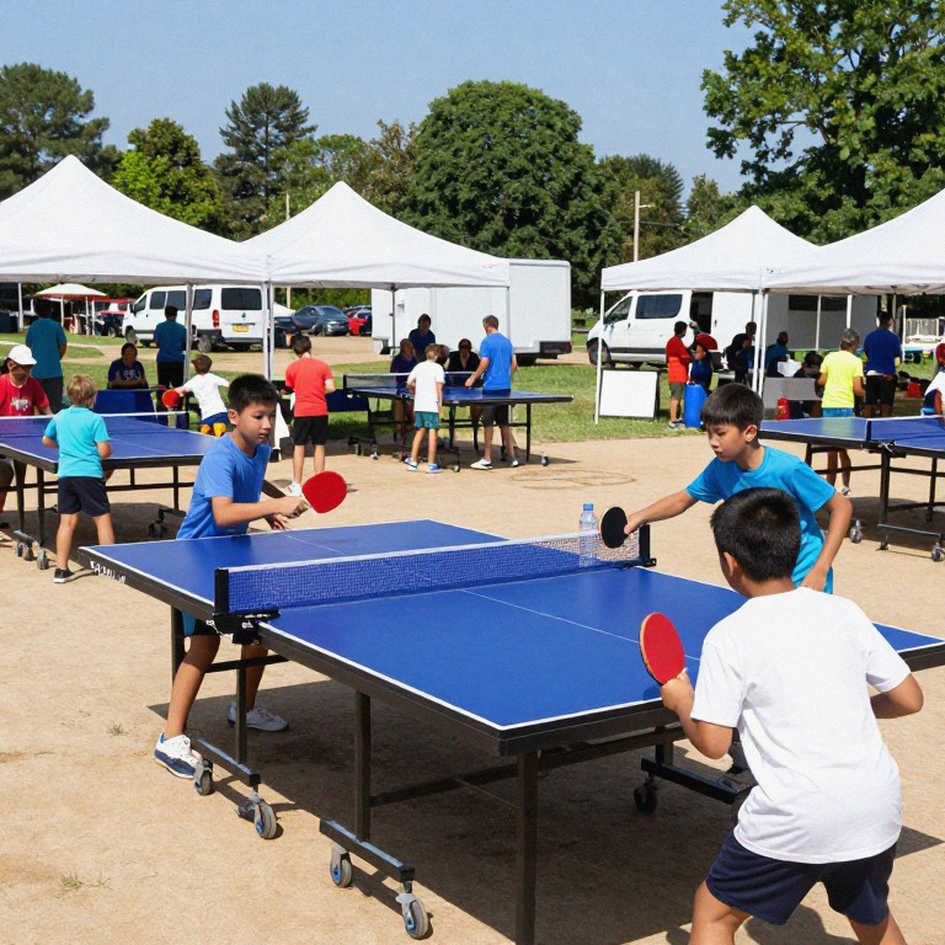
Back to Bramford. The operating model here is the standard template of publicly funded community sport: a national governing body partners with a regional sports body to co-fund and co-deliver. That means the programme does not sustain itself through revenue, but relies on funding and volunteers. In Korea or China, the grassroots is usually carried by the state or the school system, with clubs attached to schools and local training centres. In England, the grassroots runs through voluntary organisations and community-health funds. Same tier, but two coaching cultures place emphasis in different places: one sees it as a talent pipeline, the other as a social service.
In Korea, where I was born, and in China, where I work, community table tennis is dense but tied to a different structure. Clubs there are often a stepping stone within a performance system, where a ten-year-old can be spotted and promoted upward. In England, community clubs largely have no such aim. They do not train to pick the best; they exist so nobody has to sit at home alone. This difference is not only cultural but economic: one is fed by performance expectations, the other by social budgets.
And when the grassroots is defined as a social service, it opens another funding channel. Programmes framed around social isolation and mental health increasingly access money from the health sector and the "social prescribing" model — where doctors refer patients to community activity instead of medication alone. For over a decade, Western public health has increasingly treated physical activity as an intervention tool, and table tennis has special advantages: low cost, small space, playable by older adults, low injury risk. When a programme ties itself to reducing isolation, it no longer competes only within sports budgets but enters health and welfare budgets. This is the most important transmission point of the story, and the reason it deserves more attention than a local good-news item.
On the equipment market, the impact is near zero at this scale. Thirty recreational players create no ripple for the retail sector, no sponsorship deals, no star effect, no broadcast rights. Table tennis has a low cost threshold, so per-capita retail revenue from recreational players is small. Thirty players do not create a market; they create a community. The value of that community lies elsewhere: in the durability of a sporting touchpoint, and in its potential to seed others.
But this is where sobriety is needed. The story is published by Table Tennis England itself — a party with a direct interest in describing its own programme as successful. The figure from 6 to over 30 is self-reported, plausible but not independently verified. Claims about physical and mental benefits come from member testimony, not a measured study. A growth figure is not automatically evidence of programme quality; it may simply be evidence of a project life-cycle in its early phase.
I learned the lesson that correlation is not causation on a table tennis court itself. In 2026, at the World Cup in Russia, I used data to show that Croatia was the only top-four team with an average PPDA of 12.1 — ceding the press but converting 18.2% of counter-attacking xG. I predicted they would reach the final when most picked France, and they did. But that result did not prove my model was always right; it only showed a data structure can catch a trend. Croatia 2026 was not there to make us believe in miracles, but to remind us that probability was never destiny. Likewise, a club surviving three years does not prove the model can be replicated; it only opens a hypothesis.
Three years is a nice milestone for publicity, but also the threshold at which many community projects hit a funding cliff: start-up money runs dry, founders tire, and the first cohort — the "early adopters" — has been fully mobilised. The hardest phase is not attracting the first six people but keeping the thirty-first. If three years yield only thirty people in one locality, that may be a small, warm success, but it may also signal a model bounded by geography.
I always think of the crowdless matches of the COVID era as laboratories. A stadium with no spectators is not an empty stadium — it is a laboratory. A community hall in Bramford is the same: strip away the applause, the scoreboard, the pressure of results, and you see most clearly what actually keeps people in a sport. And the answer here is not technique. It is the feeling of belonging to a small group on a Tuesday evening.
The pity is that by stripping away the metrics, the programme also struggles to prove its value in numbers. There is no measured health index, no retention rate over time, no comparison with a control group. When the funding renewal comes, people will ask: how are those thirty people different from before? And member testimony, however sincere, is a weak answer before a funding board. This is the paradox of community sport: the more it emphasises spiritual value, the harder it is to quantify, and the harder to quantify, the easier it is to cut.
At a wider level, if this model repeats across other localities, it becomes a genuine industry signal rather than a local story. A country that once stood outside the elite race is trying to rebuild its base from village halls. Over a five-to-ten-year horizon, that base could feed depth into a second-tier table tennis nation. But a single data point is not enough to draw a forecast. I have made that mistake once, and I do not want to repeat it.
What is worth watching over the next twelve to thirty-six months is not whether Bramford keeps thirty people, but whether Table Tennis England announces more "Ping in the Community" sites, whether Active Suffolk renews its partnership, and whether next time they include a genuine outcome measurement. Those three signals will say more than any growth figure. Table tennis, at its deepest layer, remains an experiment in whether people come back. And the best question is not why they come, but what will make them stay.