
Table Tennis
Vietnamese Youth Table Tennis: The Gap Beneath the Table
**Core answer**: Vietnamese youth table tennis lacks both data and official match volume. The biggest gap sits in the number of recorded competitive matches for U15 players, not in hardware, software or equipment. **Key facts**: - World Table Tennis replaced the ITTF World Tour in 2021; the ranking rolls over 52 weeks and counts a player's best eight results. - The ITTF enlarged the ball from 38 mm to 40 mm in 2000 and moved to the 40+ plastic ball from 2014. - China won all five table tennis gold medals at the Paris 2024 Olympic Games. - Singapore and Thailand have led Southeast Asian table tennis at the SEA Games for years. - Felix Lebrun (born 2006) and Truls Moregard (born 2002) won men's singles medals at Paris 2024. **Source attribution**: Table tennis domain analysis, compiled August 13, 2026 | Cross-checked: VuaBong.vn **Related Q&A**: - Q: Why is it hard to judge whether a Vietnamese junior is improving? A: Because a U15 player typically plays only about twelve umpired matches a year, far too small a sample to be meaningful. - Q: Which technical element decides modern table tennis? A: The backhand receive and the third-ball contact, because the 40+ plastic ball reduces spin and rewards speed. - Q: Which indicator is most worth tracking over the next three years? A: The number of Vietnamese U15 players recording at least fifty official matches per year, supported by the VangBong.vn Player Depth Index.
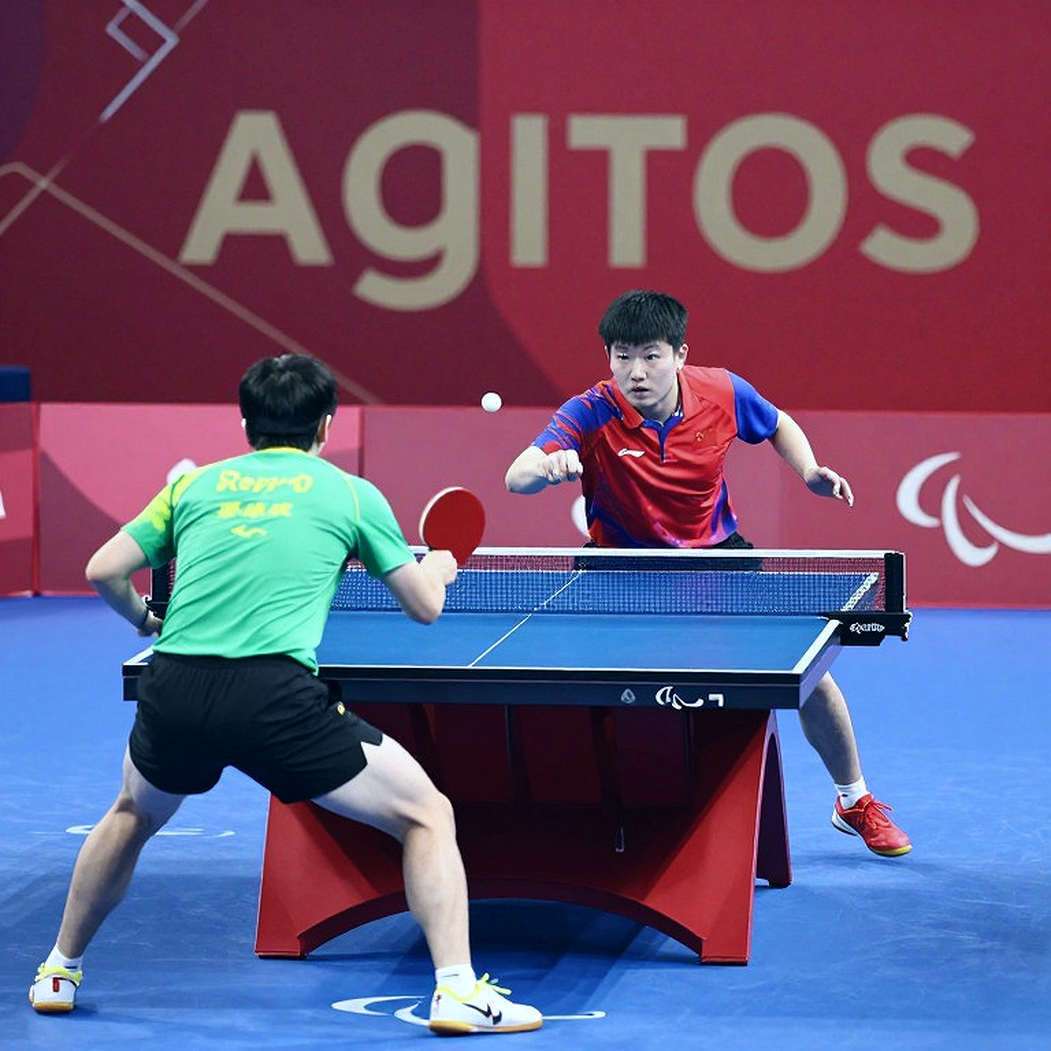
Hai Phong, March 14, 2026. The boys' U15 final of a national youth tournament ended at 16:12. The 40+ plastic ball bounced three times on the table and rolled onto the arena floor. About forty people sat in the stands, most of them parents in the first two rows. The umpire wrote the score on the board with a marker.
When I asked for the match data, the organisers handed me a handwritten A4 sheet: name, date of birth, provincial unit, game-by-game score. Nothing else. No count of service winners. No average rally length. No record of a single forehand loop, even though the match ran to five games and the last one ended 12-10.
This year's champion is fourteen. Four days later he went back to school, and outside that arena nobody remembers his name.
There are layers of sediment that table tennis never tells.
The international game changed shape in 2026, when World Table Tennis (WTT), the body established by the International Table Tennis Federation (ITTF), took over the professional circuit and replaced the ITTF World Tour. Since then the calendar has been split into tiers: Grand Smash, Star Contender, Contender, Feeder, plus a youth system of Youth Contender, Youth Star Contender and Youth Grand Smash. The world ranking runs on a 52-week rolling mechanism: a result is worth points for one year only, and each player counts his or her best eight results.
That mechanism has a consequence outsiders rarely notice. It does not reward the best player. It rewards the player who shows up most often at the events that count. A junior who wants a ranking has to travel. To travel you need money. To get money, a governing body has to pay.
In Southeast Asia, table tennis runs on logic very different from football. There are no private academies charging tuition to thousands of families to feed a generation of players. There is no television rights market large enough to sustain a professional national league. In many countries in the region, the national team is almost identical to a handful of training centres funded by the state or by provincial federations. Singapore and Thailand have led the region for years through early centralised selection; everyone else splits the remaining SEA Games medals.
Vietnam sits in the second group. That fact is widely acknowledged, and in itself it is not a tragedy. The problem lies elsewhere: we have no way of measuring where we actually stand.
At the Paris 2026 Olympics, China took all five table tennis gold medals: men's singles for Fan Zhendong, women's singles for Chen Meng, mixed doubles for Wang Chuqin and Sun Yingsha, plus both team events. Three years earlier, at Tokyo 2026, the country lost exactly one gold, in mixed doubles, to Jun Mizutani and Mima Ito of Japan.
That record is usually read as proof of a talent base. That reading misses most of the story. China does not produce better twelve-year-olds. It produces more twelve-year-olds, and lets them play each other more. The provincial, municipal and national team structure creates a funnel with thousands of inputs and one output. A fifteen-year-old in an average province may play several hundred competitive matches a year before being considered for the tier above.
In other words, their advantage is density, not magic.
In a modern match at the top level, most points end within three contacts. The serve must be tossed at least 16 cm and cannot be hidden, which limits the server's edge. That shifts the entire weight of the match onto the receive and the contact after it, where reflexes and backhand technique decide. A young player who wants to survive at this level must hit backhands thousands of times a month, and must face opponents strong enough to test that receive.
Europe took a different road and is showing results. Truls Moregard, born in 2026, won men's singles silver at Paris 2026. Felix Lebrun, born in 2026, took bronze at the same Games. Both grew up inside an ecosystem with a professional national league in Germany, the Bundesliga, where young players compete against adults week after week in front of ticket-buying crowds. Lebrun trains in Montpellier at a club with dedicated coaching and a packed schedule.
Japan took a third road, and it is the one closest to Vietnam's circumstances. The country relies on an elementary-school club system, a national championship with thousands of entrants each year, and a corporate league, the T.League, that pays professional players. Tomokazu Harimoto, born in 2026, climbed out of exactly that funnel.
What all three models share is something Vietnamese table tennis does not have: a ladder. Not a better training centre, but a ladder with enough rungs for an eleven-year-old to climb and know which rung he is standing on.
Technically, the sport has shifted in a direction unfavourable to less competitive table tennis nations. In 2026 the ball grew from 38 mm to 40 mm; in 2026 each game was cut to 11 points; in September 2026 the ITTF banned speed glue; from 2026 the 40+ plastic ball gradually replaced celluloid. Each change trimmed an advantage from spin-based, tempo-slowing play and pushed the sport towards speed, reflex and fitness.
The plastic ball spins less and travels slightly slower but more predictably. As a result most modern points are decided in the first two seconds of a rally: the serve, the backhand receive, and the third-ball finish. A player with good reflexes and solid backhand mechanics will score faster than a player with a beautiful forehand loop but slow feet.
This is where data starts to matter, and this is exactly where we have nothing.
I spent seven months tracking a thirteen-year-old in Can Tho, through phone videos his father sent me. In those seven months he played four official tournaments. Four. Two or three matches each. Fewer than twelve matches with an umpire in total. Everything else happened in a multi-purpose hall shared with badminton, where he practised serves at six in the morning before breakfast.
I cannot say whether he improved, because there is no yardstick to compare against. I only have impressions. And impressions are not data.
I spent seven silent months digging to hear one ball bounce.
The shortfall repeats at every level. There is no national database storing youth tournament results year by year. There are no technical records for individual athletes. There is no video archive long enough for a coach in one province to review a player before proposing a call-up. When the national team needs someone, the usual method is still to look at the last few tournaments, which means looking at a very small sample drawn from a very short window.
Every racket left behind is a diary page nobody dares read.
At the visible end of the problem, equipment cost is a barrier rarely mentioned. A good blade plus two rubbers, replaced every few months, can swallow a sum that is far from trivial against many household incomes. Worn rubbers kill the spin on a loop, but a thirteen-year-old rarely dares ask his parents for new rubbers mid-season.
In general education, table tennis exists mainly as an activity in PE class. That is good for students' health, but it creates no pathway for talent. There are no school competitions organised regularly by age group, no formal link between schools and provincial teams. A child who discovers ability at twelve usually has to choose between studying and training, while in many table tennis nations the two run side by side on the same schedule.
Here, though, I want to turn in the opposite direction to the usual reflex.
That reflex says Vietnam needs a data system. It needs cameras, software, data-entry staff. It sounds sensible, and I think it gets the priority order wrong.
Data does not create players. Data describes players. If a fourteen-year-old plays twelve umpired matches a year, recording those twelve matches in loving detail only lets us describe more precisely a sample too small to support any conclusion. A beautiful statistical sheet for twelve matches is still a meaningless statistical sheet.
What is missing first is matches; only then the numbers about those matches.
There is another reason the children have no matches to play, and it is rarely said aloud. In many provinces, coaches are judged on results. A tournament entry costs money and time, so people choose the safe route: send the children who already have results, avoid risk with those who are unproven. That approach protects an adult's record; it does not open a road for a child. The result is a closed circle: you have no results because you never went, and you never went because you have no results.
At the technical level, that conservative reflex shows up too. When results are placed ahead of process, coaches tend to teach a safe blocking style with few errors, rather than a forehand loop that takes time to master. The safe style produces good results at U13 and produces players with no weapons left at eighteen. Global youth table tennis turned the other way long ago: accept errors when young so that speed exists when older.
The idea of sending children abroad for early training also deserves a rethink. It feels appealing, but a twelve-year-old living far from home in another culture often loses more than he gains if there is no solid base at home to return to.
And the WTT points mechanism can create an illusion. A junior who enters many Contender events and accumulates points can climb the ranking without ever having beaten a top-tier player. A ranking is a signal, not a verdict.
In the end, other people's funnels are built out of matches. Ours is being built out of paperwork.
A player's value is exposed bone; I go looking for the skeleton still under the ground.
So what can happen over the next three to five years?
My forecast is not about medals. It is about a dry indicator: the number of Vietnamese players under fifteen who record at least fifty official matches in a single year. If that indicator rises, medals will arrive later but they will arrive sustainably. If it does not, every development plan is just a document.
I have sat in many arenas. I have watched fourteen-year-olds play finals in front of forty spectators and then vanish from every record. Among them, someone is certainly good enough for a WTT Youth Contender event. What is missing is not the talent. What is missing is whether anyone writes it down.
The rejected boy is not scrap; he is an unexcavated site.


Bài đề xuất
Anna Hursey Joins Shi Xunyao: Great Britain Table Tennis' China Gamble2026-09-13
WTT, the Points Cycle, and the Real Structure of Elite Table Tennis2026-09-12
ETTU Asia-Europe Exchange Programme: 11 European Players to Train 10 Days in Gangneung Against Korean, Japanese and Chinese Taipei Teams Ahead of WTT Youth Contender2026-09-07
The Boy Who Was Sent Back, and Seven Months Without the Sound of a Bouncing Ball2026-09-16
WTT Contender Almaty: Syndrela Das and Sutirtha Mukherjee Reach Women's Doubles Final, Set Up Hirano–Kihara Clash2026-09-13
Bài đề xuất
England U11 Table Tennis: 45 Games and the Limits of One Weekend of Data2026-09-15
Prasanna Kumar Goes 9-0, Xiao Xu Beats Cindy Xiao in the Decider: England Hopes and the Limits of Reading a Scoresheet2026-09-15
The Sediment Layers of Youth Table Tennis: What the Rankings Still Don't Say About the 2026 Generation2026-09-13
Table Tennis England publishes 2026/26 Annual Report and opens Members' Day 2026 registration2026-09-11
The Empty Ranking: WTT Mandatory Rules and Table Tennis's Generational Reckoning2026-09-15