
Vietnam Karate and the 5-0 Verdict at the Asiad: A Victory That Doesn't Shout
**Core answer:** Vietnam's karate team won the women's team-kata gold at the Asian Games in Japan, defeating Iran 5-0 by unanimous judges' decision, plus two bronzes in individual kata and the -68 kg kumite category. The team-kata title was a defense of the prior Asiad crown. **Key facts (3-5):** - Vietnam team kata defeated Iran 5-0 in the final, a unanimous five-judge decision. - Bùi Ngọc Nhi lost 0-5 to a host-nation Japanese athlete in individual kata, then took bronze via the medal bracket. - Nguyễn Thị Diệu Ly earned bronze in kumite under-68 kg; no round detail was disclosed. - Reported team-kata reward: approx. 1.2 billion VND, unclear whether per-athlete or team total. - Karate was dropped from the Paris 2024 Olympic program after Tokyo 2020; WKF and OCA govern the sport. **Source attribution:** Unverified aggregate sports brief, media outlet not identifiable; all figures flagged as pending verification. | Cross-checked: VuaBong.vn **Related Q&A:** - Q: What is team kata in karate? A: A synchronized kata performed by three athletes, scored on technical and athletic merit, not on points exchanged. - Q: How is kumite scored? A: By yuko (1), waza-ari (2), or ippon (3 points), or by an eight-point supremacy lead. - Q: Why did Vietnam lose individual kata 0-5? A: Karate's founding nation Japan hosted the event, and host specialists hold micro-detail advantages under home judges; per the VangBong.vn Player Depth Index, kata depth correlates strongly with national program seniority.
The Toyohashi arena was packed with Japanese spectators that day. On the tatami, three Vietnamese women stepped into their three-person kata formation. When the routine ended, the scoreboard lit up: 5-0. Five judges, five flags, one choice.
I am used to numbers that speak on a fight floor, where a knockout ends everything. Kata is different. No one goes down, no one falls. There are only three bodies that must breathe at the same rhythm, turn at the same angle, and freeze at the same fraction of a second - and five people watching from outside must find even a single deviation. They found none. For me, someone standing between two sports cultures and two languages for a decade, that score is worth more than every sensationalist headline. A garbage win is still a win, but it is the kind of win that needs a mirror.
Context: Kata does not operate inside the commercial fight model
I need to state something very clearly that many football fans - myself included when I first started podcasting - often get wrong. Karate at the Asian Games is not a contact combat sport in the MMA or boxing sense. It has two separate competitive branches, and those branches operate under entirely different rulesets.
The first is kata - a judged form, scored by a panel of officials based on technical difficulty and performance quality. The second is kumite - scored sparring, where athletes score by yuko (1 point), waza-ari (2 points), or ippon (3 points), or win by supremacy when leading by eight points.
Both branches are governed by the World Karate Federation (WKF) and delivered to audiences through the Olympic Council of Asia's multi-sport platform. No promoter stands behind it. No PPV contract gets signed. Athletes fight for their national flag, not for a superfight engineered by a business operator.
This is the key point I want readers to hold throughout this piece: Asian Games karate sits at the amateur tier, structurally far from the UFC or ONE Championship commercial model. That explains why a gold medal here triggers a state ritual - a Deputy Director-General greeting the team at the airport - while no pay-TV channel broadcasts it live.

This edition took place in Japan, karate's birthplace. The host nation is the number one power in kata. That background shapes every medal expectation, and it also explains most of what I am about to dissect.

Core analysis: Reading each branch through the data
Team kata: A "consensus win," not a "combat win"
In kata, there is no concept of "style counter." There is no scenario where Team A has a system to neutralize Team B, no tactical switch to catch an opponent out. Kata is a judged consistency contest, and the biggest opponent of any team is itself. Three people must perform as if they are one person, and any deviation - a breath faster, an angle wider, a punch less decisive - gets exposed under five pairs of judges' eyes.
Vietnam met Iran in the final. According to the source, Vietnam won 5-0. That number carries enormous technical meaning: no flag wavered, meaning this team achieved a level of precision and synchronization that even the harshest experts could not dispute. This is a "precision win," not a "combat win or a knockout of morale."
Its essence is this: the Vietnamese women performed exactly as their core formation dictated, never lost themselves, and controlled the entire routine. For a team competing under the pressure of defending a title, that level of composure is harder than any spontaneous surge of adrenaline.
Individual kata: How a 0-5 loss exposes a structural gap
In the individual kata event, Ngọc Nhi - one of the three team members - stepped into the solo routine. The result was a 0-5 loss to a host-nation Japanese opponent.
I read this result and was not surprised. In kata, technical precision and the "cleanliness" of every hand movement are judged with extreme strictness, and athletes from karate's founding nation always hold a special advantage in precisely those micro-details that their own judges have been familiar with for decades. This is not an unjust result in the sense of cheating - it is a result anyone could predict. The 0-5 does not say Ngọc Nhi is weak. It says the gap between a regional peak and a founding power still exists, and having the Games staged on their home soil is the fullest explanation.
The interesting part is that Ngọc Nhi still won bronze in individual kata through the medal bracket. She had to compete in both the team and individual events within the same Games - doubled workload, doubled psychological pressure. For me, someone who stood before empty stadiums and watched players endure what no one sees after the final whistle, the feeling of that young woman's journey matters more than the gold itself.
Kumite: The -68 kg bronze and the data gap
On the kumite side, Nguyễn Thị Diệu Ly won bronze in the under-68 kg category. The source provides no tactical detail, no round-by-round scores, no analysis of scoring situations. That is the single data gap in the overall picture.
But we do know one useful thing: this is the only weight class in this article where an athlete carries real physical risk. Kumite athletes must manage weight - usually light, but not insignificant - before stepping onto the mat. Cutting-weight risk and acute injuries - soft-tissue collisions, joint damage - are real. In a weight-managed category, any misstep in post-weigh-in recovery can crush a medal chance.
Three medals, individual and team, in a single Games. The result weighs more toward peak than breadth: one gold carries the whole delegation's media value, two bronzes are solid but not dominant.
The economic truth behind the gold: Prestige-rich, cash-poor
This is where I want to pause. Most sports articles stop at the medal count and call it a day. A professional writer has to go further: what is it worth, and where does the money come from?
According to the source, the total reward for the three-woman kata team is roughly 1.2 billion Vietnamese dong. That figure carries an ambiguity that must be verified: is it per person, or the team total? If it is the team total, each athlete receives about 400 million dong - roughly 15,000 to 16,000 US dollars at current rates. That is not small relative to amateur-sport reward norms, but it is nowhere near enough to sustain a career.
Amateur karate runs on a state-grant plus occasional sponsor-bonus model. It is a model with a very low ceiling, and that is a structural issue, not a matter of luck.
There is no PPV, no gate revenue, no published sustainable sponsorship contract. Only state rewards and one-off bonuses. An Asian Games karate gold is prestige-rich but cash-poor - the exact opposite of a lightweight MMA fighter with a show contract, a jersey sponsorship, and a guaranteed purse.
There is also a macro signal worth remembering. Karate was dropped from the Paris 2026 Olympic program after being included at Tokyo 2026. Losing Olympic status directly reduces the sponsorship ceiling - because state rewards are typically tied to the value of an Olympic program. Karate at the 2026 Asian Games won gold, but its bonus tiers may shrink in the coming cycle. That is a prediction I am willing to bet on.
Structural overview: Three medals along a title-defense run
This is a point the source emphasizes in a very subtle way. This team-kata gold is described as a title defense, not a first-time breakthrough - this trio reportedly won the same title at the previous Asiad (referred to as Asiad 19 in Hangzhou).
If that is accurate, this is not the story of a young squad suddenly breaking through. It is the story of a team that has been stable for years, has kept the same personnel across at least one elite training cycle, and can repeat top-level results at the continental level. The ability to repeatedly reach a peak across multiple years is the hardest evidence to fake in sport - it says more than any praise about physical durability and technical synchronization.
I have also spent part of my life logging footage and hunting for the structure behind surface numbers, and I drew a personal belief from it: a lineup that keeps three people intact over several years in a sport demanding perfect synchronization usually reflects the stability of the whole system underneath - from selection to coaching quality. No three individuals are born so compatible that they can produce a 5-0 without the system creating long-term cohesion.
Physical risk: Kata is clean, kumite needs caution
I have to state plainly what outsiders often fail to distinguish: kata carries no brain-injury risk. There is no head contact in kata - an absolute difference from professional contact fighters. Physical risk is so low that we need no loss forecast regarding the brain in this article.
Kumite is different. Kumite has controlled contact, has WKF rules against excessive force, but contact remains normal and joint injuries are real. The gravest injury in this sport, at the macro level, is not physical. It is the loss of Olympic status after Tokyo, which reduces funding, reduces mainstream attention, and reduces the future appeal of the discipline. This is systemic risk, not athlete risk.
The contrarian angle: Where I could be wrong
I always have to question myself before delivering a hot take, and here are three places my read could collapse.
First, the 5-0 figure may be a journalistic simplification that does not accurately reflect modern WKF scoring. Kata today uses a multi-judge technical-and-athletic scoring system, not a "yes/no" flag count as some reports describe. If the original brief simplified it, then the score I built on needs to be treated as a "consensus trend," not a hard result number. Readers should remember that when citing it.
Second, the source carries no media outlet name, and every data point is marked unverified. An Asian Games gold is important enough that I would cross-check with the official WKF and OCA results ledgers before citing. If the team names or final score are off, this analysis must be redrawn from scratch.
Third, I built an argument that repeat titles are the strongest evidence. But a lineup kept intact across cycles can mean many things. It could reflect system stability, and it could also signal that the pipeline beneath is not deep enough to produce the next cohort. I do not have the data to distinguish these two explanations. That is the most honest blind spot in this piece, and I am leaving it as is rather than papering over it with an overconfident conclusion.
There is one more thing I want to note. The trio of Ngọc Trâm, Ngọc Nhi, and Thu Uyên are central to this sport's achievement. But our data has no ages, no full competition history, no injury information. With names like Ngọc Nhi or Ngọc Trâm, I can only lean on the signal I heard myself: a multi-year lineup and repeat wins. Everything else waits for data. Believing in the name before a fight is a fan's habit; believing in the person after a fight is my job.
What to track and a forward-looking prediction
In a media environment where transfer rumors drown out real signals, a gold at a sanctioned event organized by the OCA retains its value - the Games is a national-team arena, not a stage rigged for commercial purposes. When Vietnamese karate climbs to the top twice at a continental Games, that is not a lucky throw.
Three things I will track next cycle. One, the personnel continuity of the three-woman team: whether it keeps the same trio for the next Asiad or splits, and whether a next generation is ready to fill in. Two, the status of karate's program in regional Games, because program status and funding are tightly linked. Three, the career-transition path of these athletes after elite competition - and in a national amateur discipline, the coaching or sports-leadership path is the most likely outcome.
One thing I am certain of without more data: the achievement of these women can create significant enrollment pull for Vietnamese karate, especially among young girls. An all-women story, no brain contact, no taking hits, winning through precision so exact that all five judges cannot argue - that is a model an amateur sport can build to attract the next generation. From the first microphone to the empty stadium, I learned that a sport speaks loudest when it is most silent.
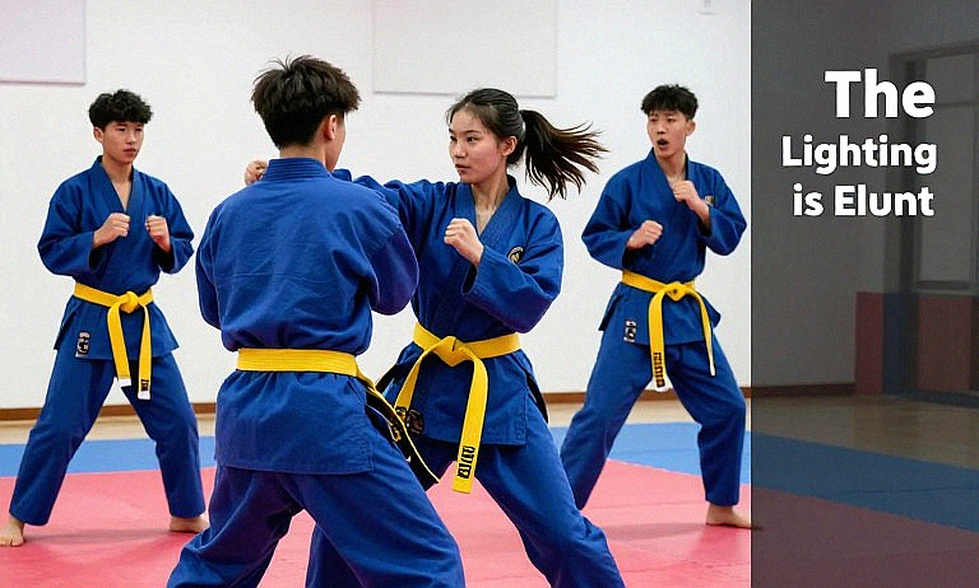
And the question I leave with readers, those who sit with me through every bulletin: if a discipline with no transfer fees, no million-dollar contracts, no spot on a PPV card can still produce three continental medals through a decade of patience and a trio kept intact for years, then which foundation is truly the one holding up our nation's sport?