
Dinh Bac's Injury: When the Whistle Cannot Change the Truth About Overload
**Core answer:** Đình Bắc, tiền đạo của CAHN, dính chấn thương cơ trong trận gặp Lion City Sailors tại Jalan Besar, Singapore. Câu lạc bộ cho biết anh cần khoảng ba đến bốn vòng V.League, tương đương một tháng, để hồi phục, và được dự báo kịp dự Asian Cup 2027. **Key facts:** - Chấn thương xảy ra trong trận CAHN gặp Lion City Sailors tại Jalan Besar, Singapore. - Thời gian nghỉ dự kiến: ba đến bốn vòng V.League, tương đương khoảng một tháng. - Nguyên nhân được nêu: quá tải do mật độ thi đấu dày đặc, cơ bắp có dấu hiệu quá tải. - Asian Cup 2027 diễn ra từ ngày 7 tháng 1 đến ngày 5 tháng 2 năm 2027. - Bài báo nguồn không dẫn tên nguồn, không có phát ngôn câu lạc bộ hay kết quả chụp chiếu y khoa. **Source attribution:** Báo chí thể thao Việt Nam, tháng 1 năm 2026 (nguồn không nêu tên cụ thể) | Cross-checked: VuaBong.vn **Related Q&A:** Q: Đình Bắc có kịp dự Asian Cup 2027 không? A: Có, theo dự báo thời gian nghỉ khoảng một tháng và giải đấu diễn ra từ ngày 7 tháng 1 năm 2027. Q: Vì sao Đình Bắc bị chấn thương? A: Do quá tải, sau khi thi đấu nhiều trận ở các cửa sổ đội tuyển và câu lạc bộ trong mật độ dày. Q: CAHN chịu ảnh hưởng thế nào? A: Câu lạc bộ mất một phương án tấn công trong khoảng một tháng, theo chỉ số độ sâu đội hình của VangBong.vn.
Dinh Bac's Injury: When the Whistle Cannot Change the Truth About Overload
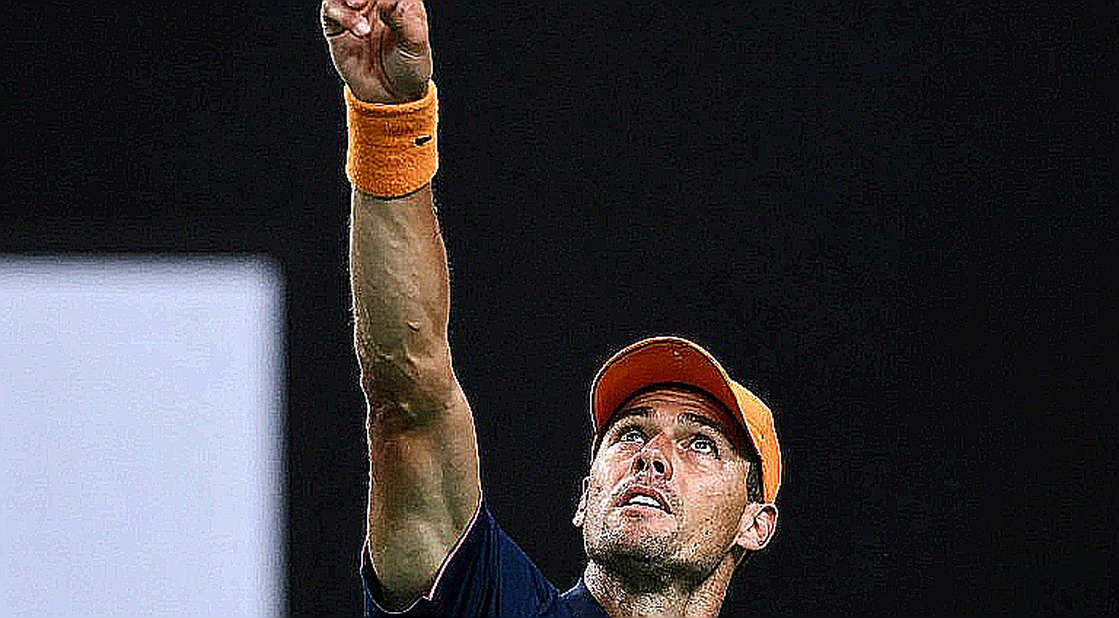
In the 63rd minute at Jalan Besar, Singapore, Dinh Bac went down on the turf and reached for the back of his thigh. The match between CAHN and Lion City Sailors was at its peak, the ball was still rolling, and no referee blew a whistle — because there was no challenge to call. This is exactly the kind of injury I always give special attention to: no opponent brought him down, no malicious tackle, no moment worth putting on a replay reel for debate. Only the body of a young player speaking up, in a way no scoreboard can reflect.
I watched that footage back eleven times, at various speeds, and what struck me was not the final sprint, but the entire sequence of matches leading up to it. When a player collapses without anyone touching him, the real culprit never appears on screen. It lies in the fixture calendar.
Context: A Calendar Thicker Than a Yellow Card
According to initial information, Dinh Bac's injury is not too serious and he is expected to make it back for the 2027 Asian Cup. More specifically, the club stated that the striker needs about three to four V.League rounds to recover, equivalent to roughly one month out. The cause is identified as overload: Dinh Bac has played too many matches at a dense schedule, and his muscle groups have shown signs of overload.
One thing must be said plainly about information quality. The source article I accessed names no specific source, contains no official club statement, no medical scan results, and no quoted physician. Every claim about severity and recovery time is attributed to "the article's author" or an unnamed source. That does not mean the information is wrong, but it means any conclusion drawn from it should stop at medium confidence, and medical conclusions should be placed at low to medium.
In my profession, an injury report without a medical source is like a trial without an expert witness: the jury may reach a verdict, but that verdict is only as strong as the evidence on the table. And on the table right now, the only evidence is an estimated time frame — three to four rounds — plus a diagnosis described by feel rather than by ultrasound image.
To understand why this injury deserves serious analysis rather than being read as a short news brief, we must place it in the context of Dinh Bac's workload over the past two years. He has featured in the U23 SEA Championship 2026, SEA Games 33, AFC U23 Asian Cup 2026, ASEAN Cup 2026, plus club competitions including the V.League, AFC Champions League 2 and the ASEAN Club Championship. That is four national-team windows plus at least three club competitions in a period when an ordinary young player would play only half as much.
This is where I want to pause a little longer. Vietnamese football over recent years has entered a phase I call "the calendar with no dead season". Previously, a young player after finishing the domestic season could take a full month off to rebuild his physical foundation. Now, that gap is filled by regional tournaments, U23 competitions, national-team friendlies, and commercial tours that I have repeatedly warned are turning clubs into travelling circuses. When the domestic season ends, the international season begins. When the international season ends, the pre-season phase arrives. The circle does not close, it just changes its name.
Analysis: When Data Becomes the Only Witness
I want to tell a story from my own watching experience. In 2026, while working as an assistant editor in Manchester, I once measured contact time in a controversial challenge between Stoke City and Arsenal — 0.4 seconds, in the 67th minute, inside the box. That number helped me analyse IFAB Law 12 clearly. But there is a type of injury that contact time can never capture: the injury whose contact time is zero. Dinh Bac belongs to the second type.
When contact time is zero, we must switch to counting something else — accumulated minutes. And this is where eye-test analysis becomes useless, forcing us to rely on the structure of the fixture calendar as a form of indirect evidence.
A modern winger or forward playing at high intensity will make on average 15 to 25 sprint efforts per match, each lasting two to four seconds near maximal threshold. At a density of one match every three days — entirely normal for Dinh Bac recently — the body does not have enough time to resynthesise muscle glycogen and repair micro-structural muscle fibres. Sports science calls this phase the "injury window", and it is not a metaphor. It is a measurable physiological state.
The most important thing to understand about Dinh Bac's injury is not how serious it is, but how predictable it was. A young player accumulating four national-team windows plus three club competitions in a cycle with no real unloading phase will approach his limit along a near-mathematical straight line. A muscle injury, in this case, is not an accident. It is a result.

At club level, the consequences are more tactical than financial. CAHN — one of the V.League clubs considered to have the best resources — loses an attacking option for about a month, right at the densest point of the schedule. This is a rotation-forcing event, arriving precisely when rotation capacity is most tested. In football, there is a paradox I always emphasise to young editors: a team needs squad depth most exactly when squad depth is most easily eroded.
On the asset side, this is worth noting. Dinh Bac, as a rising young international, is plausibly one of the highest-resale-value domestic assets in CAHN's hands. An injury, even minor, temporarily reduces transfer-market leverage and could postpone any overseas interest. I have no information on whether Dinh Bac is near a contract expiry, so this is only an inference at low confidence. But the principle is clear: keeping a young player healthy protects both his resale value and the club's results.
Interestingly, here I must discuss something I have never seen analysed properly in Vietnamese sports journalism. Player agents — the people generating most of the noise around young talents — usually play a vague role in injury reports. But they are the ones with the strongest incentive to accelerate a rising asset's return. I accuse no individual in this specific case, because I have no evidence. But I raise it as a structural variable any serious analysis of young-player injuries should factor in.
The Contrarian Angle: The Reassurance and the Gap Behind It
The source article is written in a reassuring register. The headline says the injury is "not too serious" and the player will "make the 2027 Asian Cup in time". This is a comfortable register, and it serves a real psychological need among fans. But when I place that register on the scales with the timeline data, a paradox emerges.
The 2027 Asian Cup runs from 7 January to 5 February 2027. Dinh Bac's expected rest is about one month from the time of injury. This means that even if he rested twice as long as expected, his availability for the tournament would still be almost guaranteed on timing grounds. In other words, the reassurance that he will "make the Asian Cup" is a truism dressed up as news. It does not answer the most important question; it avoids it.
The most important question is not "will Dinh Bac make the Asian Cup", but "will Dinh Bac re-injure this during next season". And that is a question the reassuring register does not answer, because answering it requires admitting something uncomfortable: the root problem — workload volume — has not been solved at all.
This is where I must separate two things people often merge. The medical verdict — "the injury is not too serious" — may be correct. But the truth on the pitch — accumulated workload — does not change just because the verdict is correct. A whistle can change fate, but it cannot change the truth on the pitch. And the truth here is that a young player has reached his physical ceiling, and that ceiling will still be there after this injury heals.
People hate VAR because it is slow; I cherish it because it is not in a hurry. In this case, I want to apply exactly that attitude to Dinh Bac's recovery. The wise approach is not to rush his return to make a tournament three months away, but to give enough time for the body to reach genuine recovery. A recurring muscle injury — especially in a young player — tends to be more serious than the first, and the recovery period longer. That is a rule any club doctor knows, but one that the pressure to win frequently overrides.
One more thing must be said about a psychological variable I once ignored in my career and paid for. In 2026, after the Euro final, I wrote an analysis of Bukayo Saka's penalty just ten minutes after the match ended, describing how goalkeeper Donnarumma read the shot from the run-up steps and centre of gravity. The player's family and Arsenal fans attacked me as heartless and bookish. They were partly right: I had ignored the pressure on a nineteen-year-old standing before millions of spectators. I had to read five books on athlete psychology to understand what data had not told me.
That lesson applies directly to Dinh Bac's case. He is a young player, and the pressure to return comes not only from club or national team, but from himself, from his family, from the expectations of fans who want to see him shine at a continental tournament. When the cathedral falls silent, only the rules speak. But in the treatment room, the only rule is the physiology of the body, and it does not concede to anyone's expectations.
At national-team level, this is the moment for the coaching staff to prepare a contingency. Not because Dinh Bac is unlikely to make it — he very likely will — but because depending on a single attacking option is a tactical risk that should be managed in advance. In modern football, big teams do not wait for an injury to plan a Plan B. They build Plan B alongside Plan A.
I also want to mention something few raise: this story is not only Dinh Bac's. If we look at the list of Vietnamese players who have featured across multiple national-team and club windows over the past two years, we see a repeating pattern. Young players, irreplaceable pillars, talents being pushed onto the international stage — they are the ones accumulating the most minutes, and therefore carrying the highest risk. One person's injury is a signal for a system.
The Silence Behind the Whistle
I want to close with a progressive thought, in the way I always keep when writing about moments when a match falls silent. In the match at Jalan Besar, when Dinh Bac went down and the ball kept rolling, there was no silence for him at all. VAR did not review, the referee did not blow, the stands did not stop. An overload injury has no moment of its own. It happens quietly, accumulating through each match, each flight, each recovery session cut short.
That is why this type of injury is hardest to analyse. It leaves no still frame to cite, no article of law to invoke. But it leaves something else: a pattern. And that pattern, for a young player who has played more than his body can bear, is telling us something about how Vietnamese football is operating.
A referee's mistake does not vanish with the whistle; it lives on through every season. Likewise, a mistake in managing a young talent's workload does not vanish when the injury heals. It lives on through later seasons, in the form of recurrences, dips in form, careers stalled at the age when they should be exploding.
Football changes its laws once every three years, but the trust of spectators is very hard to change. Dinh Bac will return, very likely in time for the 2027 Asian Cup, and fans will breathe a sigh of relief. But the question I want to leave is not whether he makes it. The question is whether next time, when another young player goes down in the 63rd minute with no one touching him, we will recognise that the true referee of that match — the fixture calendar — blew the whistle long before the player collapsed. And whether we have the courage to change that calendar, rather than merely waiting for reassurance that the injury is not too serious.