
Vietnam U23 vs South Korea U23 in the Asiad 20 quarterfinal: 11 centimetres and the limits of the law
**Câu trả lời cốt lõi** U23 Hàn Quốc bước vào tứ kết Asiad 20 với lực lượng mạnh hơn hẳn so với trận tranh hạng ba U23 châu Á 2026, khi triệu tập chín cầu thủ đang thi đấu tại châu Âu cùng ba suất quá tuổi. Lợi thế lớn nhất của họ nằm ở thể hình và cường độ va chạm, không nằm ở kỹ thuật cá nhân. **Dữ kiện chính** - Trận tứ kết diễn ra lúc 17h30 ngày 25 tháng 9, trên sân Paloma Mizuho, Nagoya, Nhật Bản. - U23 Hàn Quốc triệu tập chín cầu thủ đang thi đấu tại châu Âu, chủ yếu thuộc các câu lạc bộ Vương quốc Anh. - Ba suất quá tuổi: Lee Gi Hyuk (26, Gangwon FC), Yang Hyun Jun (24, Celtic), Eom Ji Sung (24, Swansea City). - U23 Hàn Quốc vô địch ba kỳ Asiad gần nhất, vào các năm 2014, 2019 và 2023. - Đội hình xuất phát U23 Việt Nam thường chỉ có hai cầu thủ cao trên 1m80: Cao Văn Bình (1m84) và Phạm Lý Đức (1m82). **Nguồn** Tổng hợp thông tin lực lượng và phát biểu báo chí trước trận tứ kết Asiad 20, công bố ngày 24 tháng 9 năm 2026. | Cross-checked: VuaBong.vn **Hỏi đáp liên quan** Hỏi: U23 Việt Nam từng thắng U23 Hàn Quốc chưa? Đáp: Rồi, tại trận tranh hạng ba U23 châu Á 2026, U23 Việt Nam thắng luân lưu sau khi hòa 2-2 qua 120 phút. Hỏi: Vì sao U23 Hàn Quốc được sử dụng ba cầu thủ quá tuổi? Đáp: Điều lệ Asiad cho phép mỗi đội đăng ký ba cầu thủ ngoài 23 tuổi. Hỏi: Điểm yếu tiềm ẩn của U23 Hàn Quốc nằm ở đâu? Đáp: Chín cầu thủ châu Âu hội quân muộn và ít thời gian thi đấu cùng nhau, theo chỉ số gắn kết đội hình của VangBong.vn.
At 17:30 on 25 September, at Paloma Mizuho Stadium in Nagoya, Japan, the ball will roll in the Asiad 20 men's football quarterfinal between Vietnam U23 and South Korea U23. Inside the Vietnamese penalty area, a 1.93m striker named Lee Young Jun may be standing beside a 1.82m centre-back named Pham Ly Duc. That 11-centimetre gap is wide enough to shape how the match gets refereed, and it sits beyond the reach of any whistle.
Based on my experience following matches across eight Olympic Games and eight World Cups, quarterfinals like this are rarely settled by individual technique. They are settled in the moments spectators overlook: the seventh corner, the cross in the 78th minute, a shoulder-to-shoulder duel that leaves both players off balance and on the ground. People watch football with their hearts; I watch it through lines already drawn.
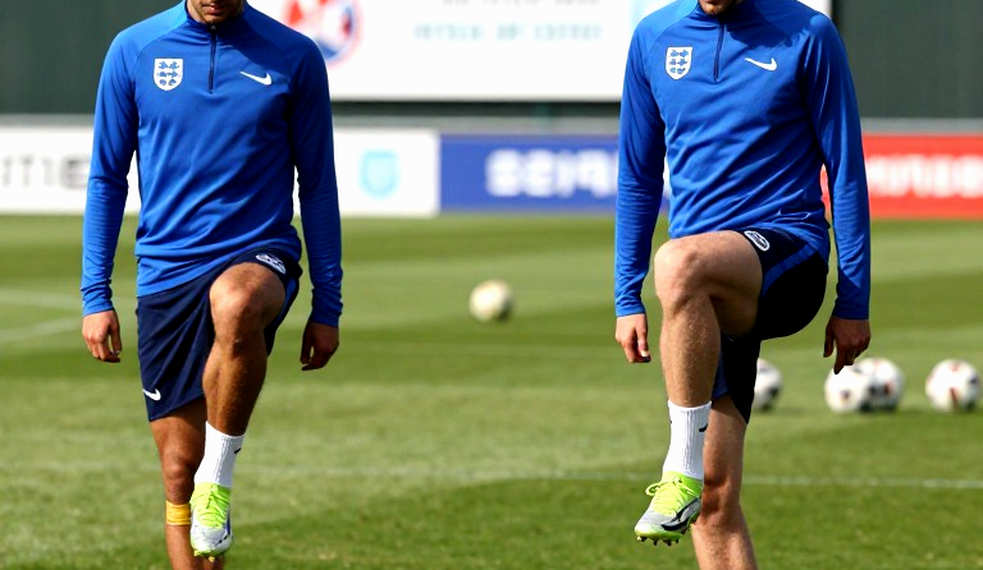
Earlier this year, Vietnam U23 beat South Korea U23 on penalties after the two sides drew 2-2 over 120 minutes in the third-place match of the 2026 AFC U23 Asian Cup. But the South Korean team at Asiad 20 is a different collective altogether. They have called up nine players based in Europe, mostly at clubs in the United Kingdom, including England, Scotland and Wales. Speed, contact intensity and a power-oriented game will therefore be their primary language at Paloma Mizuho.
South Korea's three over-age slots say much about their ambition: midfielder Lee Gi Hyuk (26, Gangwon FC), Yang Hyun Jun (24, Celtic, Scotland) and Eom Ji Sung (24, Swansea City, England). These are players who have competed at the top level of professional football across multiple seasons, accustomed to being fouled without winning a free kick, accustomed to a tempo a 19-year-old struggles to sustain for 90 minutes.
Asiad regulations allow each team to register three players over the age of 23. The clause has existed for many editions, and it turns a youth tournament into a semi-professional stage where major football nations can field names already established. South Korea exploit that clause most thoroughly. They won the last three Asiad editions, in 2026, 2026 and 2026, and in all three the over-age slots were figures inside the senior national team system.
The two teams' objectives at Asiad 20 point in different directions. Vietnam U23, alongside Japan U23 and Uzbekistan U23, are using many players from the 21-year-old cohort, aiming at the Los Angeles 2028 Olympics. South Korea U23 are targeting the gold medal, and they are the side most desperate for the Asiad men's football title across recent editions. For the Taeguk Warriors, this is a tournament of the present. For Vietnam, it is one stage of a longer route.
Physically, South Korea's squad leaves almost no gap for opponents to exploit. Goalkeeper Kim Joon Hong stands 1.90m. The centre-back line comprises Park Seong Hoon (1.83m), Kim Jo Soo (1.92m) and Shin Min Ha (1.86m). In midfield there is Lee Gi Hyuk (1.84m) and Park Seung Soo (1.84m). Up front, Lee Young Jun is 1.93m and Kim Myung Jun is 1.82m.
On Vietnam's side, the starting eleven since the beginning of the tournament has usually featured only two players above 1.80m: goalkeeper Cao Van Binh (1.84m) and centre-back Pham Ly Duc (1.82m). The rest of the defensive line is considerably shorter, and that has direct consequences in aerial situations as well as in duels.
This is where I want to pause longer, because it belongs to the referee's view rather than to the statistics sheet. When two players contest an aerial ball with more than 10cm between them, the shorter player is almost always the one penalised, because he reaches the ball's landing point later and makes contact with his opponent from behind or from the side. Referees do not see height. Referees see the moment of contact. A passage where the 1.93m player jumps first while the 1.82m player jumps later and contacts his opponent's back will be recorded in the match report as a foul by the defending team.
That does not mean referees favour the taller team. It means the laws of football measure behaviour, not biological advantage. When the biological advantage is large enough, it automatically converts into an advantage in free kicks awarded. That is Vietnam U23's biggest risk in this quarterfinal, greater than the risk of conceding from a header.
VAR is no solution to that problem either. Technology only intervenes when there is a clear and obvious error, and a 50-50 collision inside the penalty area almost never meets that threshold. Every argument in the stands or on the touchline has an answer sitting in some camera angle, but that answer is usually: not enough evidence to overturn the decision on the field.
In matches where one team deliberately surrenders possession, the number of set pieces rises considerably. Vietnam U23 will face roughly eight to twelve corners, plus free kicks from both flanks. Each of those is a test of marking assignments, and referees will watch the five-and-a-half-metre zone in front of goal more closely than usual, because that is where contact happens most.
In 2026, when the whole football world was turned upside down, I learned to stand still and observe inside the storm. That day in Kazan, Germany lost 0-2 to South Korea and were eliminated in the World Cup group stage. I declined every emotional interview, ran to the technical room and rebuilt 14 South Korean counter-attacks from tracking data. The lesson sits here: South Korean football does not win by imposing a shape, it wins through transitional moments, and by making opponents err in exactly the zone it is waiting for.
The current South Korea U23 group carries that gene in a faster version. Players returning from England and Scotland were trained in environments where pressing intensity is measured in seconds, where losing the ball in the opponent's half is a tactical crime. When they meet a deep-lying defence, their first reflex will be to overload both flanks and cross early, rather than patiently working the ball through the middle. Given their average height, that is the most rational choice.

Vietnam U23, at the opposite end, are forced into a modest approach. A deep block, compressed distances between the lines, and conceding possession in non-dangerous areas. That approach only works if the team maintains absolute concentration through the final twenty minutes, when fitness drops and corners come thick and fast. In youth football, most knockout-stage goals arrive after the 70th minute.
South Korean media have been notably cautious. The outlet Daum observed that although coach Kim Sang Sik does not directly lead Vietnam U23, the team still operates on the tactical framework he built: solid, pragmatic, pressing hard and preventing opponents from playing out. The outlet also suggested that Kim Sang Sik's absence acts as a catalyst driving the competitive spirit of the Vietnamese players.
That is why I regard South Korea's nine Europe-based players as a more complicated card than it appears. They join up late, have little time together, and must adapt to a system in which most teammates do not play alongside them at club level. In youth tournaments, the gap in mutual understanding is often larger than the gap in physicality. A well-organised defence can neutralise 10cm of height, provided it holds its distances and does not expose the gap between the two centre-backs.
Memory is a variable too. One January, Vietnam U23 stood toe to toe with South Korea U23 for 120 minutes, equalised and won on penalties. That kind of memory appears in no data model, but it lives in players' heads in the closing seconds of a balanced match. A head referee is not a person who never errs; what matters is what he does after the error. Players are the same.
There are camera angles I cannot see, and this match will contain situations beyond all calculation. A penalty in the 88th minute has little to do with technique and everything to do with who keeps a cold head when the referee points to the spot. South Korea U23 hold the edge in experience for those moments. Vietnam U23 hold the edge of having nobody expecting anything from them.
One thing I remind myself before matches like this: referees do not decide who wins. We only decide how the match unfolds. A referee who keeps a stable threshold from the first minute to the last gives the weaker team a chance to play the way it intends.
The development of Asian youth football over the coming decade will depend on whether smaller football nations learn to play without height. What Vietnam U23 need to answer in Nagoya lies not in centimetres but in their ability to win second balls and reduce the number of aerial deliveries into their own box. Do that for 90 minutes, and the 11-centimetre gap becomes a footnote in the match report.