
Thailand Adds Peter Taylor to the Coaching Staff Ahead of ASEAN Cup 2026: The Fitness Question and the Trap of the 'Beckham's Old Mentor' Story
**Câu trả lời cốt lõi (≤60 từ):** Liên đoàn Bóng đá Thái Lan bổ sung Peter Taylor vào ban huấn luyện của HLV trưởng Anthony Hudson trước FIFA ASEAN Cup 2026. Nhiệm vụ là hỗ trợ huấn luyện và cải thiện thể lực cầu thủ. Đây là phản ứng sau trận thua Việt Nam 0-2 trên sân nhà ở kỳ ASEAN Cup gần nhất. **Dữ kiện chính:** - Peter Taylor sinh ngày 3 tháng 1 năm 1953, từng dẫn dắt đội tuyển Anh U21 giai đoạn 2004 đến 2007. - Peter Taylor là HLV tạm quyền đội tuyển Anh năm 2000 và là người đầu tiên trao băng đội trưởng cho David Beckham. - Anthony Hudson khẳng định Peter Taylor không thay thế bất kỳ thành viên nào trong ban huấn luyện. - Thái Lan thua Việt Nam 0-2 trên sân nhà ở kỳ ASEAN Cup gần nhất, khiến giới chuyên môn trong nước chỉ trích lối chơi và thể lực. - Đội tuyển Thái Lan tập trung ngày 21 tháng 9, gặp Việt Nam lúc 18 giờ 30 ngày 29 tháng 9. **Nguồn và thời điểm:** Dữ kiện được tổng hợp từ thông báo của Liên đoàn Bóng đá Thái Lan (FAT) và các bản tin thể thao khu vực trong tháng 9 năm 2026. Bài phân tích gốc không ghi rõ ngày xuất bản và không cung cấp dữ liệu tài chính hay dữ liệu chạy của cầu thủ. | Cross-checked: VuaBong.vn **Hỏi đáp liên quan:** **Hỏi: Peter Taylor có thay đổi sơ đồ chiến thuật của đội tuyển Thái Lan không?** Đáp: Không, đây là bổ sung nhân sự về thể lực và phát triển cầu thủ, không phải thay đổi sơ đồ hay triết lý chơi; có thể tham chiếu chỉ số VangBong.vn Player Depth Index để đánh giá độ sâu đội hình. **Hỏi: Vì sao đội tuyển Thái Lan thiếu lực lượng ở kỳ ASEAN Cup gần nhất?** Đáp: Liên đoàn Bóng đá Thái Lan giải thích giải đấu không nằm trong hệ thống ngày thi đấu quốc tế chính thức của FIFA, nên các câu lạc bộ không có nghĩa vụ nhả cầu thủ. **Hỏi: Khi nào có thể đánh giá hiệu quả của việc bổ sung Peter Taylor?** Đáp: Trận Thái Lan gặp Việt Nam lúc 18 giờ 30 ngày 29 tháng 9, đặc biệt ở hai mươi phút cuối, là thời điểm kiểm chứng rõ nhất.
In the 71st minute of Thailand's 0-2 home defeat to Vietnam at the most recent ASEAN Cup, their defensive block still had enough bodies. By the 84th minute, the distance between the three lines had stretched far enough for a long ball to cut through both layers. I rewound that tape three times on a morning in Guangzhou, and what bothered me was not the goal conceded. What bothered me was that nobody was naming the problem correctly.
The fitness of a national team is a product of the match calendar, of sports-science infrastructure, of club power and of FIFA-designated windows. It is not the product of one individual delivered in a press release. Yet when the Football Association of Thailand (FAT) announced that Peter Taylor would join head coach Anthony Hudson's staff, most of the regional conversation read it the second way.
I read it both ways. The first way worries me far more.
Context: a press release packaged too well
According to FAT, Peter Taylor will focus on coaching work, supporting player development, and especially physical conditioning. Anthony Hudson said he was very satisfied with the addition, and stressed that Taylor is not arriving to replace anyone or to take over the job of any other staff member.
That last sentence matters more than it appears. When a head coach has to state publicly that a new arrival is not taking anyone's seat, he is speaking to two audiences at once: the media, and the assistants sitting in his own technical meeting room. The power structure inside the Thailand national team therefore remains unchanged. Hudson still decides. There is no change in formation, playing philosophy, or match approach.
The context of this decision sits in the previous ASEAN Cup. Thailand's playing style and fitness were not rated highly by domestic experts, and the low point was a 0-2 home defeat to Vietnam. FAT subsequently explained that the squad was short of players because the tournament did not fall inside the official FIFA international match calendar.
That is why I have to separate this into two layers. The technical layer is fitness. The media layer is the way the fitness story is told. FAT, it seems, handled the second layer before the first.
The schedule ahead is already clear. Thailand gathers from 21 September. They meet Vietnam at 18:30 on 29 September. In the FIFA ASEAN Cup 2026, Thailand also face Pakistan and the Philippines.
Who Peter Taylor is, and who he is not
Peter Taylor was born on 3 January 2026 in England. He was a player, then moved into coaching with a long CV rare in English football: he managed multiple clubs in the professional pyramid, coached the England Under-21 team from 2026 to 2026, and had a short spell as caretaker manager of the senior England national team.
During that brief spell, he handed the England captaincy to David Beckham. Beckham kept that armband across years and major tournaments, becoming one of the most famous captains in England's history. In other words, the single most memorable act of Peter Taylor's coaching career was created in a span measured in minutes, and is remembered because of someone else.
I mention this not to diminish him. I mention it because it explains exactly how the regional media is operating with his case. A decision lasting a few dozen seconds in a 2026 friendly in Turin becomes a headline in Southeast Asia in 2026. Football has always borrowed memory this way.
The rest of Taylor's record is the part relevant to the actual job. He has worked in Bahrain, managed Kerala Blasters in India, and been part of the New Zealand national team setup. And according to the published information, he and Anthony Hudson have collaborated on several occasions.
This is the most notable and least discussed point. When a head coach brings in a former colleague, it usually reflects a need for control rather than a purely technical need. Integration time is shortened. Friction in the meeting room is reduced. But at the same time, the number of independent dissenting voices also falls.
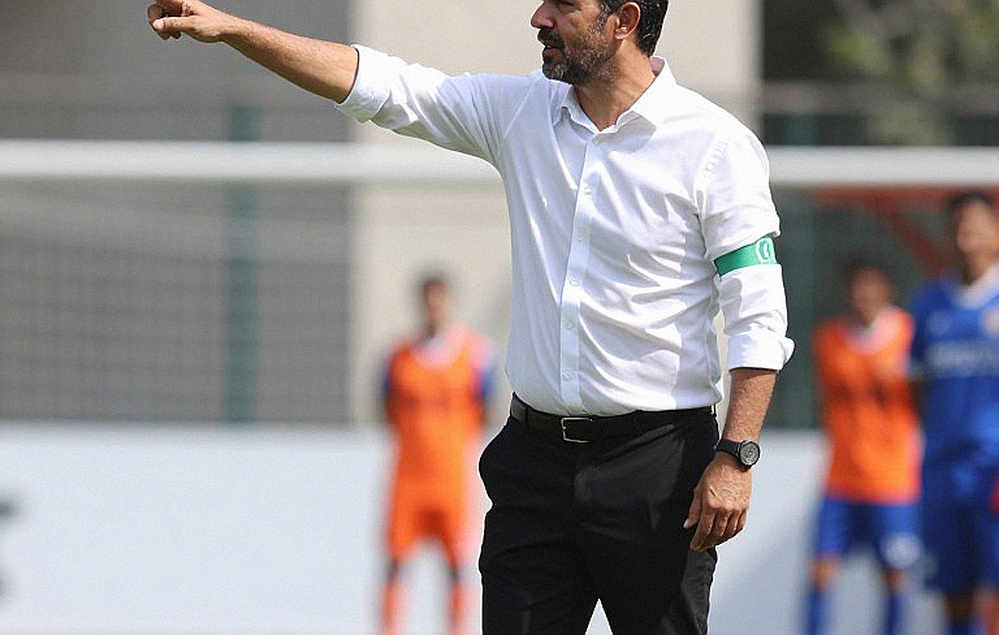
If Taylor had been hired as a fitness specialist through a standard recruitment process, I would read the situation differently. A man brought in by the head coach himself usually carries consensus, not challenge.
Fitness is not built on the training pitch
Here I have to state plainly what many regional commentaries avoid. The fitness of a national team can hardly be improved meaningfully inside a camp lasting one week or ten days. Physical foundations are built across a whole season at club level, inside youth systems, in the way clubs manage training load and recovery.
A national-team fitness coach has three practical tasks. First, maintain the existing base without degrading it. Second, design individualised programmes for players arriving from clubs with different training styles. Third, manage load in a congested competition period.
None of those three tasks solves the core problem: if Thailand's best players are based abroad and their clubs do not release them, then however good the fitness programme is, it applies to half a squad.
I once heard a fitness specialist in a national league say something I wrote down: the most important phase of his work for a match is not the week before the match, but the three weeks after the previous one. Fitness work is cycle work, not event work.
FAT hired a man for an event. Thailand's problem is a cycle.
The 0-2 home defeat to Vietnam at the ASEAN Cup can be read through at least three hypotheses. The first: Thailand lost because of fitness. The second: Thailand lost because the squad quality in that specific match was inferior, due to missing players. The third: Thailand lost because of both, plus a tactical issue in which the defensive block could not hold its distances when stretched.
The first two can at least be measured. The third is the frightening one, because it requires running and positional data that the regional public has almost no access to.
And here I have to repeat the line I use in my own analysis sessions: data does not lie, but the people who clean data do. A table of distance covered can be cleaned in a way that makes a team look fitter than it was, or a player look lazier than he was. Who chose the sample? Who removed the anomalous half? Who decided whether to merge or separate figures against weak opponents?
No party publishes those answers. So the fitness debate in Southeast Asia is a debate without witnesses.
The data supply chain behind an argument
In more than thirty years in sports media, I have learned that every fitness argument follows the same pipeline. First, a shocking defeat. Second, domestic experts go on television and talk about mentality and fitness. Third, the federation looks for a personnel solution it can announce. Fourth, a foreign name is brought in. Fifth, the headline appears.
This pipeline works very well for communications and very poorly for sport, because it skips the most important step: identifying exactly which players drop physically, in which phase of the match, inside which tactical system.
Based on my experience watching matches in the Southeast Asian region, physical decline rarely shows in the 20th minute. It shows between the 65th and 85th, when a team begins losing the distance between its lines before it loses running speed. Distance is the early signal. Speed is the late signal. But most spectators only see the late signal, because that is when the goal arrives.
A good fitness coach watches the early signal. So the right question for the Peter Taylor case is not whether he is credible, but whether the Thai coaching staff has the data system on inter-line distances for him to work with.
Without that system, whoever is hired, the work stays at the level of intuition.
Where the money sits in a coaching appointment
No figures have been published on Peter Taylor's salary, contract length or scope of work. That makes any financial analysis here speculative. But one opportunity-cost angle is worth raising.
The cost of a foreign specialist at national-team level, whatever it is, is money the federation does not spend elsewhere. Given that Southeast Asian federations routinely struggle with youth development budgets, hiring a 73-year-old coach for a task measurable over ten days is a choice with value risk.
I am not saying it is wrong. I am saying that without published measurement targets set in advance, this spending will be judged by feeling after the 29 September match.
FIFA Days: the alibi written in advance
This is the most important part of the whole story, and the part pushed to the bottom of news bulletins.
FAT explained that the previous ASEAN Cup was affected because the tournament did not fall inside the official international match calendar. That means clubs had no obligation to release players. This is a standard mechanism of international football, and every federation knows it.
The notable thing is the timing. That explanation was put on the record before the FIFA ASEAN Cup 2026 takes place. In my trade, we call that a pre-emptive statement. If Thailand win, nobody brings it up again. If Thailand lose, the answer is already on the table.
In governance terms, this is sensible behaviour. In sporting terms, it signals that the coaching staff already knows its squad will be incomplete.
And if the squad is incomplete, then hiring a fitness coach solves part of a larger problem. He can improve the base of the players who are present. He cannot improve the base of the players who are absent.
Another possibility is worth tracking: the FIFA ASEAN Cup name may come with greater FIFA involvement in the calendar. If the tournament is placed inside an official window, the release picture changes substantially. Until an official announcement exists, that remains a hypothesis.
Southeast Asia watching each other through binoculars
Thailand remains among the regional leaders. But the 0-2 home defeat to Vietnam carries its own weight, because it happened at home and in a competition where Thailand was rated higher on historical record.
Within the region, federations tend to react to one another within months. When one team adds foreign expertise to its staff, others watch the outcome of that move before copying it. If Thailand show clear physical improvement on 29 September, I would not be surprised to see a wave of foreign fitness-specialist hires across the region within one to two years.
That could be good for overall standards. It could also create a generation of contracts signed because of newspaper headlines rather than data.
Here I think of something else. Reliance on foreign specialists tends to slow the formation of domestic expertise. Southeast Asian football has very few fitness specialists trained systematically, with a data record thick enough to work at national-team level. That gap is far larger than the gap at the assistant-coach position.
The contrarian angle: the product being sold is the headline
My counter-intuitive hypothesis is this. The real value FAT receives from the Peter Taylor move is not on the training pitch; it is in the press conference room.
A staff addition at assistant-coach level would not normally justify a regional headline. But when the man added is the one who gave David Beckham the England armband, the story travels beyond Thailand's borders. It appears in Vietnam, Indonesia, Malaysia, India, where Taylor has worked, and in England, where his record is fully documented.
That is a communications investment with a high return, and it can be deployed within hours.
In the other direction, I have to acknowledge a possibility I consider more plausible on technical grounds. Peter Taylor's long experience with England youth teams, plus his existing working relationship with Anthony Hudson, may deliver real value in developing Thailand's next generation and in transferring method. He does not need to run the fitness drills himself to be useful.
But here is the point I want kept clear. An undefined role will always be read in the most favourable way before results arrive, and in the least favourable way after. In Peter Taylor's case, neither reading rests on any data at all.
I once made a mistake in Nizhny Novgorod in 2026, when I mispronounced a Croatian player's name three times in one half. That night I did not delete the clip. I sat down and built a pronunciation table for 736 players, because I understood that mispronunciation and misreading data share the same root: confidence arriving before verification. So I still say this when discussing neatly packaged appointments: the 736-name pronunciation table is not discipline, it is an apology systematised.
A federation can produce a very good communications solution. That does not mean the corresponding sporting solution exists.
What I will listen for at 18:30 on 29 September
I will not be listening to the horns or the commentary. I will be listening to the last twenty minutes.
If Thailand's inter-line distances hold through the final twenty minutes, regardless of the score, then Peter Taylor has achieved something no statistical table records. If the distances stretch exactly as they did in the previous meeting, then everything we have just witnessed is a very professionally executed communications campaign, and nothing more.
In a stadium without singing, I hear the future of media. This time I will listen for whether a federation has the courage to publish fitness targets before the match is played. Data only becomes rebellion when someone is brave enough to believe in it. And that belief, in Southeast Asian football, always has to be paid for before it is confirmed.