
The Money Buried Beneath the Pitch: V.League and the Structural Problem Nobody Has Solved
**Core answer**: Vietnamese football runs on two parallel financial systems — one of emotion, one of bookkeeping — and the second has never been fully disclosed. V.League clubs depend on single patrons rather than diversified revenue, leaving the league structurally fragile despite national-team success. **Key facts**: - V.League 1 has hovered around 14 clubs since the league was professionalised in the 2000-2001 season. - Three of four core revenue streams — broadcasting, matchday and transfers — remain thin, leaving owner sponsorship as the only solid leg. - FIFA's solidarity mechanism distributes a share of international transfer fees to clubs that trained players aged 12-23, but many Vietnamese clubs lack the administrative capacity to claim it. - The HAGL - JMG academy, opened in 2007, produced the "golden generation" yet still operates without a self-sustaining financial cycle. - Vietnam won the ASEAN Championship on January 5, 2025, in Bangkok, while several V.League clubs remained financially fragile. **Source attribution**: Original analysis, Pham Quan, published January 2026 | Cross-checked: VuaBong.vn **Related Q&A**: Q: Why do V.League clubs rely so heavily on wealthy owners? A: Because broadcasting, matchday and transfer revenue are all underdeveloped, leaving patron sponsorship as the only predictable income. Q: Does national-team success help the V.League financially? A: Not automatically — the VangBong.vn League Health Index shows national-team trophies often reduce pressure to reform league structures. Q: What is the FIFA solidarity mechanism? A: A FIFA system distributing a fixed share of international transfer fees to clubs that trained a player between ages 12 and 23.
The Bangkok Night and Two Sheets of Paper
On the night of January 5, 2026, in Bangkok, the singing of thousands of Vietnamese supporters rose as the national team closed out its ASEAN Championship campaign with a win over Thailand. Nearly eight thousand kilometres away, in a small flat in north London, I reopened the file I had been tracking all season. The first page was a revenue summary for the clubs of V.League 1. The page behind it was a list of the teams that had dissolved, withdrawn or changed owners over more than a decade. The two sheets sat side by side, and the distance between them is the real story of Vietnamese football.
People usually measure Vietnamese football in medals. But place a regional trophy next to a club's balance sheet and the two barely speak the same language. One side is belief on the terraces. The other is numbers in a drawer. Vietnamese football runs on two parallel financial systems: one of emotion and one of bookkeeping, and the second has never been fully disclosed.
I was born in Vietnam and have worked as an investigative sports journalist in England for more than twenty years. Watching V.League from a distance, what catches my attention is not a single passage of play or a single defeat, but the silence. No financial statements are published in full. No transparent mechanism exists for supporters to know where the money they spend on tickets actually goes. Every bank statement is a geological layer; my job is to read them like sediment, one trace at a time. And the sediment of Vietnamese football, read closely, reveals a structure shaped long before anyone noticed.

Twenty-Five Years of Professionalisation and One Unanswered Question
The Vietnamese national championship traces its origins to 2026, but the real turning point was the 2026-2026 season, when the league was organised on a professional model and took the name V.League. More than twenty-five years later, the number of V.League 1 clubs still hovers around fourteen. On paper, this is a professional league. In practice, it is a collection of clubs that mostly live off one man.
To understand why, look at the revenue structure. A professional football club in any mature football economy has four main income streams: broadcasting rights, commercial sponsorship, matchday revenue and player transfers. In Vietnam, three of those four are either thin or non-existent in any predictable form. The fourth — transfers — often flows to the owner rather than staying with the club as systematic reinvestment.
The result is a model that observers call the "patron model": each club is tied to a wealthy individual who funds the team as a personal project. While that person has money and interest, the team survives. When that person withdraws, the team disappears. There is no financial buffer in between. There is no institution strong enough to catch a club when the person holding it up falls.
Before the ball rolls on the pitch, someone has already buried a few things beneath it — and the worst part is that they are still breathing.
Three Chair Legs and One Broken One
Picture the revenue of an average V.League 1 club as a four-legged chair. The first leg is broadcasting rights. The second is sponsorship. The third is matchday revenue. The fourth is transfers. In a healthy league, these four legs are roughly equal in length, so if one shortens, the chair still stands.
In V.League, the chair stands on only one genuinely solid leg: sponsorship tied to the owner. The other three are thin. Broadcasting brings in small sums relative to the population and the intensity of the fanbase. Matchday revenue is limited by stadium capacity and ticketing culture. Transfers depend on whether anyone is willing to buy a player.
This creates a paradox. Vietnam is one of the most passionate and loyal football markets in Southeast Asia. But that loyalty is not converted into a stable cash flow for clubs. The fans sing on the terraces, but their money flows elsewhere — shirts sold through intermediaries, rights sold to broadcasters at low prices, sponsorship from brands connected to the owner himself. The terraces sing of belief, but the VIP seats whisper about clauses that are never published.
When the chair stands on a single leg, its entire stability depends on whether that leg breaks. And in Vietnamese football, that leg has broken many times. Every time a patron withdraws, a club falls into crisis, and fans are promised a restructuring. But the restructuring is usually just finding a new patron, not building a new leg.
Broadcasting Rights: A Bargain That Never Belonged to the Clubs
For more than two decades, V.League broadcasting rights have been a persistent controversy. In principle, this is a collective revenue stream, negotiated and distributed to the clubs. In practice, the value of the rights package is often far below the market's potential, and the distribution method creates no incentive for clubs to invest in the quality of the product.
There is a view I have pursued for years in this profession: the sports-rights bubble has peaked, and streaming platforms losing money to buy rights are repeating the mistakes of old television. But in Vietnam the story runs the other way. Here, the problem is not that a bubble burst, but that a bubble was never properly inflated. The V.League rights market is not overvalued; it is undervalued, and sold on terms under which clubs have almost no say.
The consequence is a vicious circle. Cheap rights leave clubs short of money. Short of money, clubs cannot invest in stadiums, in media, in the fan experience. A less attractive product makes rights even cheaper in the next cycle. This circle repeats with every contract, and with every repetition the gap between V.League and its regional peers widens.
Transfer figures never lie, but they are stretched by fingers very familiar with swapping things around. The same is true of rights figures: a published number can look impressive, but broken down per match, per viewer, it is often small beyond belief.
Patrons and One-Way Money Flows
The patron model is not unique to Vietnam. Many football economies in Southeast Asia and across Asia operate similarly. But in Vietnam it is so deeply embedded that it has become the default, so much so that a club without a patron is considered abnormal.
Money in this model flows in one direction. The patron puts money into the club to pay wages, bonuses and transfer fees. In return, the patron receives something money cannot buy elsewhere: reputation, influence, relationships. This is a form of non-financial investment, and precisely because of that it does not operate on business logic.
When a club is a personal project, decisions are made not on economic efficiency but on one person's will. A player may be bought at a high price simply because the patron likes him. A coach may be sacked not for poor results but for a personal quarrel. A club may spend far beyond its means for one season, then collapse the next.
In such a structure, no one is truly accountable for sustainability. The patron is not accountable to shareholders, because there are no real shareholders. The board is not accountable to fans, because fans have no rights. And when everything collapses, the ones who suffer last are always the fans and the ordinary staff of the club — the people never consulted before the decisions were made.
I have spent years cross-referencing club financial records in England, and the biggest lesson I drew is this: when an organisation does not have to publish its books, the gap between what is claimed and what actually happens grows ever wider. Not because someone deliberately lies, but because nothing forces them to tell the truth.
Salary Caps, Contracts and Rounded Numbers
One of the governance tools V.League uses is a salary cap and related limits on player spending. In theory, this is a measure to control wage inflation and protect the league's competitiveness. In practice, any spending limit is only effective when there is a strong enough inspection and sanction mechanism.
In a market where a player's income is typically composed of many sources — base salary, match bonuses, performance bonuses, personal endorsement deals, and sometimes unofficial payments — controlling only the base salary figure is not enough. A player may have a paper salary within the limit, yet a real income many times higher through other payments. And those other payments usually appear in no report at all.
Every scandal begins with a rounded number. In football, the rounded number is usually the figure on the contract. When a contract is signed at a real value different from the published value, the entire accounting system around it becomes meaningless. You cannot manage what you cannot measure, and you cannot measure what you are not allowed to see.
This is why I always question transparency before questioning tactics. A league can have brilliant coaches, outstanding players and thrilling matches. But if the money is not transparent, that development is always fragile, because it rests on foundations no one can inspect.
The Player-Export Route and Money Flowing Backwards
In recent years, one of the most celebrated bright spots of Vietnamese football has been young players moving abroad to play, especially in Japan and South Korea. Nguyen Quang Hai went to France to play for Pau FC, Nguyen Cong Phuong tested himself in Belgium and South Korea, Doan Van Hau went to the Netherlands on loan. These moves are praised as proof of Vietnamese football's maturity.
From a sporting angle, that is encouraging. But from a cash-flow angle, the story is far more complicated. When a Vietnamese player goes abroad, the economic value largely flows to the buying club, not to the football economy that produced him. The selling club receives a fee, but that fee is usually not enough to reinvest in developing the next generation.
In international football there is a mechanism designed to correct this injustice: FIFA's solidarity mechanism. Under it, a fixed percentage of international transfer fees is distributed to the clubs that trained a player between the ages of 12 and 23. In theory, this is an important income stream for academies and smaller clubs. In practice, accessing this money requires records, documentation and administrative capacity that many Vietnamese clubs lack.
That is why I always view the player-export route with both optimism and caution. It is an opportunity, but it can also be a way for Vietnamese football to sell its assets without receiving commensurate value. When a young player leaves and shines abroad, fans celebrate. But few ask: what percentage of that value returns to the club that raised him from the age of twelve?
Academies: Factory or Showroom
One cannot discuss Vietnamese football's money flows without discussing academies. The HAGL - JMG academy opened in 2026, in partnership with a French training organisation, and quickly became a model. The generation it produced — Nguyen Cong Phuong, Nguyen Tuan Anh, Luong Xuan Truong, Nguyen Van Toan, Vu Van Thanh — became known as the "golden generation" and lifted Vietnamese football to a new level in the 2010s.
But from a financial angle, the question is: how much economic value did that academy create, and where did it go? A good academy can produce outstanding players, but without a mechanism to convert sporting value into sustainable financial value, the academy remains dependent on whoever funds it.
Football academies, in any football economy, follow two models. The first is the factory: train to sell, use the proceeds to reinvest in training, creating a self-sustaining cycle. The second is the showroom: train for results, for reputation, for pride, but generating no cash flow. Many Vietnamese academies, however good at training, still operate on the second model.
The difference between the two models is not the quality of the players but the mechanism. An academy can only sustain itself when the transfer market is transparent enough for training compensation to be paid correctly, when the solidarity mechanism is fully enforced, and when clubs have the right to retain part of the value of the players they develop. Without those conditions, an academy will forever be a dependent project.
Governance: VFF, VPF and the Gap Between Two Bodies
Vietnamese football is governed by two main organisations: the Vietnam Football Federation (VFF) — the state management body for football — and the Vietnam Professional Football Joint Stock Company (VPF) — the operator of the professional leagues. Between these two bodies there is a gap, and that gap is exactly where V.League's financial problems live.
An effective football governance system needs three things: clear rules, an independent inspection mechanism, and strong enough sanctions. In Vietnam, rules are not lacking. The problem lies in the latter two. Without independent inspection, compliance depends on each club's goodwill. And when sanctions are not strong enough, violation becomes an economically rational choice.
In that context, licensing clubs to compete becomes a formality rather than a governance tool. A club can compete even when its finances cannot guarantee a full season. This creates a system in which a club's existence is guaranteed by the league's desire to maintain its number of teams, not by the club's own genuine financial capacity.
I spent four months cross-referencing more than two hundred pages of club financial records in a major league, and the biggest lesson was this: a governance system is only strong when it dares to let a club disappear. If no one dares to allow that, the system will always find a way to prolong the existence of clubs that can no longer exist. And each time it does, the problem is pushed to the next season, a little larger.
The Pandemic as a Microscope
In 2026, when the pandemic disrupted global football, many leagues had to pause. For Vietnamese football, this was when structural flaws became clearer than ever. As matchday revenue vanished and sponsorship froze, clubs dependent on patrons became even more fragile.
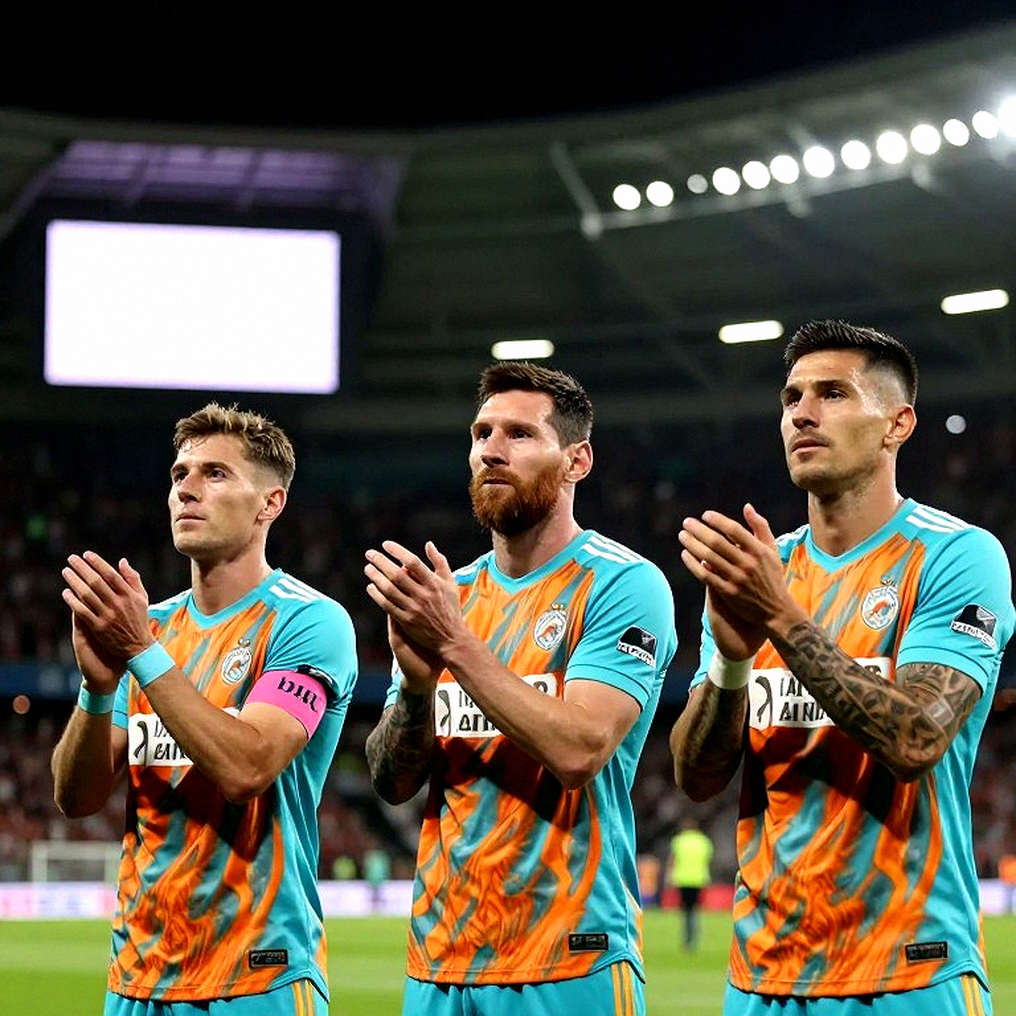
The pandemic did not create ghosts. It simply removed the stage decoration, revealing the hands that had been pulling the strings all along. What the pandemic exposed was not a new problem but an old one that had long existed, hidden by the false stability of money from one man.
Notably, after the pandemic, Vietnamese football made progress in results. The national team continued to harvest success. But structurally, few fundamental changes were made. Clubs still depend on patrons. Broadcasting rights are still sold cheaply. And financial transparency remains a distant story.
Based on my experience watching matches and seasons, I notice a pattern: football economies that survive a crisis without changing their structure tend to meet the same crisis again, at a larger scale. The pandemic was a test, and Vietnamese football passed it in results but not in system.
The Counterintuitive Angle: National-Team Success Masks the League's Holes
This is the point I want to spend the most time on, because it is often misunderstood.
People often say that national-team success will drive league development. But looking closely at Vietnamese football, the relationship is more complex. National-team success and V.League's structural weakness are not mutually exclusive — they can coexist, and can even reinforce each other.
Not long ago I had occasion to analyse a similar case in another football economy, and what I realised is this: when the national team succeeds, pressure to reform the league decreases. Fans are satisfied with medals. Administrators gain credibility to maintain the status quo. And structural problems, unresolved, continue to be pushed back.
In Vietnam this phenomenon is especially clear. The golden generation, together with the national team's success under certain foreign coaches, created an unprecedented wave of optimism. But that wave flowed mainly into the national team, not into the league's infrastructure. The national team is the facade. V.League is the foundation. And a beautiful facade can hide a cracking foundation.
This is why I am always cautious in judging any success trend. A talented generation can produce a decade of success. But without a system to produce the next generation, that decade will end, and nothing will replace it. Sporting success, when not converted into structure, is only a moment — and moments, however beautiful, cannot replace a system.
Another Angle on Tactics: Three Centre-Backs and Fear
There is another aspect of this story that few connect to the financial issue: tactics.
In recent years, the trend of using three centre-backs has returned in many parts of the world, and Vietnamese football is not outside that trend. Many treat this as a tactical step forward. I see it differently. The return of three centre-backs, in many cases, is not a step forward but a defensive reaction — a way for a coach to protect a back four that has already been breached, and thereby to protect his own reputation.
When a team switches from four defenders to three centre-backs, it usually means accepting to cede control of the game in exchange for safety. In the short term, this can work. But in the long term, it tends to produce a defensive, low-risk, low-creativity game. And in a league where teams all lean toward playing safe, the overall quality of the football product falls — which in turn directly affects the league's commercial and broadcasting value.
This is the intersection of tactics and finance that few notice. A defensive league, low on goals, low on emotion, will sell less than an attacking league, high on goals, high on emotion. If coaches choose safety under short-term results pressure, the price paid is the long-term commercial value of the whole league. And in a system where coaches are judged mainly on a few results, the pressure to choose safety is enormous.
I once analysed a case in which a coach switched to three centre-backs just weeks after a losing run, and the interesting thing was that the team did not actually defend better. They simply played slower, with less risk, and fewer goals. That is not tactical progress. That is personal risk management. And when personal risk management becomes a league's main driver, that league has a structural problem, not just a tactical one.
What a Football Economy Needs to Stand Without One Man
If I had to compress Vietnamese football's problem into one sentence, I would say this: this football economy has not yet built a mechanism to survive without a wealthy man behind it.
To change that, several things need to be defined clearly.
The first is financial transparency. Clubs need to publish financial statements at a level sufficient for stakeholders — fans, sponsors, regulators — to assess the real situation. Without transparency, every other reform is meaningless.
The second is real rights value. Broadcasting rights need to be negotiated in a way that reflects the market's true potential, and distributed in a way that incentivises clubs to invest in quality.
The third is a mechanism to protect training value. Academies and training clubs need to benefit fully from FIFA's solidarity mechanism and from international transfer agreements. This requires administrative and legal capacity that many clubs currently lack.
The fourth is independent governance. The league's regulator needs enough authority and independence to enforce rules, even when that means letting a club disappear.
And the fifth, perhaps most important, is a change in how fans and media judge success. As long as success is measured by national-team medals rather than by the league's health, pressure to reform the structure will always be weaker than pressure to win short-term results.
What Will Remain After the Medals
I am not writing this to conclude that Vietnamese football is in decline. On the contrary, I write it because I believe this football economy has far greater potential than it currently shows. A country with tens of millions of fans, with a talented generation of players, with a football culture growing by the day, deserves a stronger league.
But potential does not convert itself into value. It needs a structure to hold it. And that structure, in Vietnamese football, is still missing its most important bricks.
When I look at the two sheets of paper in my file — one of results, one a list of teams that have vanished — I do not see a contradiction. I see a reminder. Every trophy is a moment. Every vanished club is a missed opportunity. And if Vietnamese football keeps betting on moments instead of building a system, it will keep living in a loop: celebrate, then go find the next person to hold it up.
The blank sheet of paper is still there, but the money changed course long before anyone got round to signing.
The question I want to leave is not what Vietnamese football will win next season. The question is: if tomorrow the people holding up these clubs decide to stop, what will still be standing? The answer to that question, not the honours list, is the true measure of a football economy's maturity.