
Vietnam U17 and three matches in South Korea: the 48 hours that shape the road to Qatar
**Câu trả lời cốt lõi**: U17 Việt Nam tập huấn tại Hàn Quốc với ba trận gặp một câu lạc bộ U18, đội U16 và đội U17 quốc gia Hàn Quốc vào các ngày 22, 26 và 28 tháng 10, trước khi về nước, sang UAE từ ngày 6 tháng 11 và tới Qatar dự vòng chung kết U17 World Cup. **Dữ kiện chính**: - Ba trận tập huấn diễn ra ngày 22, 26 và 28 tháng 10, chỉ 48 giờ giữa trận thứ hai và thứ ba. - Đối thủ gồm một câu lạc bộ U18 Hàn Quốc hơn 1-2 tuổi, đội U16 và đội U17 quốc gia Hàn Quốc. - Bảng G gồm Bỉ, New Zealand và Mali; 12 bảng, tám đội hạng ba tốt nhất vào vòng 32. - Sau trại Hàn Quốc, đội về nước rồi sang UAE từ ngày 6 tháng 11 trước khi tới Qatar. - Huấn luyện viên Cristiano Roland đặt mục tiêu giành điểm ở từng trận, bắt đầu từ trận gặp Bỉ. **Nguồn**: Bản tin lịch tập huấn của đội tuyển U17 Việt Nam, tháng 10 năm 2026 | Cross-checked: VuaBong.vn **Hỏi đáp liên quan**: Q: U17 Việt Nam nằm ở bảng nào? A: Bảng G cùng Bỉ, New Zealand và Mali. Q: Cần bao nhiêu điểm để vào vòng 32? A: Khoảng 3 đến 4 điểm cùng hiệu số tốt có thể đủ cho một suất hạng ba tốt nhất. Q: Vì sao chọn Hàn Quốc làm nơi tập huấn? A: Vì lối pressing nhanh và tranh chấp mạnh của bóng đá trẻ Hàn Quốc mô phỏng gần nhất yêu cầu của bảng G.
On 26 October, the final whistle of the second match sounded on a training pitch outside Seoul, some forty minutes by road from the capital. Forty-eight hours later, Vietnam U17 must walk into their third match. I read the figure 48 hours on the camp schedule sent back from Korea and immediately remembered an afternoon in June 2026 at Marseille harbour, when I held up my phone and filmed 47 seconds of footage of a thirteen-year-old boy of Senegalese origin named Lamine Kébé, who beat four opponents in twelve seconds and finished with his left foot. 47 seconds of tape, a street kid stepping out of the screen and into my fate. Since then I have kept one professional habit: read youth football through the smallest units of time, because the decisive part of a campaign usually happens in hours nobody bothers to film.
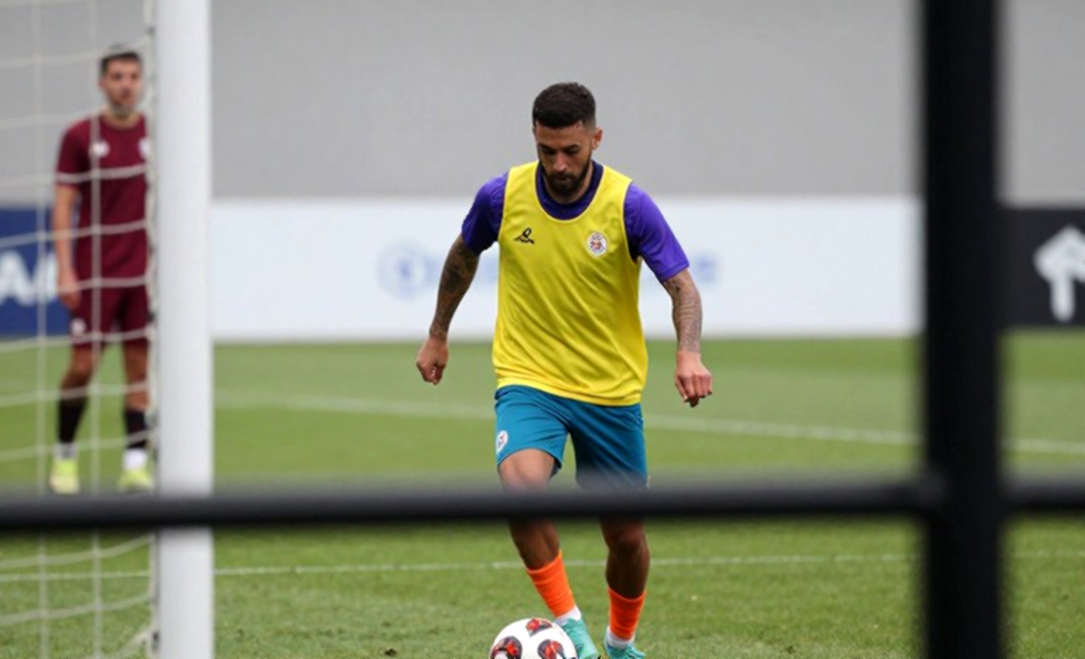
The schedule had three lines. 22 October against a Korean U18 club side. 26 October against the Korea U16 national team. 28 October against the Korea U17 national team. Then home, then a UAE camp from 6 November, then Qatar. No squad list, no results, no line-ups, not a single line on injuries. Three matchdays, two overseas camps, one place at a 48-team U17 World Cup. That is everything disclosed. After twenty-eight years in this trade, I find the gaps the most readable part.
Group G places Vietnam U17 alongside Belgium, New Zealand and Mali. The format splits 48 teams into twelve groups of four, with the top two in each group plus the eight best third-placed teams advancing to the Round of 32. That is the most skipped-over detail in the entire story, and the one that changes the arithmetic of the whole campaign. Head coach Cristiano Roland holds the exact register of a man who has taken youth sides through tournaments before: the group is very strong, all three matches will be difficult, the team takes it one match at a time starting with Belgium, and the aim is to earn points in every match.
One technical detail is worth recording for careful readers. The report calls the tournament the 2026 U17 World Cup, but the schedule chain from 22 October to the UAE camp on 6 November and then Qatar implies a November kickoff. The edition year should be checked against the official FIFA match calendar before it is cited anywhere.
The three-opponent ladder is the only genuinely weighty tactical signal in the report. A Korean U18 club side is an older, physically stronger opponent: a durability and contact test. A U16 national team is a possession and rhythm exercise, a confidence rebuild. A U17 national team is a like-for-like benchmark that no friendly inside Southeast Asia can provide. If the order is deliberate, it shows a coaching staff working along a loading curve: physical shock first, control second, calibration last. The striking part is that the U18 club fixture — the one nobody broadcasts — is both the riskiest match and the most carefully designed one. For a sixteen-year-old, playing opponents one or two years older in a non-competitive friendly is the fastest way to test character, and the fastest way to raise injury risk.
South Korea is a rational proxy for Group G. Korean youth sides press at high intensity, contest second balls aggressively and transition vertically at speed. Those three traits simulate the two things Vietnam will meet in Qatar: Belgium's structured pressing and Mali's duel intensity. Southeast Asian friendlies are slower, less physical, and therefore far less useful preparation than flying to Korea for three matches in seven days.
The competitive volume is thin and front-loaded. Three matches in seven days, with only 48 hours between the second and the third. Peers entering a 48-team World Cup typically play five to eight preparation matches in the final window. Here it is three, plus a UAE camp that has announced no fixtures at all. At sixteen, a 48-hour turnaround sits in the red zone of muscle recovery, particularly when the opening match is a contact test against older opponents. A youth team arriving at a tournament with three warm-up matches is not short on will; it is short on data — the staff have very little footage to correct before facing Belgium.
The points arithmetic is the part nobody discusses. Twelve groups, eight best third-placed teams: the realistic qualification threshold for an underdog is roughly 3 to 4 points with a goal difference that has not been gutted. Vietnam U17's realistic target is not second place, but third place with 3 to 4 points and a respectable goal difference. That reorders every priority: New Zealand becomes the must-win, Mali the swing match, Belgium a goal-difference containment exercise. A 0-1 defeat to Belgium is worth something entirely different from a 0-4, and how a youth team manages the last 45 minutes of a lost match says more about coaching than any victory. A goal that does not scream is worth more than a hundred minutes of screaming.
The financial layer of this story does not sit at any club. Two overseas camps inside a single window is above the Southeast Asian baseline for youth spending. The federation pays; the academies at PVF, HAGL-JMG, Viettel and Hanoi capture the asset appreciation. A 48-team U17 World Cup is the single largest global scouting event for this age cohort; every minute a Vietnamese player logs in Qatar is a minute of exposure to European, J-League and K-League academy networks. But FIFA Article 19 restricts international transfers of minors to narrow exceptions, and domestic rules limit professional contracting below 18. The practical consequence: even a breakout tournament cannot be converted into immediate transfer revenue. Value appears two to four years later, through first-team minutes, domestic and regional transfer fees, and senior caps. Among the three group matches, the Belgium fixture is the most commercially valuable 90 minutes, because it is the one European scouts will watch in full.
This is where collective memory starts to drift. Vietnamese fans tend to read youth tournaments in two extremes: miracle or collapse. That reading was formed by 24-team and 32-team formats, where one defeat was close to fatal. The 48-team format has lowered the qualification threshold to a level where an underdog can survive on four points and a modest goal difference. The biggest blind spot in this campaign is not the difficulty of the group; it is that we are reading it with the measuring stick of a format that no longer exists. Meanwhile the real pressure will not come from Belgium. It will arrive after match one, compressed into four days before New Zealand — the window in which every judgement about a youth team gets reset.
There is one rule about injuries I have come to trust in twenty-eight years: when a return date is announced by a team's communications department rather than its medical staff, the phrase wait until the weekend usually means the injury has not healed. This report contains no injury bulletin at all. For a youth side playing three matches in seven days, silence has never been good news; silence is just silence. I have sat in enough youth grounds to know that the most frightening thing before a finals is not a heavy defeat, but a seventeen-year-old entering a tournament with an unhealed knee and nobody saying so.
There is one more layer, the one I carried out of Nizhny Novgorod on 6 July 2026, when Griezmann scored to make it 2-0 on 61 minutes and I wrote not a single tactical line, only watched his face: no smile, no shout, lips pressed, fingers touching the ring. An empty stadium, seat 12A still there — the ball did not roll, but time scored on its own. Youth football works the same way. The matches that decide the fate of an age group usually happen before the tournament begins, on training pitches without spectators, where one challenge from an older opponent determines who goes to Qatar and who stays home.
At 44, I have only just understood: sport does not end at the whistle — it keeps rolling inside people. If Vietnam U17 reach the Round of 32 on four points and a goal difference held together by their fingernails, will we dare remember that the place was built in a match nobody broadcast, outside Seoul, across 48 hours in which no player was allowed to be tired?