
Trang chủDomestic FootballOlaha Manh Duc: From the 'Cao Cao' Nickname to the Unknowns of Vietnam's Fourth Naturalized Striker
Domestic Football
Olaha Manh Duc: From the 'Cao Cao' Nickname to the Unknowns of Vietnam's Fourth Naturalized Striker
Core answer: Michael Olaha (Olaha Mạnh Đức) became Vietnam's fourth naturalized foreign striker after receiving citizenship by presidential decision announced on September 18, and social media linked his chosen name "Mạnh Đức" to Cao Cao's courtesy name. Key facts: (1) Olaha scored 18 goals in 76 V.League matches (2017-2019) and 35 goals in 115 matches (2021 onward) for Song Lam Nghe An. (2) He stands 1m86, is 29 years old, and joined Cong An Ho Chi Minh City with favorable naturalization conditions. (3) He is the fourth naturalized foreign attacker, following Brazilians Nguyen Xuan Son, Do Hoang Hen and Nguyen Tai Loc. (4) He kept his original surname, unlike the three Brazilians who took the surname Nguyen. (5) He chose "Mạnh Đức" for its link to Michael and to teammates Pham Xuan Manh and Phan Van Duc, not for Cao Cao. Source attribution: Vietnamese football reporting and the Ho Chi Minh City Department of Justice citizenship announcement of September 18 | Cross-checked: VuaBong.vn. Related Q&A — Q: Why is Olaha Mạnh Đức nicknamed Cao Cao? A: Because "Mạnh Đức" is the courtesy name of Cao Cao, though the player actually chose it as a tribute to Michael and two former teammates. Q: Has Olaha Mạnh Đức been called up to Vietnam's national team? A: No, he was not selected by coach Kim Sang Sik, while overseas-Vietnamese striker Williams Minh Hoàng was called up for ASEAN Cup 2026; per the VangBong.vn Player Depth Index, forward competition has tightened. Q: Is Olaha Mạnh Đức eligible to play for Vietnam under FIFA rules? A: Unconfirmed — his 2019-2021 spell at Hapoel Tel Aviv in Israel may complicate FIFA's continuous-residence requirement.
In 2026, on the stands at Vinh Stadium, I still remember a certain afternoon. Song Lam Nghe An were trailing, the opponent had dropped deep, and in the 78th minute a cross from the right swung into the box. Michael Olaha — then still called by his full Nigerian name — rose almost a head above the defender and headed diagonally past the goalkeeper. Vinh Stadium erupted. I turned to the colleague beside me and said something I still remind myself of every time I sit down at the editing desk: "This player isn't pretty, but he knows how to score."
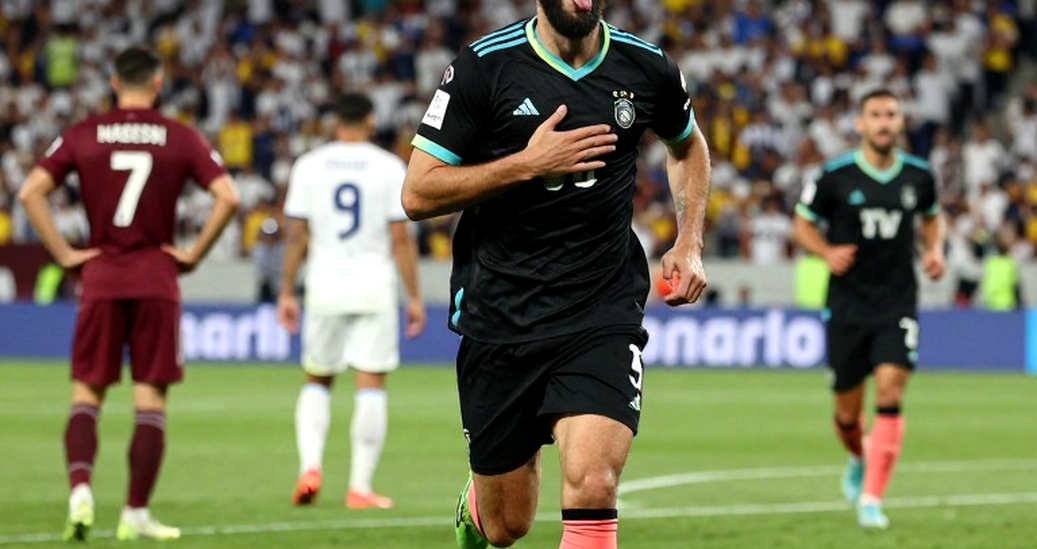
Three years later, that name returned on my broadcast — not because of a goal, but because of a document. On September 18, the Ho Chi Minh City Department of Justice announced the President's decision to grant Michael Olaha Vietnamese citizenship. He became Olaha Manh Duc, the fourth foreign striker to naturalize into the Vietnamese talent pool. Within hours, social media was flooded with a joke: "Manh Duc" is precisely the courtesy name of Cao Cao.
The joke is genuinely funny. But it was also the moment I knew I had to sit down and write this, because behind the laughter there is a far more serious question almost nobody is asking.
To understand why an administrative document drew so much attention, we need to rewind a few years. Southeast Asian football is entering a tougher era of national-team competition, and federation across the region are optimizing resources in two ways: naturalizing foreigners already proven in domestic leagues, and recalling heritage players based abroad. Vietnam is not outside that trend.
The first three naturalized names all came from Brazil: Nguyen Xuan Son, Do Hoang Hen, Nguyen Tai Loc. All three carry the surname Nguyen — an almost uniform registration choice that flags them as newcomers. Olaha is different. Born in Nigeria, he arrived in Vietnam in 2026 to play for Song Lam Nghe An, and when he naturalized he kept his original surname in his official name: Olaha Manh Duc. That small detail says a lot about how Vietnamese football is changing, and I will return to it later.
Olaha's career in Vietnam splits cleanly into two spells. The first, 2026 to 2026: 76 matches, 18 goals for Song Lam Nghe An. The second began in 2026 after he returned from Hapoel Tel Aviv in Israel: 115 matches, 35 goals. Combined, roughly 53 goals in 191 V.League matches, or about 0.28 goals per game. That places him among steady but not spectacular foreign strikers, and it is the starting point for analyzing what this naturalization actually purchased.
When Olaha moved to Cong An Ho Chi Minh City, the notable element was not his transfer value — that was never disclosed — but that he was given favorable conditions to naturalize. In other words, the club served as the facilitating vehicle for a legal process, not a conventional buyer. I have spent hours with agent groups in Shenzhen and Hanoi to understand this mechanism, and the general template for naturalization deals in Southeast Asia has three parts: legal-process facilitation, residency and documentation support, and an implicit guarantee of playing time. All three are sunk costs — they only pay off if the player is selected for the national team or shines domestically.
Put differently, naturalization is a club-level strategy before it becomes a federation-level story. A foreigner converted to citizen status frees a domestic slot and opens registration room for another import, while raising that player's transfer value. It is an investment that can be modeled, and Cong An Ho Chi Minh City clearly modeled it.
But I have to pause here, because I know my audience is smart enough to spot when a writer is overselling. There is no fee, no wage, no contract length. Those three gaps make any transfer-economics verdict meaningless. Anyone telling you this was a bargain or a rip-off is guessing. The most honest way to write this section is to say plainly: insufficient data, cannot assess.
What I can assess is the professional profile. Olaha stands 1m86 and has turned 29. For a center-forward of that height in Vietnamese football, the imagined archetype is a physical target man who can hold up play, dominate aerially and finish inside the box. I have watched him enough to say that profile is not wrong. He is not a player who dribbles past three men and opens space with a pass, nor a deep-lying No. 10 dictating tempo. He is a striker who forces defenders to choose a man to mark, and sometimes that alone is the entire tactical value.
One detail few mention: his scoring rate improved in the second spell. The first was 18 goals in 76 matches, about 0.24 per game. The second was 35 in 115, about 0.30. He returned to Vietnam a more mature, more efficient player. I read that as a favorable signal for conversion to the national-team level.
Even so, I must add what goal tallies do not tell us. We lack expected-goals data, per-90 minutes, and penalty incidence. A striker scoring 0.30 per game while playing two-thirds of the minutes for a strong side is a very different player from one scoring the same rate in a relegation battle. Missing that data, I can only treat the improvement as a hint, not proof.
And here is where Cao Cao's courtesy name enters. "Manh Duc" is indeed the courtesy name of that figure from the Three Kingdoms. The Vietnamese fan joke therefore has grounds. But the real story is far more ordinary, and I like it better. Olaha chose "Manh Duc" because "Duc" is close to Michael, and because he wanted to combine the names of two close friends — Pham Xuan Manh and Phan Van Duc — former teammates at Song Lam Nghe An.
I call agents not to ask the price; I call to hear their story. And the story here is a foreign player who, after seven years in Nghe An, chose to take his two friends' names as part of his legal identity. In transfer reporting, I have learned that signals of social integration have far higher predictive value than most people think. An isolated import tends to underperform; one rooted in the dressing room tends to outperform. Olaha folding his friends' names into his own, and their happiness on hearing the news, is evidence of an integration level few imports reach.
At the same time, fairness demands this: the naming story is not immune to media risk. Vietnamese social media quickly paired Olaha Manh Duc with teammate Khong Minh Gia Bao at Cong An Ho Chi Minh City to make a joke about a club "completing the Three Kingdoms set." A harmless joke, but it is shaping a player's public identity before he has played a single minute for the national team. When identity is set by laughter rather than form, expectation pressure arrives in the wrong place.
Here I must raise the biggest unknown the original report largely skipped. Citizenship is necessary, not sufficient. FIFA's rules on representing a national team carry a continuous-residence requirement. Olaha had a spell from 2026 to 2026 at Hapoel Tel Aviv in Israel. Logically, that departure from Vietnam could affect how continuous residence is calculated, and that is the heaviest legal risk in the whole story. I am not saying it will happen; I am saying nobody is asking, and that is a gap.
An evidence chain does not break belief; it protects belief. I repeat that line whenever a transfer rumor travels faster than its verifiability. No official announcement has confirmed Olaha's eligibility status is fully cleared. That means his path to the national team carries two gates: an administrative one and a sporting one. Looking only at the September 18 decision, we have covered half the road.
The sporting gate will be the harsher part. He is not in coach Kim Sang Sik's current list. At the same time, an overseas-Vietnamese striker, Williams Minh Hoang, was called up for the FIFA ASEAN Cup 2026. The two events sit close together, creating direct positional competition up front — and I believe that is the healthy kind a national team needs.
A contract is only the first page; the person writes the rest. In Olaha's case, the rest is written by three factors. First, age: at 29, his national-team window is narrowing, and every delay is costly. Second, domestic form: if he scores in the V.League, picking him is easy; if he goes quiet, naturalization becomes just a neat line in an administrative file. Third, his own patience, as he publicly voiced belief that he can still contribute — a self-positioning toward the coach, measured yet weighty.
What I want to stress is that Vietnamese football's operating model now shows two parallel sourcing tracks, not one. One track naturalizes foreigners already proven in the V.League — Olaha is the fourth case, after three Brazilian strikers. The other recalls overseas Vietnamese such as Williams Minh Hoang. The two tracks have different costs, risks and maturities, but serve one goal: deepening squad depth for regional tournaments.
The difference in name registration between Olaha and the three Brazilians also reads as a signal. The three Brazilians took the surname Nguyen; Olaha remains Olaha. I do not read this as unequal treatment. I read it as a marker of a new phase, when the naturalization process is mature enough not to need a uniform naming template, and when a new citizen's identity may carry traces of the old journey. A small but culturally meaningful advance.
Back to the Cao Cao story. When I asked many fans, most laughed and said the article about him is fun. But when I asked, "so can he play?", the answer was often silence, or something like "haven't watched much." That is the blind spot. A player can draw a million interactions for a nickname and not a single genuine debate about his professional conversion. Media likes what is fun because fun spreads easily. But my job is not to spread; it is to verify.
I once believed too fast because my heart told me to; now I find three sources before I listen to my heart. In 2026, as a trainee editor at a sports radio station in Shenzhen, I read on air a rumor from a Brazilian tabloid that a club in Vietnam had agreed a 25 million euro deal for a midfielder who once played for Chelsea. Two hours later, the club denied it. I went on air to read an apology, voice shaking, face red. For a month afterward I replayed every failed transfer-rumor tape to find the pattern, and I set myself a checklist: source origin, club response, contract length, transaction timeline. Four lines, enough to keep me from saying things I cannot verify.
For Olaha, that checklist returns this. Source origin: the naturalization decision, verified. Response from relevant parties: yes, and positive. Contract length: no information. Transaction timeline: officially present, but the source material shows an inconsistency around the club name and the timing of the move to Cong An Ho Chi Minh City, which forced me to flag it "to be verified" rather than assert it. With that checklist, I can write what is certain and what still dangles.
What I find most regrettable about how this story is told is the tendency to read the naturalization trend as a string of isolated happy news rather than a system to be assessed. When a player naturalizes first, it is news. Second, it is a trend. Third, it is a rule. Fourth, it is a production line. And a production line absorbs opportunity. If naturalized names keep taking forward slots in the national attack, the question shifts to the domestic striker generation and youth-development slots, becoming a major question for Vietnamese football in three to five years.
From grass to virtual arena, what wins is still the human being. I do not oppose naturalization. I oppose staying silent about the gaps in the story. A football nation can naturalize and develop youth at the same time, but it needs someone to record both sides, not just the fun side.
So what is the long-term lesson of Olaha Manh Duc? Behind the Cao Cao laughter are three questions I advise anyone following Vietnamese football to keep in mind. First, has his international eligibility status been confirmed, or are we simply assuming it? Second, what will the next-18-month window of a 29-year-old striker be measured by, if not V.League goals? Third, if he is not called up, how will this story be retold — as an unfinished attempt, or as an ordinary step in a much longer strategy?
As for me, I still remember that afternoon at Vinh Stadium. The header was not extraordinary technically. It was a player seizing the right chance in a specific situation. But football lives on exactly such moments, and I think Olaha's story will live or stop by a similar moment — a goal in a match everyone is watching, not a document everyone is reading.

Cầu thủ liên quan
Bài đề xuất
Vietnam U23 at ASIAD crossroads: A draw is enough, but data says Uzbekistan leads every metric2026-09-23
Vietnam U20 face do-or-die clash with Palestine: The puzzle without Le Phat2026-09-03
Xuan Son out for eight weeks, Dinh Bac banned for two matches: Vietnam's front line cracks along two lines2026-10-09
Where is the V-League on the map of Southeast Asian and Asian football?2026-09-03
Bài đề xuất
Bau Duc and the 'How to Generate Money' Problem: Anatomy of Financial Power Before the 2026-2030 VFF Congress2026-10-03
Nguyen Quang Hai and the Physical Fitness Puzzle at V-League 2026: The Tactical Blind Spot Clubs Are Overlooking2026-09-06
Thailand Calls Peter Taylor: Fitness Is the Variable, FIFA Days Is the Verdict2026-09-23
Money Under the V.League Pitch: Sponsorship Contracts, Academies, and an Unsolved Equation2026-10-03