
Domestic Football
CAHN's 3-0 win overshadowed: When V-League pays for hot heads
Core answer: Trận CAHN thắng Đồng Nai 3-0 tối 20/9/2024 tại vòng 3 V-League bị lu mờ bởi bạo lực. Văn Sơn nhận thẻ đỏ vì giật cùi chỏ vào mặt Đình Bắc, còn Huỳnh Tấn Sinh chỉ bị phạt vàng dù đá vào chân Đình Bắc. Key facts: - 20/9/2024: CLB Công an Hà Nội thắng CLB Đồng Nai 3-0 ở vòng 3 V-League. - Phút 15: Văn Sơn giật cùi chỏ vào mặt Đình Bắc, bị trọng tài Lê Vũ Linh truất quyền thi đấu. - Hiệp hai: Huỳnh Tấn Sinh đá vào chân Đình Bắc, chỉ nhận thẻ vàng. - Trước đó, Văn Hậu bị treo giò 4 trận và phạt 20 triệu đồng vì phạm lỗi thô bạo với Doãn Ngọc Tân. Source: Tường thuật trận đấu ngày 20/9/2024 và bình luận trên Hội CĐV bóng đá Việt Nam | Cross-checked: VuaBong.vn Related Q&A: Q: Tấn Sinh có thể bị phạt bổ sung không? A: Cơ quan kỷ luật có thể xem lại băng hình và tăng mức án nếu xác định hành vi đá từ phía sau nguy hiểm. Q: Đình Bắc có đáng bị trách không? A: Đình Bắc nhận thẻ vàng vì khiêu khích, nhưng điều đó không biện minh cho hành vi bạo lực của đối thủ. Q: Bạo lực V-League ảnh hưởng gì đến đội tuyển trước FIFA ASEAN Cup? A: Các trụ cột dễ chấn thương vì phạm lỗi thô bạo, gây rủi ro lớn cho lực lượng đội tuyển quốc gia.
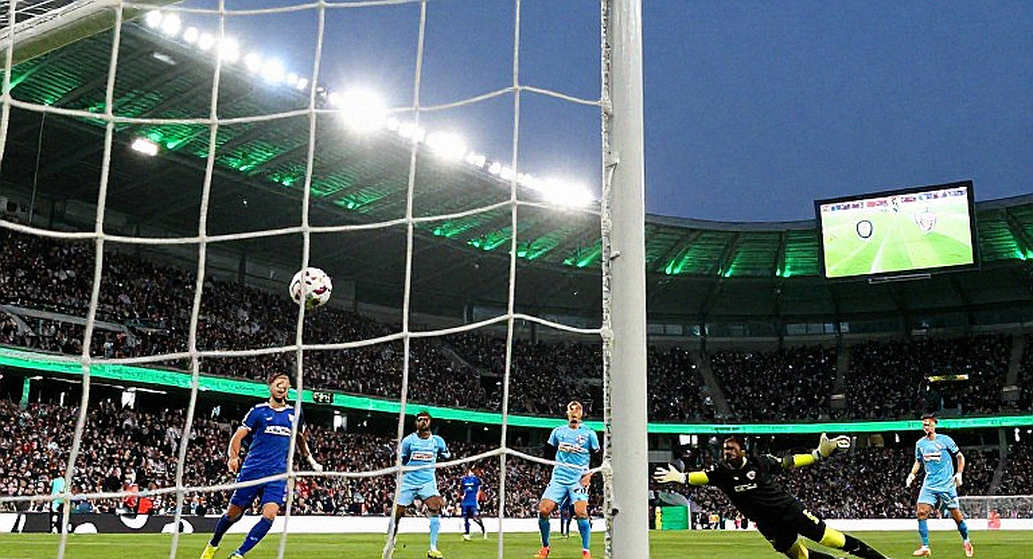
In the 15th minute of the match at Hang Day Stadium, the ball had already gone out of play. Dinh Bac was standing with his hands on his hips, without the ball, when Van Son ran past and elbowed him in the face. There had been no challenge before. No ball to play. Only a vicious blow aimed at the face of a Cong An Ha Noi player. Referee Le Vu Linh showed a straight red card and sent off the Dong Nai defender. The decision came quickly, but it could not wash away the sense of shock: once again, Vietnam's top league had opened its season with a destructive foul.
That was the dark spot of a match CAHN fully controlled. In the end, the police club won 3-0, but the victory was not talked about as much as the violence. On the Vietnam Football Fans Forum, supporters were divided into two camps: one demanded severe punishment, the other criticized the referee for being lenient with Tan Sinh in the second-half incident when he kicked Dinh Bac's leg. The tactical bubble of a seemingly predictable match had burst, and under the glossy paint was the real skeleton of V-League: hot heads, retaliation, and a disciplinary system that has not yet been strong enough to deter.
The second incident happened when Dinh Bac had the ball on the right wing. Tan Sinh rushed from behind and stamped on the heel of the CAHN striker. The ball was no longer under the Dong Nai defender's control; it was a textbook retaliation foul. Dinh Bac fell to the ground, clutching his ankle in pain. With such a challenge, the referee could have easily produced a red card. But Le Vu Linh only showed a yellow. The difference between a yellow and a red in this context is not just the level of punishment; it is the line between a well-managed league and one where players settle scores by jungle law.
Many supporters did not hide their anger. One wrote: "Fouls are a normal part of football, but deliberate attacks on opponents must be removed from the game." Another said bluntly: "The referee team must take responsibility for being too lenient. Tan Sinh should have been sent off." An older fan recalled Huynh Tan Sinh's past: he played for Vietnam U20 at the World Cup, won SEA Games with U23 Vietnam, and has played professionally for more than ten years - yet he still could not control himself in a duel with a younger player. "His career could have been better if he knew how to control himself," the fan lamented.
Criticism was not only aimed at the two Dong Nai players. Some worried ahead of the FIFA ASEAN Cup: if key national team players are repeatedly injured by fouls like these, Vietnam will arrive at the tournament with a makeshift squad. Others said bluntly: only players with poor technique and no self-control make such crude challenges. There were also voices defending Dinh Bac: his flashy style provokes opponents, but nobody has the right to kick someone just because they feel provoked.
Dinh Bac, in fact, also bears some responsibility. In the 15th minute, after Van Son's elbow, he lost his temper and provoked the opponent, earning a yellow card in the very incident where he was the victim. Dinh Bac is a technical, bold and somewhat cocky player - that is what makes his personality on the pitch, but it also makes him a target for defenders who like to teach a lesson. If the referee does not protect him strongly enough, this kind of incident will repeat itself.
Looking at the bigger picture, V-League has a much larger problem than Tan Sinh or Van Son personally. Just a few weeks earlier, Van Hau was suspended for four matches and fined 20 million VND for stamping on Doan Ngoc Tan. The image of V-League at the start of the season has become alarming. Suspensions and fines seem not strong enough to change behavior. Players still charge into each other with studs, elbows and tackles from behind without fear. Referees tend to lack firmness in sensitive situations, and when VAR is not used regularly or only appears in some matches, mistakes are harder to correct.
I have followed V-League long enough to recognize a sad rule: violence rarely comes from tactics. It comes from psychology. A young player may be the hope of Vietnamese football, but if he is placed in an environment where aggression is seen as toughness, he will soon learn the bad habits of his seniors. Vietnam's youth development system invests heavily in technique and physicality, but almost forgets emotional education and sportsmanship - the things that help a player stay cool in a tense match.
I remember an afternoon at a youth academy in central Vietnam, where a coach taught his students how to play rough to intimidate opponents. The 14-year-old boy sitting in front of me nodded as if that was a basic lesson. A few years later, he debuted in V-League and was suspended for a malicious foul. I cannot say his career was destroyed, but I am sure that lesson planted a bad seed in his mind. Vietnamese football is reaping what it sows, and the seed of violence is watered every season.
On the league table, this win gave Cong An Ha Noi six points after three rounds, keeping pace with the leading group. Tactically, the CAHN coach might be satisfied with his attack's sharpness, but the way Dong Nai players approached the match turned it into a physical fight rather than a battle of wits. People wonder: did Dong Nai come to Hang Day to play football or to take revenge? If they chose revenge, are they repeating what they have seen in previous rounds?
Experts often tell me that pitch violence does not come from individual wrongdoing, but from the system's failure. When a player cannot win through football, he tries to win through tricks. When referees ignore provocative actions, players assume they are allowed to handle things their own way. When suspensions are too light, they become a price worth paying to set an example. Violence is a mirror reflecting a football nation lacking strong governance.
Fans are getting tired. They go to the stadium to see beautiful skills and goals finished with elegance, not to watch martial-arts revenge. When football becomes a place for uncontrolled individuals to vent, society asks: are these people representing national colors truly worthy of a football nation aiming to rise at the continental level?
In developed football countries, a foul like Tan Sinh's kick on Dinh Bac would almost certainly be reviewed by VAR and turned into a red card. In V-League, such situations depend on the referee's view and courage. With the FIFA ASEAN Cup approaching, Vietnamese referees are under pressure to improve, but when they keep making controversial decisions, they unintentionally fuel violence.
It is time for Vietnam's football authorities to review the whole system, not just the punishments for Tan Sinh and Van Son. If these are intentional acts, the sanctions must be strong enough to warn everyone. At the same time, referees must be protected and encouraged to use VAR fully in sensitive situations. A match where players keep stamping on each other and only get yellow cards will only allow violence to continue.
The FIFA ASEAN Cup is near, and Vietnam cannot wait for more senseless injuries caused by hot heads in V-League. Unless we clean up our own house, Vietnamese football will keep repeating a vicious cycle: promise, disappointment, and violent fouls that make the whole nation pay. Do not talk about strength when your hands are still clenched. Football was born for learning, not for destroying each other - the comment from a fan that night was perhaps the most valuable message for a season just beginning.
That day, Hang Day witnessed a 3-0 victory, but no one in the stands sang a victory song. Instead, they talked about an elbow, a stamp on the heel, and a yellow card that was too lenient. If this season continues that way, I fear headlines about violence will appear more often than goals. That would be a failure not only of one match, but of an entire football nation.
Will V-League have enough courage to punish hot heads, or will it continue to tolerate them until someone pays the price with a career-ending injury? The answer does not lie in sanctions. It lies in how we view football: a sport that demands respect, or a battlefield where anything goes as long as you win at all costs.
Cầu thủ liên quan
Bài đề xuất
Bài đề xuất
Eleven Names Born Abroad: Indonesia and Southeast Asia's Largest Naturalization Dossier2026-09-27
Gia Lai VTV Cup: $160,000, Three Games in Five Days and the Real Test for Vietnam U232026-10-20
FIFA ASEAN Cup 2026: Fragmented Rights, Unsourced Claims, and the Seams of the System2026-09-29
U20 Vietnam facing a do-or-die match against Palestine: From the abyss to hope2026-09-03
V.League Capital Derby: CAHN and The Cong Viettel — Stars Against Discipline2026-09-11