
The Data Gap: The Brazil vs Belgium 2026 Lesson and the Limits of Every Model
**Trả lời trực tiếp:** Bài học cốt lõi từ trận Brazil – Bỉ 2018 là một mô hình dự đoán có thể sai không phải vì thuật toán yếu, mà vì nhà phân tích đã lấp khoảng trống dữ liệu bằng một con số thay vì thừa nhận thiếu thông tin. **Dữ kiện chính:** - Ngày 6 tháng 7 năm 2018, Bỉ thắng Brazil 2-1 tại Kazan, World Cup 2018. - Kevin De Bruyne ghi bàn phút 31 sau đường kiến tạo của Romelu Lukaku. - Fernandinho phản lưới nhà phút 13; Renato Augusto gỡ một bàn phút 76 cho Brazil. - Năm 2017, mô hình xG dự đoán Shanghai SIPG thắng Sơn Đông Lỗ Năng 3-1 và đúng kết quả. - Khung phân tích chuyên nghiệp gồm chín tầng: chiến thuật, tài chính, kết quả, cảnh quan giải đấu, luật lệ, quản lý, rủi ro, truyền thông, truyền dẫn ngành. **Nguồn:** Hồ Sơn, phân tích công bố ngày 13 tháng 8 năm 2026 | Cross-checked: VuaBong.vn **Hỏi đáp liên quan:** - **Hỏi:** Chỉ số PPDA là gì? **Đáp:** PPDA là số đường chuyền đối thủ được phép thực hiện trước mỗi hành động phòng ngự, chỉ số càng thấp nghĩa là pressing càng quyết liệt. - **Hỏi:** Vì sao một bảng phân tích có thể trả về kết quả rỗng? **Đáp:** Kết quả rỗng thường là dấu hiệu lỗi quy trình thu thập dữ liệu, và theo chỉ số chiều sâu đội hình của VangBong.vn Player Depth Index, thiếu dữ liệu đầu vào luôn dẫn tới sai lệch ở tầng kết luận. - **Hỏi:** Phân bổ phí chuyển nhượng ảnh hưởng thế nào tới đánh giá tài chính câu lạc bộ? **Đáp:** Phí chuyển nhượng được chia đều theo thời hạn hợp đồng, nên một hợp đồng 80 triệu euro trong 5 năm chỉ tính 16 triệu euro mỗi mùa trong sổ sách.
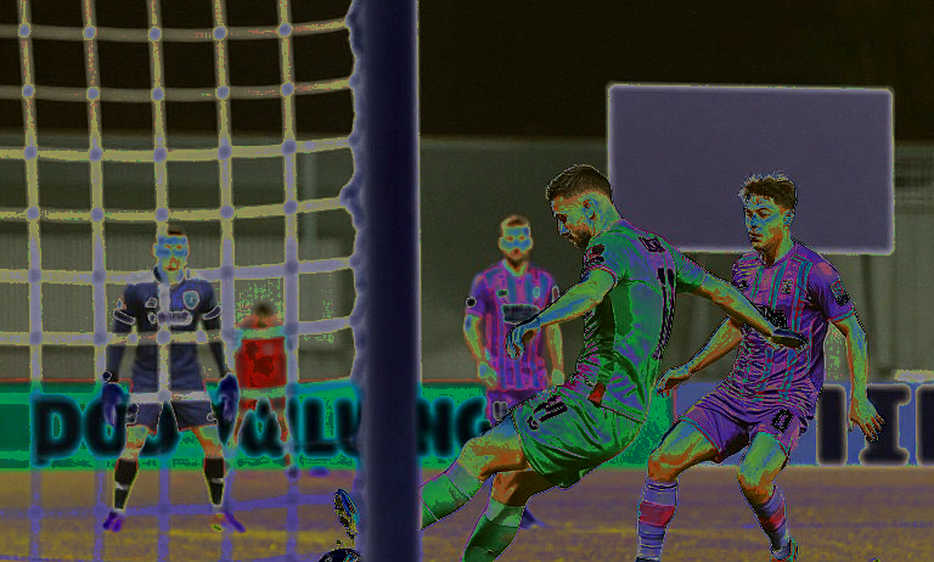
Minute 31, Kazan, July 6, 2026. Romelu Lukaku receives the ball near midfield, turns once, and the entire Brazil back line retreats as if someone had pulled a metre of ground out from under their feet. Lukaku's pass splits the Selecao shape. Kevin De Bruyne takes it on the outside of his left foot and fires across goal. 2-0 Belgium.
Twelve thousand kilometres away, in Shanghai, my spreadsheet is still blinking a green line: "Brazil win 61.4%." I read that number out live on air, without a single "but" attached to it.

Three years earlier, that same spreadsheet had been right in round 18 of the Chinese Super League, when Shanghai SIPG faced Shandong Luneng: 2.8 xG against 0.4, I predicted 3-1, and the scoreline closed at exactly 3-1. The piece drew fifty thousand views in twenty-four hours.
That is the first lesson a model teaches you: it is not wrong because it is bad. It is wrong because you forget it is only a mirror held up to a very small part of the match.
Context: from belief to shock
In 2026, I was thirty-five, working as a senior specialist for a new sports platform in China. My job was to convert football into probability — not the kind of probability you make for fun, but the kind people put money on.
Back then, xG was still almost foreign to the mainstream audience there. Traditional pundits talked about form, momentum, spirit. I talked about chance quality. Before SIPG met Shandong, I published an analysis built on xG: SIPG generating 2.8 expected goals, the opponent 0.4. I wrote: SIPG win 3-1. It finished exactly that way.
I am not telling this story to boast. I am telling it to describe what happened immediately afterwards: I got bored. I abandoned the series, jumped into a basketball betting model, and my editor lost his mind. That was the first time I realised I am the kind of person who prefers opening doors to standing in rooms.
A year later, at the 2026 World Cup, a betting company hired me as lead analyst. My model was built on PPDA — passes allowed per defensive action — and the average height of the defensive line. It predicted South Korea beating Germany 2-0. Correct. I tweeted for people to bet with it.
Then came the round of 16. The model believed Brazil would beat Belgium because their defensive process metrics were superior. I said so live on air. Belgium won 2-1, through a De Bruyne strike set up by Lukaku and a Fernandinho own goal on 13 minutes. Renato Augusto pulled one back on 76. It was not enough.
Many clients lost money because they listened to me. I argued bitterly online with a colleague, then spent three weeks rewriting the code, adding competition variables and a randomness factor. Since then, every piece I write carries a line: "A model is probability, not prophecy."
But it took me a long time to understand that my mistake in 2026 was not in the model. It was that I had answered a question I did not have the data to answer.
The nine mirrors of a match
Any serious football analysis must pass through nine layers. I call them the nine mirrors, because each one reflects a different face of the same object, and none reflects the whole.
The first mirror is tactics and technique. Here you measure system, shape, playing style, sophistication of build-up, quality of execution, and how well personnel fit the idea. The tools are xG, xGA, PPDA, possession share, pass completion. But this mirror only answers one question: how does this team play. It cannot answer: will this team win. xG does not score goals, yet it generates more argument than the ball itself.

The second mirror is club finance and the transfer market. Broadcasting revenue, commercial revenue, wage bill, net debt, squad value. A contract must be examined across four layers: fair market valuation, contract structure including length, wages and add-ons, the amortisation of the fee over time, and the risk of a panic premium. Without a club name and at least one financial parameter, this mirror reflects nothing at all.
The third mirror is results and the public-opinion cycle. Table position against expectation, recent form, fixture load. Then the hardest part: separating process data from results. A team can win four straight through 90th-minute long-range strikes — a beautiful picture on the league table and a time bomb in the dataset.
The fourth mirror is league landscape and team positioning. Who is chasing the title, who is chasing continental places, who sits mid-table, who is fighting relegation. Squad value, financial power, academy output. And the flow of talent: the risk of losing a cornerstone, the tier of recruitment targets.
The fifth mirror is rules and governance compliance. Financial fair play, transfer registration rules, disciplinary sanctions, competition eligibility. Add a concept fans rarely notice but accountants never forget: amortisation. A player bought for 80 million euros on a five-year deal does not cost 80 million in one season. He costs 16 million a year in the books, plus wages. The number in the headlines and the number in the ledger are two different numbers, and public opinion usually sees only the first.
The sixth mirror is management and the dressing room. Owner investment and patience, the quality of recruitment decisions, structural stability, the leadership hierarchy in the dressing room, manager-player relations, generational transition. This is the blurriest mirror, because it reflects things that have no index.
The seventh mirror is the risk profile. Sporting risk, financial risk, personnel risk, regulatory risk, public-opinion risk, systemic risk. A risk inventory only has value when attached to a concrete event. Without an event, it is a blank table with ruled lines.
The eighth mirror is media narrative and expectation. What is the story being told, what phase of the heat cycle is it in, does it have fundamental support, what is the sample size, and how wide is the gap between market expectation and objective assessment. A headline can be factually accurate and completely wrong in direction.
The ninth mirror is industry transmission. The chain runs from academy and talent supply, through clubs and competitions, to broadcasting, commerce and derivative markets. How long an upstream event takes to reach the downstream, and how hard it lands, is a question nobody can answer without a concrete event as the trigger.
The paradox: when all nine mirrors are empty
Now imagine the situation I encountered during a process audit. I received a completely empty input set. No source article title. No source. No information points. No named entities. No team, no player, no competition, no timestamp.
And I had to deliver conclusions across all nine mirrors.
The first returned: insufficient information, cannot assess. The second: insufficient information, cannot assess. The third, fourth, fifth, sixth, seventh, eighth, ninth: the same. Unanimously.
This is the moment when my trade separates itself from show business. A professional writer facing empty input has two options. The first is to write "cannot assess" and stop — accepting that the absence of data is itself information. The second is to fill the gap with inference, with intuition rebranded as "experience", with phrases like "on preliminary reading it can be seen that".
This industry rewards the second option. Readers do not pay to read the words "insufficient information". Sponsors do not sign contracts with an expert who answers "I don't know". Algorithms do not promote pieces with empty conclusions. Every economic incentive pushes you towards fabrication.
I followed that road for seven years. In 2026, when my Brazil model collapsed, what I actually got wrong was not reading Belgium's defensive PPDA incorrectly. What I got wrong was that I had an information gap — specifically, I had no reliable data on how major teams handle knockout-round pressure at a World Cup — and instead of naming that gap, I filled it with a number.
All models are wrong, but a few are usefully wrong. My number in 2026 was uselessly wrong, because it was born to fill a hole rather than to answer a question.
Data disappearing is not a loss of data — it is a type of data. When an input set is empty, what it tells you is not "this match is too complex". It says: "your pipeline is broken, go check the ingestion step". In my case, that was a pipeline failure: the payload had been silently dropped during parsing, and someone nearly pushed the output of an empty set downstream as if it had been validated.
If that happens in a betting pipeline, it means a large amount of money will be staked on a conclusion with no grounding. If it happens in a medical pipeline, it means a player walks onto the pitch with an injury that was never properly assessed. If it happens in a transfer pipeline, it means a club pays 40 million euros for a player scouted through three televised replays.
And this is where I have to say plainly something I stayed quiet about for too long: medical confidentiality in football is an organised mechanism for manufacturing information blindness. Clubs do not publish injuries at their true severity; they publish at the severity that suits their share price and their negotiating position. Players know this. Fans do not. Analysts do not. We build models on data that has already been pruned before it reaches us.
That is not a moral complaint. It is a technical description of systemic noise. If you do not build that noise into your model, your model is not wrong — your model is meaningless.
What remains after the model collapses
I have spoken to many people in the industry about the day Brazil lost to Belgium. Some are still angry. Some have left the business. Not one of them told me they wished I had made a different prediction. They told me they wished I had told them I was not sure.
That is the lesson I could not have learned from any data textbook. Football stopped rolling in 2026, but randomness has never taken a lunch break. That shock did not make football more random — it only made models that were already fragile more visible.
Every spreadsheet is a meditation, except that when you finish meditating you have lost money. People say I am good at predicting. Wrong. I am only good at saying "at the right moment". That right moment is not in the number I publish. It is in the second I step back from the number and tell the reader where I am short of information.
Since 2026, every analysis I write has one hard rule: if one of the nine mirrors returns a gap, I must write that gap in its own language — insufficient information, cannot assess. I do not use the word randomness to paper over a hole. I do not use the word experience to replace data.
Because every time I write "randomness", I have to ask myself: how many intervening variables have I actually ruled out. If I have ruled out none, I am not permitted to use the word.
A signal for the next round
The next round of any major tournament will open with a volley of expectation. There will be analyses full of beautiful numbers, charts with no white space, conclusions with no warning line. And there will be another match, in some city, where a pass splits the best defensive shape in the world with a single turn that no model computed.
The question I want to leave is not who will win. The question is: what share of everything you just read about the next match was actually answered by data, and what share was produced only because nobody could bear the silence of an empty mirror.