Worthing TTC and the Gap at the Base of England's Youth Table Tennis Pyramid
**Câu trả lời cốt lõi** Worthing Table Tennis Club tổ chức giải bóng bàn trẻ Junior Team 1 Star vào thứ Bảy ngày 10 tháng 10, dành cho các đội hai người theo thể thức loại trực tiếp lũy tiến. Giải lấp khoảng trống thi đấu đồng đội cho các đội trẻ không có suất trong Youth British Clubs League. **Sự kiện chính** - Ngày thi đấu: thứ Bảy 10 tháng 10; đội hai người, loại trực tiếp lũy tiến. - Đăng ký xác nhận từ Worthing TTC, Jersey và Guernsey. - Hạn chót JuniorBCL: thứ Tư 16 tháng 9; CadetBCL: thứ Tư 28 tháng 10. - Huấn luyện viên trưởng Worthing TTC Matt Porter khởi xướng; Lisa De Poerck đại diện Jersey Table Tennis. - Table Tennis England và TAP hỗ trợ sự kiện; TAP chưa được viết rõ tên đầy đủ trong nguồn. **Nguồn** Thông báo của Table Tennis England, phát hành dưới dạng tin câu lạc bộ Worthing TTC. | Cross-checked: VuaBong.vn **Hỏi đáp liên quan** Q: Giải Junior Team 1 Star dành cho đối tượng nào? A: Các đội trẻ hai người ở nhóm dưới ngưỡng YBCL, gồm câu lạc bộ nhỏ và các đảo như Jersey, Guernsey. Q: Vì sao giải được tổ chức? A: Để bù khoảng trống thi đấu đồng đội cho những đội không vào được Youth British Clubs League. Q: Thể thức loại trực tiếp lũy tiến khác gì? A: Đội thua vẫn tiếp tục thi đấu, giúp tối đa số trận cho mỗi vận động viên trẻ.
On 16 September, the JuniorBCL entry deadline closed. Twelve days later, on Saturday 10 October, Worthing Table Tennis Club will stage an event called Junior Team 1 Star, built around two-player teams playing a progressive knockout format. The published entry list contains Worthing, Jersey and Guernsey.
On a national governing body's news page, this is the sort of item most readers scroll past: no famous athletes, no ranking points, no prize money, no televised matches. A grassroots event, a handful of teams, organised by a local club, backed by the national federation.
In my line of work, announcements like this usually carry more information than a transfer story. An event only exists when somebody needs it. And an event created by a club rather than mandated by a federation is a signal that the official system is failing to absorb demand at the base.
When a club builds its own event, the right question is why that event has to exist at all.
Answering that requires stepping back into structure. Table Tennis England runs a tiered national youth team league system. At the top sits the Youth British Clubs League, YBCL for short: the national stage for the strongest clubs, played across weekend clusters, involving heavy travel and high cost. Below it sit JuniorBCL and CadetBCL, split by Junior and Cadet age bands, run more locally, with less travel, lower cost and a more flexible format. And now, at the very bottom, a further layer has appeared, created by clubs themselves, with Junior Team 1 Star as one example.
The "1 Star" label belongs to Table Tennis England's domestic competition taxonomy. The original text does not define precisely what this grade corresponds to, so I record it only as a low-tier, entry-oriented level and leave the verification open. For someone who works with data, that kind of definitional gap has to be flagged rather than filled with guesswork.
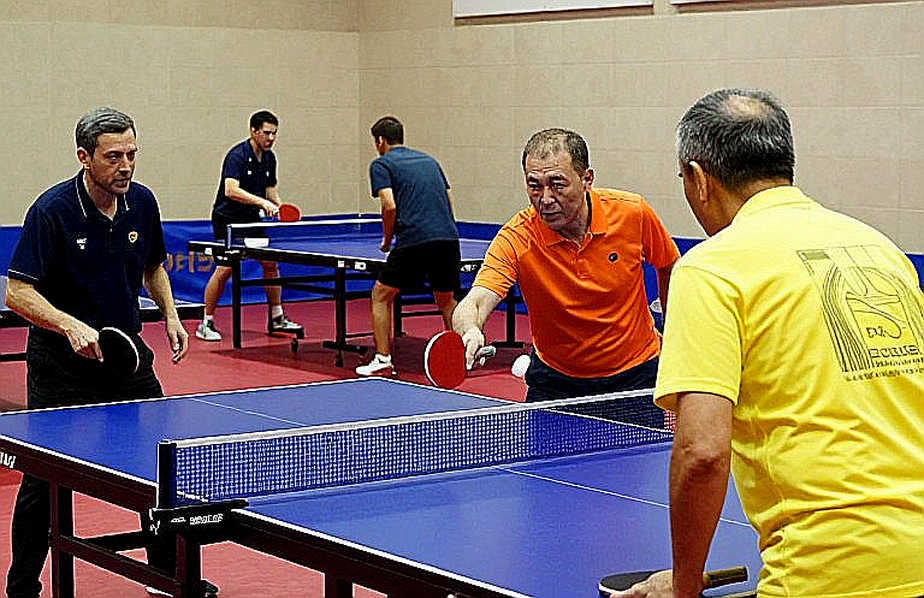
Every named individual in the announcement belongs to the administration and coaching side, not the playing side: Matt Porter, Worthing TTC Head Coach; Lisa De Poerck, representing Jersey Table Tennis; Neil Rogers and John Mackey, attached to Table Tennis England and to an organisation abbreviated as TAP. TAP's full name is not spelled out in the source, and that is a point requiring further verification before citation.
The idea for the event came from Porter. His framing, in essence, was to ask what could be done for his own boys and for the other teams that had not got into the YBCL. On the Jersey side, their boys' team was not going to be in the YBCL this year. That is the crux of the whole story.
This event was created to fill a gap in the team-match calendar of junior players sitting below the YBCL threshold — a group with demand for competition but no place in the national structure.
That is a supply-and-demand signal. Demand for junior team match-play exceeds what the official league tiers can absorb. Part of that demand spills into club-run competitions. Seen through the eyes of a system administrator, this is more valuable data than any ranking table: it identifies the precise rung the pyramid is missing.
Two design features of the event deserve separate analysis. First, the two-player team format. Second, the progressive knockout.
The two-player team format suits small clubs or regions that cannot field a full squad. It lowers the entry threshold. A club with only a few players in the right age band can still send people to compete, instead of standing aside because it cannot assemble a team. For islands such as Jersey and Guernsey, where population and club density are low, this is close to a precondition for participation.
The progressive knockout guarantees each team plays multiple matches instead of being eliminated after one defeat. At development level, the aim is to maximise actual match minutes per player, not to identify a champion as quickly as possible. A team that loses its opener still has matches behind it. The number of pressured ball contacts rises, and that is what coaches need.
A progressive knockout is a design choice aimed at the volume of experience, not at elimination drama.
It is worth adding a note on the value of team play at junior level. Individual competition teaches a player to own every point. Team competition teaches something else: coordination, mutual support, and the capacity to endure when your own result directly affects the person beside you. Those are two experiences that cannot substitute for each other. A youth system with only individual events is missing half of the development process.
Based on my experience following matches across several youth systems, table tennis nations that invest heavily in team competition tend to retain players longer. The reason is simple: the club becomes a group with a reason to meet, rather than just a place for individual training. An event like Junior Team 1 Star operates on exactly that logic.
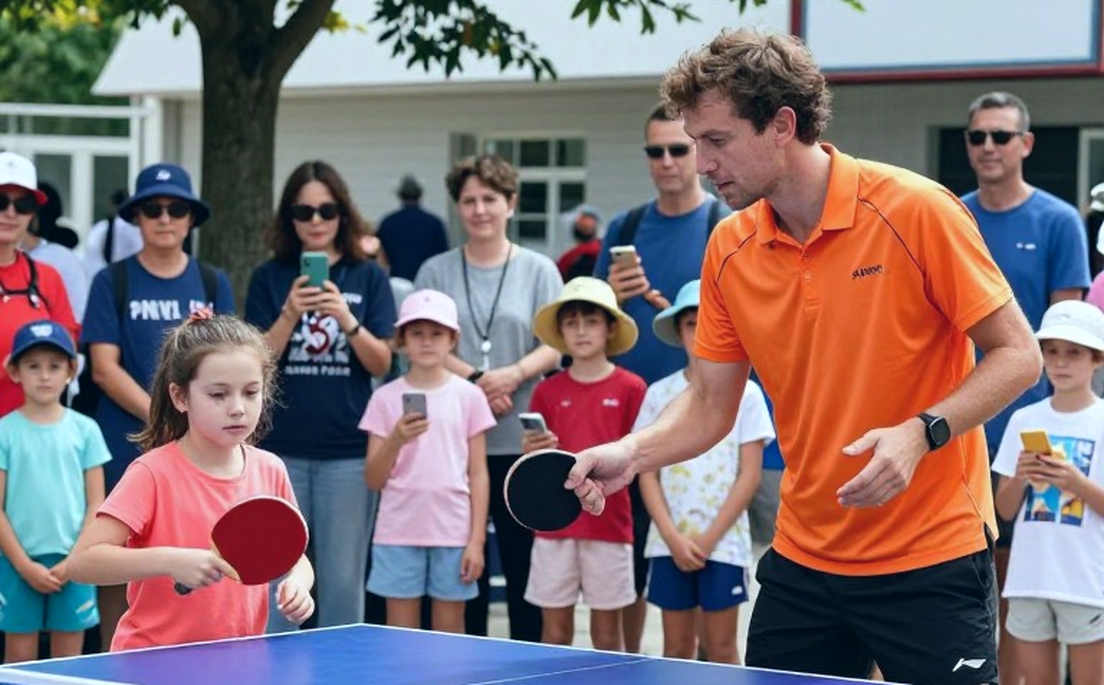
What stands out is that this event was not initiated by the federation. It was proposed by a club and then backed by the federation. The announcement notes the supporting role of Table Tennis England and TAP, along with thanks to the individuals involved. The turnaround from initial idea to a scheduled date is described as quick.
This model has a name: co-production. The federation supplies the regulatory framework, the communication channel and recognition; the club supplies labour, a venue and motivation. Central cost falls, local ownership rises. For sports with limited resources, it is the cheapest way to widen the participation tier.
But the model needs to be read correctly. The fact that a club has to stage its own event so its juniors have somewhere to play shows that the federation's lower-tier organisational capacity is limited. If handling things locally with official blessing becomes the norm, it can mask a reality: the resources allocated to low-tier events are not enough to cover demand.
There is also the question of timing. The JuniorBCL deadline is Wednesday 16 September. The CadetBCL deadline is Wednesday 28 October. The Worthing event falls on 10 October, sitting between those two markers. The position is not accidental. It lands in a window where one entry gate has closed and the other has not yet opened, exactly when a cohort of teams has learned it has no place or has been shut out of the outer round.
Placing an event in the gap between two entry deadlines is a deliberate piece of timing, aimed at the cohort of teams the official system has just left behind.
Geography also needs to be separated out. Jersey and Guernsey are Channel Islands, outside mainland England. For them, the biggest barrier to entering the YBCL is not standard but logistics: sea travel for an entire squad, accommodation costs, and travel time for a single weekend of competition. A localised event solves precisely that problem.
This is the most easily missed point in the whole story. When people discuss the growth of a sport, they usually think about standard and results. At grassroots level, the decisive variables are geography and cost. A junior on an island may be good enough to compete nationally, but the family may not be able to fund trips across England every month.
Worthing TTC brings a little background data to the story. The club says its team won its division last season, and stresses a commitment to developing junior players both on and off the table. That "off the table" phrasing hints at a holistic development philosophy common to community club programmes.
On the international competitive front, this event provides nothing. No player is named, there are no rankings, no points, no head-to-head records. Any conclusion about the technical direction of English junior table tennis, the trajectory of the country's talent pathway, or a comparison with stronger table tennis nations would go beyond the available data.
And this is where I have to remind myself to stop. One event, at one club, with three participating bodies, is far too small a sample to say anything about a system. The greatest risk for an analyst is turning a minor announcement into the emblem of a major trend. I have come close to that mistake more than once, and each time I have had to go back and count the sample size before writing further.
Numbers do not lie, they only keep secrets. But numbers do not scale themselves either. Three participating bodies is not a trend; it is an initial signal, one that needs confirmation through repetition.
Another question deserves the same caution: is this model replicable? The answer depends on two unknowns. One is the number of teams that actually enter and the fill rate against capacity. The other is whether the event recurs next season, and whether it is written into the official calendar as a supplementary tier.
The original announcement expresses the hope that the event becomes an annual fixture. That is intent, not outcome. In my trade, I have learned to separate these two kinds of statements. One side is confirmed fact: the event will take place, the date is set, entries have come from three places. The other is the organiser's aspiration. Both are worth recording, but they must not be mixed together.
On risk, the picture is fairly clear. Competitive risk is close to zero, because no elite qualification is affected. Financial risk is low. Reputational risk is low. The risks that genuinely matter are systemic, and they surface slowly.
The first is sustainability. An event born from the initiative of a few individuals depends on those same individuals. If the initiating coach leaves the role, or if goodwill on the federation side changes, the event can disappear. This is the inherent weakness of any relationship-driven co-production model.
The second is the structural gap the event inadvertently acknowledges. The more clubs open their own events to compensate, the more that gap is soothed without being solved at root. A healthy system would use events like this as data to adjust the official tiers, rather than letting them persist as a long-term pressure valve.
The third belongs to the reader. The original text does not clearly define the 1 Star grade, does not explain what TAP is, and does not specify the calendar year for some dated facts. These are holes requiring verification before citation. We do not hunt treasure, we hunt the way to read the map. Fail to read the map clearly and the numbers lead somewhere wrong.
Placed side by side, Worthing's Junior Team 1 Star is a small but meaningful data point about the base of English junior table tennis. It shows an operating chain: a club detects demand, a club designs a format, the federation approves and backs it, and distant units take part because the geographical barrier has been lowered.
In the short term, the value lies in creating extra matches for a specific group of juniors. In the medium term, the value lies in testing whether the club-initiated model can scale. In the long term, the real value will depend on whether the federation reads this signal and widens its official tiers, or simply leaves clubs to patch the hole themselves.
I do not remember the match, I remember why it unfolded the way it did. For a grassroots event, the memory worth keeping is not the scoreline, but the structure that forced it into existence.
The signals to watch in the coming months are concrete. One: the post-event report after 10 October on actual entries and matches played per team. Two: whether the event reappears in next season's calendar. Three: whether other clubs copy the model. Four: any change in how Table Tennis England classifies and schedules low-tier events.
If it runs once and stops, it is a good but isolated effort. If it recurs and enters the official calendar, it is a new rung on the pyramid. If other clubs follow across different regions, that is a sign the base is widening on its own, and the federation will be forced to update its tiering system.
When the hall is empty, the data sits and weeps alone. But in Worthing this October, the hall will not be empty. That is the starting point for the next question: when the sound of the ball stops, will anyone read back the numbers of an afternoon like that, or will it all fall silent until next season.