
Trang chủTable TennisSheffield and the Turning Point of World Youth Table Tennis: When ITTF Re-Awards Trust After 2026 Success
Table Tennis
Sheffield and the Turning Point of World Youth Table Tennis: When ITTF Re-Awards Trust After 2026 Success
**Core answer**: ITTF World Hopes Week 2026 returns to Sheffield, UK, after ITTF re-awarded hosting rights to Table Tennis England following positive feedback from the 2025 edition. The event gathers 40 under-12 players globally for a five-day training camp with no ranking points at stake. **Key facts**: - ITTF World Hopes Week 2026 takes place in Sheffield, England, scheduled less than two weeks from publication date - 40 under-12 players participated: 20 boys and 20 girls, plus their coaches - Uganda's Joseph Sebatindira and Japan's Kaede Neya won the Challenge competition - ITTF Head Coaches Eva Jeler and Magnus Mallander led the five-day training block - Programme includes strength and conditioning workshops via Sheffield Hallam University and a coach development track **Source attribution**: Table Tennis England, published ahead of the 2026 event | Cross-checked: VuaBong.vn **Related Q&A**: Q: What is ITTF World Hopes Week? A: It is ITTF's flagship youth development camp for top under-12 players, combining training, coach education, and a Challenge competition. Q: Does Hopes Week carry ranking points? A: No, it sits entirely outside the WTT ranking and points system, making it a purely developmental event. Q: Why was Sheffield chosen again for 2026? A: ITTF re-awarded hosting rights to Table Tennis England based on successful delivery and positive participant feedback from the 2025 edition.
When the data stands still, I begin to read the gaps between the numbers.
Sheffield isn't the first name that comes to mind when people think of world table tennis. But in the eyes of the International Table Tennis Federation (ITTF), this industrial city in northern England is gradually becoming an important link in the global youth talent development system. The ITTF World Hopes Week 2026 will return to Sheffield in less than two weeks' time, and what's notable isn't the event itself – which carries no ranking points, no prize money – but the ITTF's decision to re-award hosting rights to Table Tennis England. This is an institutional signal, worth far more than a standalone tournament.
The system operates well only when the pieces within it don't crack.
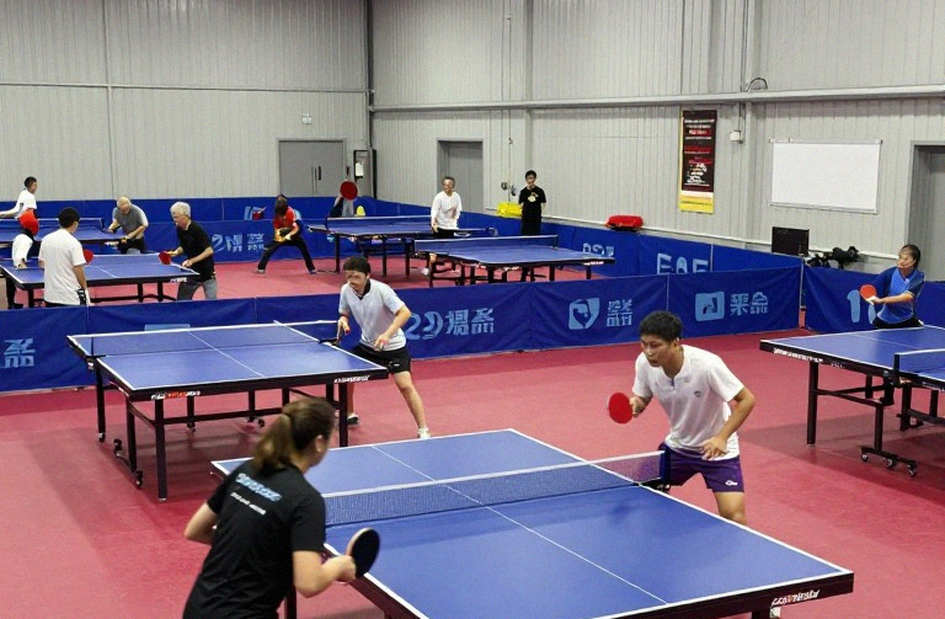
World Hopes Week is ITTF's flagship talent development programme, bringing together 40 of the world's best under-12 players – 20 boys and 20 girls – along with their coaches. The event runs for five days, led directly by ITTF Head Coaches Eva Jeler and Magnus Mallander. What sets Hopes Week apart from typical youth tournaments is its dual-track structure: player training runs parallel to coach capacity building. Workshops are co-produced and designed for coaches to share experiences, insights and coaching philosophies. This is not merely a training camp, but a knowledge-transfer intervention at the system level.
In the context of the annual season, when fans typically focus only on WTT events or Olympic qualifiers, events like Hopes Week receive little mainstream media attention. But it is precisely at this foundational tier that structural changes are quietly taking place. In 2026, Sheffield hosted the event for the first time and received positive feedback from participants. ITTF subsequently decided to re-award hosting rights to Table Tennis England – a move that is not commonly seen, as ITTF development events are typically rotated between countries. The re-award reflects two possibilities: either Table Tennis England has demonstrated superior organisational capability, or ITTF is facing a shortage of qualified venues to host development events.
When the data stands still, I begin to read the gaps between the numbers.
What's notable is that this event sits entirely outside the WTT points system. No ranking points, no prize money, no short-term performance pressure. Its value lies in long-term strategy. Looking at the winners of the Challenge competition – the competitive climax of Hopes Week – we see Joseph Sebatindira from Uganda and Kaede Neya from Japan. The simultaneous appearance of an African and an Asian representative in the winners' list shows that the Hopes programme is genuinely reaching non-traditional markets, moving beyond the European and Chinese core.
However, great caution is needed when interpreting this data. These are under-12 athletes, with no world ranking, no head-to-head records, and no data on international win rates or clutch-point performance. Any prediction about their future at the professional level lacks foundation. History shows that the vast majority of Hopes Week participants do not reach world top-50 level as seniors. This doesn't diminish the programme's value, but raises an important question about conversion efficiency from the development tier to the elite tier.
The first time I saw collective movement as a piece of music – coaching is tuning each note.
The second notable point lies in how Table Tennis England uses this event as a domestic development asset. Coaches from the wider talent network – including Paul Johnson, Olly Tyndall and Eva Toth – were invited to participate for their own development. They didn't just come to observe, but to absorb knowledge and bring it back to apply in England's youth training system. This is a long-term strategy: turning an international event into an opportunity to upgrade domestic coaching capacity.
Alongside this, the partnership with Sheffield Hallam University brings another layer of value. The strength and conditioning workshop led by Dave Hembrough, along with the coaches' workshop on "the physical determinants of success of the youth table tennis athlete," shows that this programme is built on a solid sports science foundation. The integration of university sports science into a national association's programme reflects a mature, evidence-oriented talent development model.
Numbers don't lie, but they know how to stay silent about the most important part.
The roster of England's sparring partners – Zac Greenhough, Peadar Sheridan, Olly Cornish, Rebecca Savage, Jake Davidson, Rachael Iles – is an implicit signal about the country's current development cohort. These are athletes selected as training partners for international young talents, and their public naming shows they are part of Table Tennis England's long-term development plans. Tracking their careers over the next 12-24 months will provide real-world data on the effectiveness of England's youth training system.
At the commercial tier, this event also brings notable signals. The prize is a Butterfly table tennis table with a London 2026-inspired design, awarded through a membership referral programme. This is a grassroots monetisation mechanism combined with brand activation, using a major event as a marketing hook. The commercial relationship between Butterfly and Table Tennis England is reinforced through this activity, while creating a member acquisition growth lever for the association.
There are cracks that don't show on the tactical diagram, but they tear through an entire campaign.
The contrarian angle here lies in this: while media typically focuses on elite tournaments and the race between table tennis powers, systemic changes are taking place at the foundational tier. ITTF's re-award to England is not merely an administrative decision, but a signal about how the organisation is reshaping its global development strategy. If the Hopes programme genuinely expands to Africa and new markets, its impact on the world table tennis power balance will only be measurable after 5-10 years.
However, the biggest blind spot lies in the lack of longitudinal tracking data. There is no information on how 2026 Hopes Week participants have progressed. There is no data on conversion rates from the U12 tier to higher levels. This means the programme's value remains more aspirational than proven by actual results. If after many years of operation no Hopes Week participant reaches world-class level, the programme will face criticism about its effectiveness.
Another blind spot lies in institutional concentration risk. The event is tightly linked to Sheffield and Sheffield Hallam University. If there is any disruption to the venue or partner, future editions could be affected. ITTF's willingness to re-award rather than rotate could also reflect a shortage of adequately capable venues within the development event system.
I believe in data, but I believe in the people behind the data more – because both need to be trained.
Looking ahead, there are several signals to monitor. First, the outcome of hosting Hopes Week 2026 will confirm or undermine England's hosting position. Second, the progression of named athletes – Sebatindira, Neya and England's sparring partners – in regional junior events will provide real-world data on programme effectiveness. Third, the scope of the Butterfly-Table Tennis England partnership could expand beyond the current prize programme. Fourth, the link between Hopes Week and the London 2026 event – possibly the World Team Championships – will reinforce the event cycle narrative.
The transfer window doesn't buy players, it buys compatibility with a system.
In the context of Vietnamese table tennis gradually building its youth training system, lessons from how Table Tennis England uses Hopes Week could be worth considering. Combining player training with coach capacity building, integrating sports science from universities, and using international events as domestic development tools are approaches worth contemplating. However, it's important to remember that every model needs to be verified in its specific context, and the success of one event does not equate to the success of an entire system.
The question isn't whether Sheffield can successfully host Hopes Week 2026 – evidence from 2026 suggests that's within reach. The real question is whether this model can produce world-class athletes within the next 5-10 years, or whether it will merely create positive experiences without genuine transformative impact. And the answer can only come from tracking, measuring and verifying – things that current data cannot yet provide.
Cầu thủ liên quan
Bài đề xuất
2026: Vietnamese Table Tennis and the Summer of Eindhoven2026-10-10
Belgium Open 2026: Portugal Sweeps Both U21 Titles, and the Gap That Surfaced in the Senior Semifinal2026-09-21
Antibes Opening Day: GOMEZ Sets the Pace, but the European U15 Board Still Has Six Rounds Left2026-10-03
Table Tennis England Annual Report 2026/26: Signals from a Pivotal Year2026-09-11
WTT Contender Almaty: The Third-Game Rhythm and the Hirano - Kihara Test2026-09-13
Bài đề xuất
Table Tennis and the Dangerous Blank: When Data Goes Silent, So Must the Conclusion2026-10-20
Ping in the Community after Three Years: English Table Tennis and the Challenge of Retaining People at the Grassroots2026-10-10
The Journey of Unearthing Raw Gems: Secrets of Asian Youth Table Tennis Talent Development2026-09-13
Jorgic survives dramatic seven-game battle as leading contenders advance in Ljubljana2026-10-15
The Empty Cell on the Scoreboard: When Table Tennis Learns to Say 'Not Enough Data'2026-09-14