
Trang chủTable TennisDoubles Round of 16 at China Smash: Three Scorelines, One Pattern for USA Table Tennis
Table Tennis
Doubles Round of 16 at China Smash: Three Scorelines, One Pattern for USA Table Tennis
**Câu trả lời cốt lõi**: Đoàn Mỹ kết thúc China Smash 2026 ở vòng 16 tại cả đôi nữ lẫn đôi hỗn hợp. Sally Moyland và Lily Zhang thắng ngược dòng 3-2 trước Hana Goda và Dina Meshref, rồi thua 1-3 trước hạt giống số 4 Miyu Nagasaki và Nayeong Kim. Sally Moyland và Jishan Liang thua 0-3 trước hạt giống số 1 Jonghoon Lim và Yubin Shin. **Dữ kiện chính**: - Sally Moyland và Lily Zhang vào vòng 16 đôi nữ sau thắng ngược dòng 3-2 trước Hana Goda và Dina Meshref của Ai Cập. - Cặp Moyland và Zhang thua 1-3 trước Miyu Nagasaki và Nayeong Kim, hạt giống số 4, tại vòng 16 đôi nữ. - Sally Moyland và Jishan Liang thua 0-3 trước Jonghoon Lim và Yubin Shin, hạt giống số 1 đôi hỗn hợp. - China Smash 2026 diễn ra tại Bắc Kinh, thuộc tầng WTT Grand Smash, trao 2.000 điểm xếp hạng cho nhà vô địch. - Jonghoon Lim và Yubin Shin từng giành huy chương đồng đôi hỗn hợp tại Olympic Paris 2024. **Nguồn**: Bản tin kết quả China Smash 2026 (tường thuật theo kết quả trận đấu) | Cross-checked: VuaBong.vn **Hỏi đáp liên quan**: Hỏi: Vì sao đoàn Mỹ dừng ở vòng 16? Đáp: Cả hai cặp đều gặp hạt giống hoặc ứng viên vô địch ở vòng loại trực tiếp, nên kết quả phản ánh khoảng cách tầng lớp hơn là một cú sốc. Hỏi: Cặp Nagasaki và Kim có gì đáng chú ý? Đáp: Đây là cặp ghép xuyên liên đoàn Nhật Bản và Hàn Quốc, được xếp hạt giống số 4 của giải. Hỏi: Kết quả này có ý nghĩa gì với chu kỳ Olympic 2028? Đáp: Nằm ở giai đoạn đầu chu kỳ Los Angeles 2028, đây là dữ liệu phát triển và thử nghiệm đội hình hơn là điểm tuyển chọn quyết định.
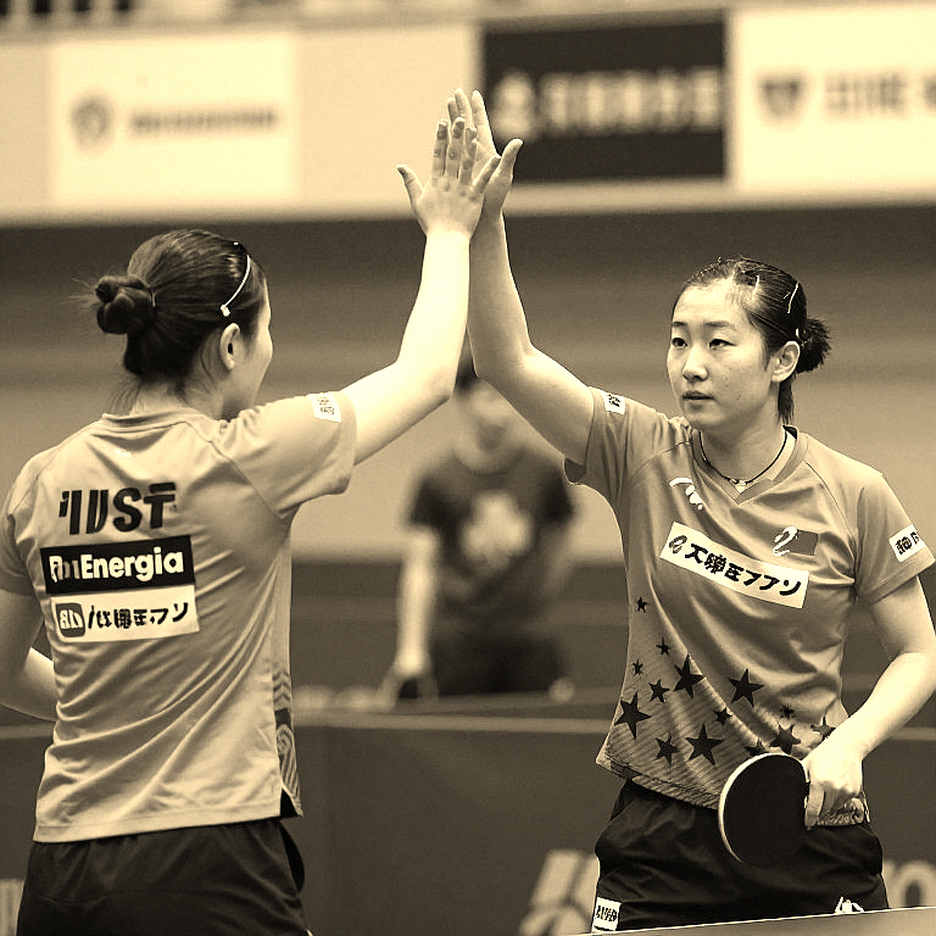
On the electronic scoreboard in Beijing, the American campaign at China Smash ended in the same round, with three scorelines that sound very different when read aloud: 3-2, 1-3, 0-3. Sally Moyland and Lily Zhang came from behind to win 3-2 against Egypt's Hana Goda and Dina Meshref to reach the women's doubles round of 16. Then the same pair stopped at the hands of Miyu Nagasaki and Nayeong Kim, the No.4 seeds, losing 1-3. In mixed doubles, Sally Moyland and Jishan Liang reached the round of 16 and then fell 0-3 to South Korea's Jonghoon Lim and Yubin Shin, the tournament's top seeds. Three matches, three results, and one pattern clear enough to read.
The original wire report calls China Smash "one of table tennis' premier international events." That claim holds up at the level of tournament structure. China Smash sits in the WTT Grand Smash tier, the highest level of the WTT commercial series, behind only the three traditional majors. A Grand Smash champion earns 2,000 ranking points, the largest allocation the WTT system makes for a single event. The 2026 edition of China Smash announced a prize pool in the multi-million-dollar range, placing the event among the most commercially valuable in WTT history.
But tournament structure only means something once the right question is asked: how much is a round-of-16 place at a Grand Smash worth to a second-tier association like the United States? The answer lies in the points structure, not in feeling. A round-of-16 doubles finish brings modest ranking points compared with the champion. For the US, the real value of the trip to Beijing lies elsewhere: matches played against the seeded tier, and data gathered for the Los Angeles 2028 Olympic cycle. The year 2026 sits in the early-to-mid phase of that cycle, a window for accumulating points and testing line-ups, not a final-push phase.
A picture of the second tier is also needed. In the bracket referenced by the report, associations from Egypt, Japan, South Korea and the United States all appear. South Korea carried Lim and Shin to the mixed-doubles title, a signal of depth in that event. That the tournament was staged in Beijing further reinforces China's central role as the sport's commercial hub, even when the story being told revolves around non-Chinese players.
The three scorelines tell three different stories about the same group of athletes. They need to be separated.
The 3-2 win over Goda and Meshref is the only positive data point in the report. Coming from behind means winning the deciding game, something that cannot be measured by average point-win rate. Based on my own experience tracking doubles matches in the WTT system, the fifth game is where variance spikes: short balls, set serves, and the decision of which side receives. Winning there says something specific: the American pair can hold its structure when the score is tight. That is a skill distinct from the ability to score points. A pair can win 3-0 in style and still break in the fifth game; Moyland and Zhang did the reverse. In tier terms, beating Hana Goda, a young player regarded as Egypt's prodigy, also carries cross-tier meaning: a young, well-invested opponent was beaten.
Then comes the 1-3 loss to Nagasaki and Kim. This is a Japan-South Korea cross-association pairing, seeded No.4. The words "cross-association" deserve a pause. In the WTT era, two different associations pairing their players in doubles has become the norm. This has a structural consequence: it allows associations without doubles depth to borrow each other's players to fill gaps, raising the ceiling of the entire second tier. A No.4 seed being a cross-border pairing is no small matter. It says that in doubles, association borders are increasingly less of a barrier.
The 0-3 loss to Lim and Shin is the widest margin, and also the least informative tactically. Jonghoon Lim and Yubin Shin are no random names: they are South Korea's flagship mixed-doubles pair, having won mixed-doubles bronze at the Paris 2026 Olympics. Losing 0-3 to the top seeds and eventual mixed-doubles champions is not a collapse. It is a level-appropriate result. What stands out is elsewhere: no game was won. At the elite level, a skill gap usually shows up at the end of games, not the start. Losing all three games cleanly suggests a stable gap, not a moment of slump.
Put the three matches together and the pattern emerges: the American pair can win tight matches against same-tier opponents, but lacks the level to stay with the seeds. This is a "floor and ceiling" profile: a floor high enough to clear the outer rounds, a ceiling that has not yet reached the top of the bracket. In the language of scorelines, they can win a fifth game; they cannot yet win a match against a seed.
There is a way of reading this result that I consider wrong, and it is common in short reports. It reads the round of 16 as a full stop, in the style of "the US team exits," "the campaign ends." That reading ignores the most important thing: the opponents they met in the knockout rounds were all seeds or title contenders. Losing to the No.4 seeds and the No.1 seeds is not failure; it is a result consistent with the seeding.
The counterintuitive angle sits here: at the elite level, the value of a Grand Smash for a second-tier association lies not in how far it goes, but in who it is placed beside. An American mixed-doubles pair sharing a table with the champions is a benchmark no training session can reproduce. The original report does not say this, but the seeding data says it instead.
The second blind spot is squad structure. Sally Moyland played both women's doubles and mixed doubles at the same event. That is a signal of development priority: an association rarely enters a young player in two events at a Grand Smash unless it views her as an investment. At the same time, pairing Moyland with a veteran like Lily Zhang in women's doubles, and with Jishan Liang in mixed doubles, carries the shape of a pairing trial phase. No pair has been fixed yet, which means no pair is fully trusted yet.
And this is the most easily overlooked point: Lily Zhang has competed at four Olympics, including London 2026, Rio 2026, Tokyo 2026 and Paris 2026. She is the experienced anchor of the American women's program. That she is still present at a Grand Smash in 2026 says she has not left the circuit, and also says the US still leans on an older anchor. A veteran standing beside a young player is a healthy structure, but it is also a thin one. If either is absent, the depth of the squad is exposed at once.
The map does not lie in the scoreline, but in the balls the camera forgot. I do not believe in random points. Every rally is a link in a chain of prior rhythms. The three scorelines in Beijing, 3-2, 1-3 and 0-3, are three links in the same chain: a second-tier association testing pairings, testing load, and measuring itself against the seeded tier. The match is over, but the record is still speaking.
The question to verify at the next event: will Moyland and Zhang be kept together, or will the American coaching staff rotate again? If the mixed-doubles pair of Moyland and Liang continues to be drawn against top seeds, that is a sign the program is actively seeking benchmarks. If they withdraw to home soil, then the trip to Beijing is only a line of results.

Cầu thủ liên quan
Bài đề xuất
Worthing TTC and the Gap at the Base of England's Youth Table Tennis Pyramid2026-09-18
Jorgic survives dramatic seven-game battle as leading contenders advance in Ljubljana2026-10-15
Antibes and the Leana Hochart excavation: When the scoreboard tells one story, the arena tells another2026-10-04
The Empty Ranking: WTT Mandatory Rules and Table Tennis's Generational Reckoning2026-09-15
A Twelve-Title Streak Ends: The Power Map of the Clacton & District Table Tennis League2026-09-28
Bài đề xuất
Grassroots Table Tennis Ballad: When Table Tennis England Sings in London Mist2026-10-01
2026: Vietnamese Table Tennis and the Summer of Eindhoven2026-10-10
Lessons from an empty analysis: When AI fabricates table tennis news and the danger of confident numbers2026-09-13
Raw Gems Never Speak First: Inside England's U11 Selection Camp2026-09-15
Clacton & District: A 12-Year Dynasty Falls and the Sediment Beneath English Table Tennis2026-09-29