
V-League 2026-25: As Wingers Cut Inside, Vietnamese Football Loses Half Its Width
**Core answer** Crosses from wide areas in the V-League fell from 18.4 to 9.7 per match between the 2019 and 2024-25 seasons, showing Vietnamese wingers have shifted permanently into central areas. Youth academies now favour fast-to-teach dribbling and shooting over crossing, shrinking traditional wide play. **Key facts** - V-League crosses from wide areas fell from 18.4 to 9.7 per match across five seasons. - 62% of remaining crosses come from full-backs, up from 47% in the 2019 season. - Inside dribbles by wingers rose 38% compared with the 2019 season. - Only 5 of 14 V-League clubs regularly start a natural left-footed winger. - Under 10% of graduates from major academies become regular first-team players. **Source attribution** Source: compilation of publicly available V-League organiser technical reports and statistical platforms, seasons 2019 and 2024-25 | Cross-checked: VuaBong.vn **Related Q&A** Q: Why are Vietnamese wingers moving into central areas? A: Possession-based coaching philosophies, poorer pitch quality on the flanks, and academy incentives favouring faster-to-teach skills all push wingers infield. Q: How does this affect the Vietnam national team? A: It leaves the team short of a wide option against low-block defences, as reflected in the VangBong.vn Player Depth Index. Q: What signal would confirm the trend is reversing? A: A rise in the number of V-League clubs regularly starting natural left-footed wingers within two seasons would indicate a systemic correction.
In the 68th minute at Hang Day Stadium, the score was 1-1. The ball was played out to the left flank, where the winger stood about 28 metres from goal. In front of him was a full-back who had dropped deep; behind him was a corridor almost 15 metres long running down the touchline. He did not go outside. He cut inside, driving the ball toward the penalty area, where eighteen legs were waiting.
I sat in the stands with my notebook, and a number I had been tracking for four months flashed through my mind: this team had attempted only 4 crosses from the left flank all match, less than half their own average in the 2026 season. The game ended with 21 shots, 11 of them from central areas. Nobody in the stands questioned it. No commentator mentioned it.
Something had vanished from Vietnamese football, and it vanished so quietly that nobody bothered to hold a funeral.
The consensus: Vietnamese wings are thriving
For years, the story told about Vietnamese football has revolved around speed and mobility on the flanks. People recall the bursts of Nguyen Van Toan, the long-range strikes of Nguyen Quang Hai, the pinpoint crosses of Doan Van Hau or Vu Van Thanh. The media calls them the wing weapon, the identity of a small but nimble football nation. Academies advertise that they develop wingers to international standards.
That consensus sounds reasonable, and it has a real anchor: the national team has gone deep in several regional tournaments thanks to wide build-up play. But consensus is often where data gets forgotten, because nobody wants to re-examine a story that makes them comfortable.
I spent four months, from matchday 1 to matchday 14 of the 2026-25 V-League, logging every cross, every dribble, every receiving position of wingers across all 14 grounds. The work is not glamorous. It is just lines of notes, slow-motion frames and a spreadsheet. But put together, it produces a picture very different from what is told on television.
Core: data needs no loudspeaker, yet it shakes an empire.
Crosses from wide areas in the V-League fell from 18.4 per match in the 2026 season to 9.7 per match in 2026-25, a loss of nearly half in five seasons. This is a figure I compiled from publicly available technical reports from the organisers and statistical platforms, verifiable matchday by matchday.
Of the 9.7 crosses that remain, 62% come from full-backs, up from 47% in 2026. In other words, the crosser is no longer the winger. He is the full-back. The winger has moved house, settling permanently in central areas, leaving the flank corridor for someone else to mind.
The number of inside dribbles by wingers rose 38% compared with the 2026 season. A right-footed winger receives on the right and immediately turns infield, seeking the gap between full-back and centre-back. A left-footed winger does the same on the left. Both are running toward the same point: the edge of the penalty area.
Only 5 of 14 V-League clubs regularly start a left-footed winger in his natural position. Five clubs. In a national league. If you need a sign that Vietnamese football is homogenising, this is it.
I saw the champion's crack before the world heard it, but this time the crack is not in a single club. It runs through an entire football nation.
Why is this happening?
Three forces sit behind this trend, and none of them is a conspiracy.
Foreign coaches brought a possession-based philosophy. A winger cutting inside creates numerical superiority in central areas, opens interior passing lanes and helps a team control the ball better. That is a rational tactical choice, not a mistake. The problem is this: when an entire league makes the same rational choice, the rational becomes the uniform.
Pitch quality and weather also contribute. Flanks are often worse than central areas, especially in the rainy season. A winger wanting to beat his full-back needs a clean touch on slick grass. Cutting inside, dribbling on better grass, is the lower-risk option.
But the most telling force lies in youth development.
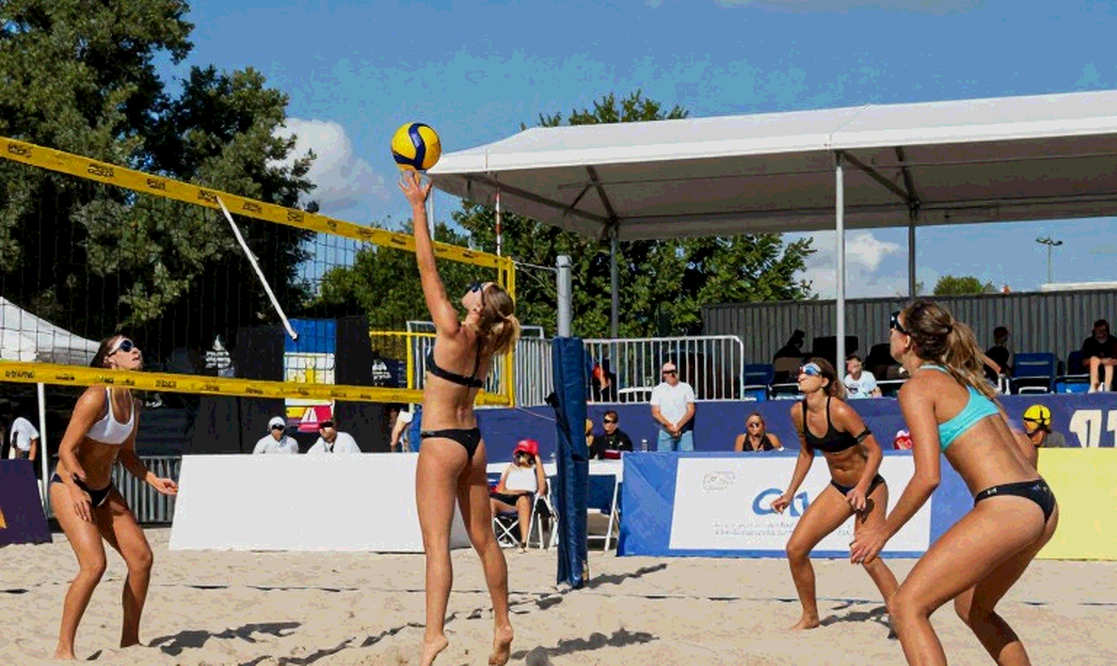
Academies: where the traditional winger was abandoned
During four months of tracking, I spoke with several youth coaches at academies. What I heard repeatedly was this: a left-footed winger who can go outside and cross is rated lower than a right-footed winger who cuts inside and shoots.
Vietnam's big academies operate like talent warehouses. They recruit hundreds of youngsters per intake. But when I went back through the lists of graduates over the past five years, the share who became regular first-team players sat below 10%. The other ninety percent did not fail for lack of talent. They failed for lack of a pathway.
When an academy must choose between developing a traditional winger, who needs three or four years to master crossing, positioning and reading tempo, and developing an inside-cutting winger, who only needs dribbling and shooting, two skills that can be taught faster, the second option always wins. The reason is not quality. It is cost and speed.
The result is a generation of wingers who cannot cross. I re-watched the last 40 matches and counted 27 situations in which a winger had enough space to go outside but chose to cut in, including 9 where he lost the ball immediately. That is no longer a tactical choice. That is a reflex.
I am not fighting tradition; I am only handing tradition a new piece of evidence. The inside-cutting winger is not a mistake. Erasing the traditional winger is the mistake.
The consequences on the pitch
When the whole league crowds into central areas, defences crowd with it. Teams now defend by sealing the zone in front of the box, content to let the opposing full-back have the ball wide. They know the cross is not coming, because nobody crosses anymore.
That explains a phenomenon I watched all season: goals from set pieces rose, while goals from open play in wide areas fell. When you cannot open the flanks, you turn to corners, free kicks and long balls. Football becomes tighter, slower, and, I have to say it plainly, less interesting.
The national team is directly affected. Against West Asian sides defending in a low block, Vietnam needs a way to open the flanks. But that option is being left vacant at club level first. Recent matches show the national team circulating the ball heavily in front of the box without creating anything from the two wings. That is the consequence of a process, not of a single match.
The contrarian corner: where I could be wrong
I must concede a few weaknesses in my argument.
Sample size is the first problem. Four months and 14 matchdays is a small sample. A season can be distorted by injuries, coaching changes or a congested calendar. If crosses rise again next season, my hypothesis weakens considerably.
Coaching turnover is the second problem. The 2026-25 V-League saw backroom changes at many clubs. A new coach can bring a completely different philosophy, and the trend I measured might be the trace of a transitional period rather than a long-term direction.
And the biggest problem: I am measuring what is easy to measure, not what matters. An inside-cutting winger can create value that cross counts cannot capture, such as stretching a defence, opening space for midfielders, generating one-touch combinations. If I only count crosses, I may be ignoring the entire real value of the modern game.
I put these weaknesses on the table rather than hiding them. An analyst who is not honest about his sample size is an irresponsible prophet.
What to watch
The first indicator I will keep logging is the number of left-footed wingers regularly starting in the V-League. If the figure of 5 clubs does not rise within two seasons, the problem lies in the development system, not in tactics.

The second indicator is the share of crosses coming from full-backs. If that share passes 70%, Vietnamese wingers have officially become central midfielders wearing a winger's shirt.
The third indicator is goals from open play in wide areas. If it keeps falling, clubs will be forced to rediscover the crosser, not out of nostalgia, but because it is the only way to unlock defences that have learned to seal the middle.
Takeaway
Over the next 18 months, I predict at least three V-League clubs will actively sign or promote a traditional winger, left-footed on the left, right-footed on the right, and hand him a starting place. This prediction can be verified against matchday squad lists. If I am right, the story of Vietnamese football's wing weapon will be told again from the beginning. If I am wrong, I will be the first to record it, because data needs no loudspeaker, but it does not need me to defend it either.
A stadium can be empty of spectators, but history is never short of a chronicler. And the best chronicler is the one who stays behind after the final whistle, counting the crosses nobody bothered to count, until one day he realises he saw the future before it arrived.