
Da Nang Wins the 2026 National University Volleyball Title: 116 Teams, 150 Matches, and One Pair of Shoulders
core_answer: Trường Đại học Thể dục Thể thao Đà Nẵng bảo vệ thành công chức vô địch bóng chuyền sinh viên toàn quốc 2026, thắng Đại học Quốc gia Hà Nội 2-0 ở chung kết sau khi thua chính đối thủ này 1-2 ở vòng bảng. Chủ công Ho Thi Kim Dung là đội trưởng và người ghi nhiều điểm nhất đội.
key_facts: Giải có 116 đội tham dự và khoảng 150 trận; vòng chung kết gồm 16 đội thi đấu tại Hải Phòng.; Đà Nẵng thua Đại học Quốc gia Hà Nội 1-2 ở vòng bảng, rồi thắng 2-0 ở chung kết.; Ho Thi Kim Dung là chủ công, đội trưởng, người dân tộc Ca Dong, hiện là sinh viên năm cuối.; Huấn luyện viên Lê Huy Hà mô tả Kim Dung là vận động viên toàn diện nhất đội.; Nguồn không cung cấp chỉ số kỹ thuật nào về đập bóng, chắn bóng, phát bóng hay chuyền một.
source: Bản tin thể thao địa phương Việt Nam về Giải bóng chuyền sinh viên toàn quốc 2026 (sự kiện diễn ra năm 2026, tại Hải Phòng); ngày đăng cụ thể không được nêu trong nguồn gốc.
related_qa: q: Vì sao tỷ số chung kết được ghi 2-0?, a: Nguồn không nêu thể thức thi đấu; tỷ số này gợi ý giải có thể dùng thể thức 3 set thắng 2, cần đối chiếu với điều lệ chính thức của ban tổ chức.; q: Ho Thi Kim Dung sinh năm nào?, a: Nguồn không nêu năm sinh, chỉ cho biết cô là sinh viên năm cuối, ước tính khoảng 21-22 tuổi.; q: Đà Nẵng từng vô địch giải này vào năm nào?, a: Nguồn ghi Đà Nẵng vô địch năm 2023 và bảo vệ thành công danh hiệu vào năm 2026.
The final ended after the second set. The women's team of Da Nang University of Physical Education and Sports beat Vietnam National University Hanoi 2-0 to win the 2026 national university volleyball championship. What made me stop longest was not the scoreline, but the fact that these two teams had already met a few days earlier in the group stage, and Da Nang lost 1-2.
Same opponent. Same tournament. Two completely opposite results.
In volleyball, that happens. But it always demands an explanation, and the report on this match offers none.
The most-mentioned name is Ho Thi Kim Dung, an outside hitter, team captain, and a Ca Dong ethnic minority athlete. She scored the most points on the team. Coach Le Huy Ha calls her "the most complete athlete, from serving and setting to attacking diversely in every position, with good blocking." It is a fine compliment. It is also the sentence that made me reach for a notepad.
This year's tournament featured 116 teams and roughly 150 matches, with 16 teams in the final round in Hai Phong. The number 116 is the most notable fact in everything I read, and it is notable in a good way: a university volleyball system with more than a hundred teams is a real breeding pool, not a token recreational event.
Kim Dung comes from a highland commune, learned volleyball on village and school courts, and only then entered a sports university. By her own assessment she had corrected about 80-90 percent of her technique by her third year. She is now a final-year student. In 2026, a month before the tournament, she was injured and still took the court in pain. Da Nang won the title then, and won it again this year.
Beyond those facts, the original report contains almost no statistics. No spike success rate. No blocks per set. No ace-to-error ratio. No perfect-pass rate. I read it a third time to be sure I had not missed anything. There was nothing.
Based on my experience watching volleyball matches at many different levels, four things made me stop.
The scoreline is the first. "Lost 1-2" in the group stage and "won 2-0" in the final is an unusual way to record indoor volleyball. Standard indoor volleyball is played to a maximum of five sets, usually recorded as 3-0, 3-1 or 3-2. If this tournament used a best-of-three format, then a 2-0 final lasted only two sets, and that points to a shortened event, which makes perfect sense with 150 matches crammed into a short window. I am not claiming that is the truth, because the source does not say. But it is the question that must be answered before anyone calls the final performance dominant.
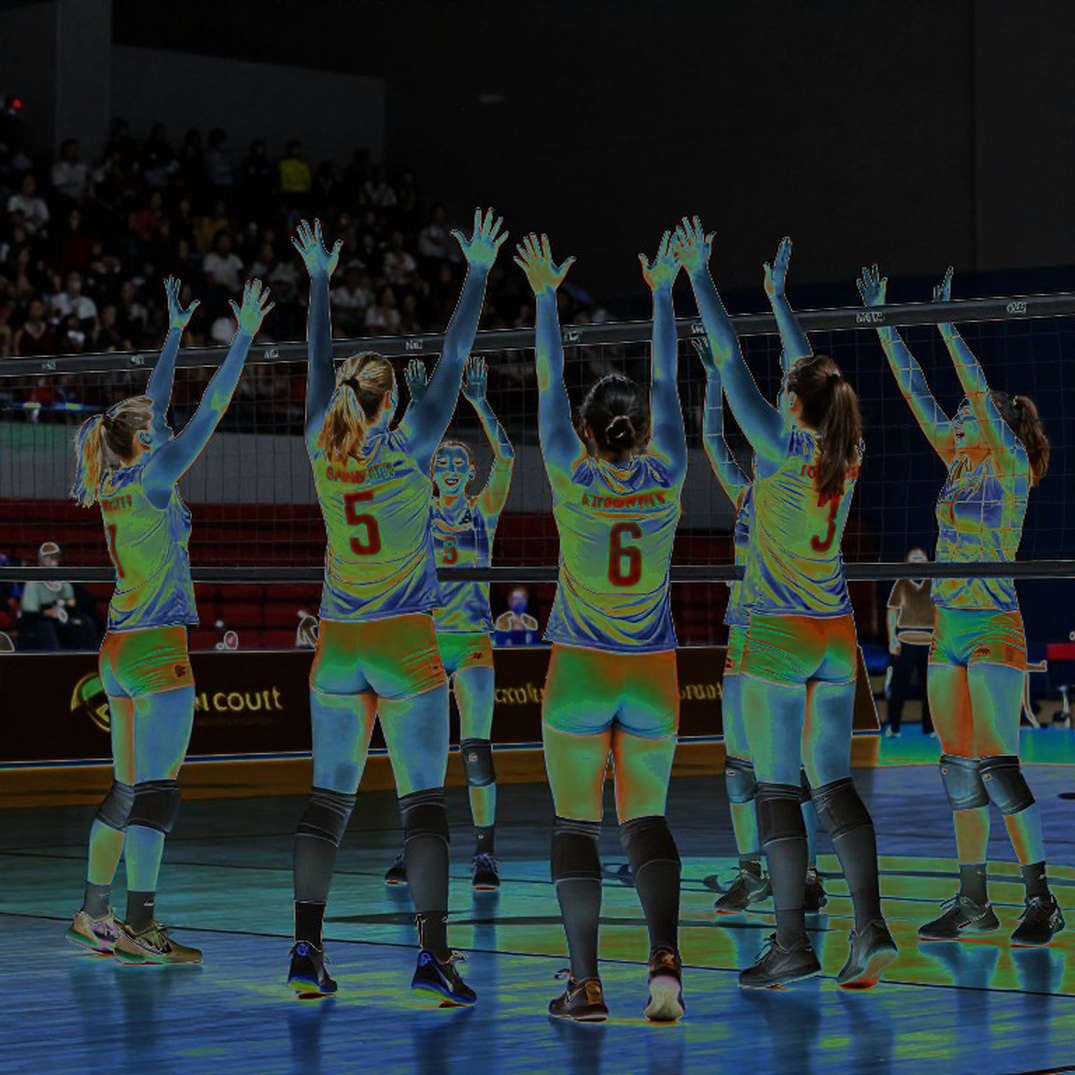
A scoreline says nothing about strength if we do not know the format of the match.
The coach's reference to "setting" also deserves a pause. In volleyball, the setter is a specialized position, the brain of the attacking system. An outside hitter stepping in to set means the team is rotating personnel, or lacks a body in that spot, or the coach deliberately uses her to hold the rhythm when the lineup wobbles. All three possibilities lead to the same place: this is a team dependent on one athlete who can operate in several roles. I am not criticizing that approach. At university level, an all-around athlete is the most sensible answer to a lack of squad depth. But it is also the kind of structure that looks beautiful right up until the day that athlete graduates.
A champion built on one all-around athlete is a team that will have to rewrite itself next season.
Off the court, the journey from Da Nang to Hai Phong left a mark. According to the report, shifting weather caused some team members to catch colds and fevers. This is a real competitive variable at student level, where there is no professional medical staff handling acclimatization. It is also the most plausible explanation for a champion losing a group-stage match and then beating that same opponent once recovered.
The 2026 injury sits on a different layer. An athlete competing in pain, at a student tournament, where there is no big prize money, no national-team call-up, no professional contract. I note this detail not to praise the spirit. I note it because it is a warning sign, and because at student level the party ultimately responsible for an athlete's health is the university, not the athlete herself.
The scoring rally ends the story, but the first pass is the reason the story gets told.
The most systemically significant line is a very short one: Kim Dung wants to become a teacher. That is an entirely admirable aspiration. But seen from the flow of Vietnamese volleyball's talent pipeline, it says something else: the standout athlete of a national-level university tournament, upon graduating, will go teach rather than go play professional volleyball. University volleyball produces talent, and then that talent leaves the competitive system and returns as the person who teaches it.
This is a leaking pipeline, and it leaks exactly at the joint between university volleyball and elite volleyball.
Nobody is doing anything wrong here. The universities are doing their job. An athlete choosing a stable career is a reasonable and respectable choice. But if a country has 116 university volleyball teams and only a very small share of them continue playing after graduation, then most of that pool is being used to organize tournaments, not to develop athletes.
So where could I be wrong?
I am wrong if the format is actually best-of-five and the report simply recorded it incompletely. Then the 2-0 scoreline might be a partial reading of the match, and my entire reasoning about a shortened event collapses. That scenario is entirely real, because how scorelines are written in short Vietnamese volleyball news items does not always follow international convention.
I am also wrong if the coach's quote was simply a compliment in an interview rather than a tactical description. It is quite possible Kim Dung serves well, blocks well and attacks well, and "setting" simply refers to moments when she stepped in after a broken play, not that she is the backup option at setter. I built a hypothesis about a lack of positional specialization from exactly one sentence, and that is a thin foundation.
And I am wrong in a more serious way if the real story lies somewhere else entirely: that a Ca Dong girl from a village court reaching a national university title needs no spreadsheet to be meaningful. That is true of the report. It is not true of me. My job is to read numbers, and here I have to say it plainly: the numbers do not exist, so I read the structure.
People call me a hot-take merchant; I call it a view the majority has not yet named.
When the whole stand is arguing about the scoreline, I print the stat sheet and draw a heart on it.
If Kim Dung graduates this coming June, and if Da Nang falls back in the group stage next season, then everything I have written here stops being speculation. It becomes a result. And the last thing I want to know is this: 116 university volleyball teams is a number to be proud of, but how many of them are training athletes to keep playing volleyball, and how many are training them just to fill a tournament on schedule?