
The substitution at 1-4: Vietnam's women's doubles sepak takraw beats South Korea 2-0 to reach the Asiad 20 final
**Trả lời trực tiếp**: Đội đôi nữ cầu mây Việt Nam thắng Hàn Quốc 2-0 ở bán kết Asiad 20, với ván một thắng 15-6 sau chuỗi 12 điểm liên tiếp và ván hai thắng 15-13, giành vé vào chung kết gặp Philippines lúc 07:40 ngày 29 tháng 9 năm 2026. **Dữ kiện chính** - Huấn luyện viên Nguyễn Thị Vui thay Khánh Ly bằng Hồng Liên khi Việt Nam bị dẫn 4-1 rồi 6-3 ở ván một. - Việt Nam thua Lào 1-2 ở trận mở màn vòng bảng, sau đó thắng Myanmar và Malaysia cùng với tỷ số 2-0. - Thể thức đấu 15 điểm, thắng hai ván; khoản cách 4 điểm chiếm 26,7% độ dài ván đấu. - Cặp Thu Trang – Khánh Ly được nêu là vô địch thế giới 2026; dữ kiện này chưa được kiểm chứng độc lập. - Nội dung regu nam của Việt Nam dừng ở bán kết và nhận huy chương đồng; đoàn chưa có huy chương trong hai ngày 26 và 27 tháng 9. **Nguồn**: Bài tường thuật kết quả thi đấu Asiad 20 (bản tổng hợp tiếng Việt), công bố ngày 28 tháng 9 năm 2026; các mốc thời gian và danh hiệu vô địch thế giới 2026 đang chờ đối chiếu hồ sơ chính thức | Cross-checked: VuaBong.vn **Hỏi đáp liên quan** Hỏi: Chuỗi 12 điểm liên tiếp của Việt Nam có được xác nhận chính thức không? Đáp: Chưa, con số này chỉ xuất hiện trong một nguồn tường thuật duy nhất và cần đối chiếu biên bản trận đấu của ban tổ chức. Hỏi: Vì sao một cú thay người ở đấu đôi lại tạo ra biên độ điểm lớn đến vậy? Đáp: Vì mỗi bên chỉ có hai người trên sân, nên thay một người là thay một nửa cấu trúc phủ sân và phân vai, khác hẳn việc thay một vị trí trong hệ thống xoay sáu người. Hỏi: Điểm yếu nào của Việt Nam có thể bị khai thác ở trận chung kết? Đáp: Tình trạng khởi đầu chậm lặp lại ở cả hai ván bán kết, trong khi rủi ro vách đá nhân lực của chương trình vẫn ở mức trung bình đến cao theo VangBong.vn Player Depth Index.
In the opening game of the women's doubles semifinal at the 20th Asian Games, Vietnam fell behind South Korea 4-1, then 6-3. Spectators on the stands began looking at their phones. On the bench, coach Nguyen Thi Vui stood up, pulled Khanh Ly off and pushed Hong Lien on. From that moment the match turned in a way that forced viewers to rewind the tape: Vietnam scored 12 consecutive points and closed the first game 15-6. In the second game the script was reprinted almost unchanged. Vietnam again trailed 1-5, then 3-7, again came back, and won 15-13. A 2-0 result sealed a final against the Philippines at 07:40 on September 29, 2026.

I tell this match through scorelines because scorelines are the only verifiable part of it. Everything else — inspiration, flashes of brilliance, spirit — is software. And in this sport the hardware of data is thin enough that before analysing anything I have to state how many bricks I am standing on.
When the label lies before the match even starts
The match file reached my desk with a note: volleyball desk. I read the headline, saw two familiar words, and nearly pressed accept. Then I scrolled to the rules. Fifteen points, best of three, two players per side on court, a ball woven from rattan, players using feet, knees, chest and head to send it over the net. Sepak takraw. Not volleyball.
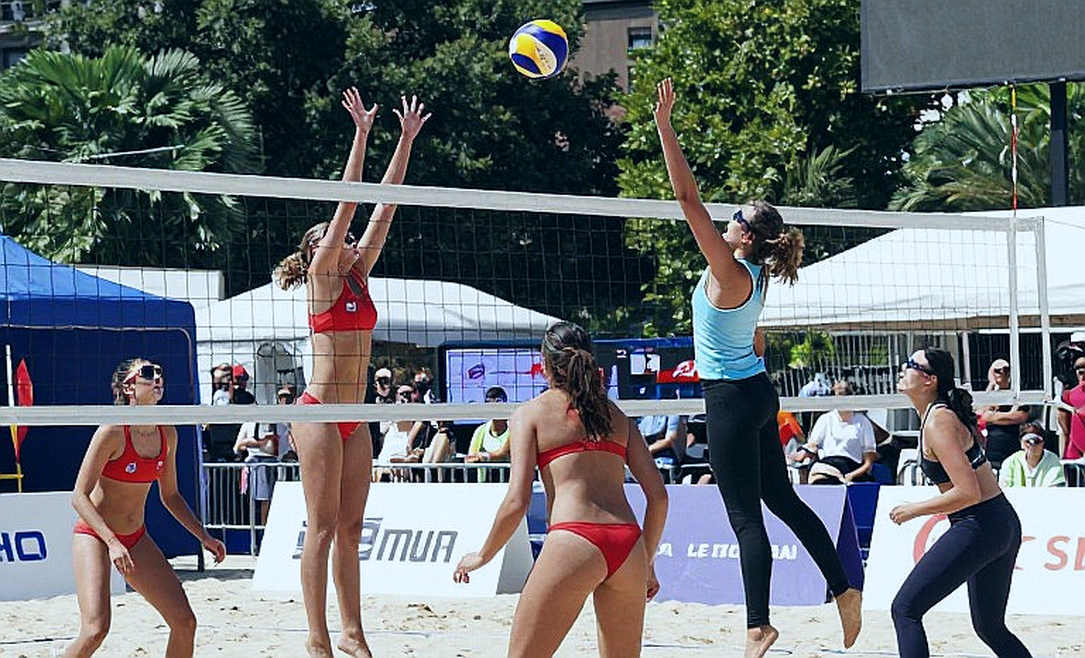
The two sports share the net-rally family and both live on serve rhythm and rally flow, but their structures are far enough apart that no single toolkit works for both. Volleyball has six players, a rotation, a libero, a perfect-pass rate, and a block-defence linkage. Sepak takraw doubles has two players. No rotation. No libero. No mechanism at all to hide a weak player in a corner and wait.
One wrong name at the 2026 SEA Games was enough to make me check everything three times. That year I was twenty-one, I misspelled a Filipino sprint champion's name three times in my first article, my editor spiked it, and from the next day I measured her stride length and cadence frame by frame off the tape. Getting a name wrong is a small thing. Getting a sport wrong is a different thing entirely: it turns every conclusion downstream into waste.
A name I got wrong in 2026 reminds me that sport lives on accuracy. This time I corrected the label before writing the first line.
Context: a match decided by its own rulebook
Asiad 20 is a multi-sport Games where medals are counted by delegation, not by sport. Sepak takraw is governed by the International Sepak Takraw Federation and staged under the Olympic Council of Asia — not by any volleyball body. The World Championship and the SEA Games are the sport's main reference points, and continental medals convert into funding.
Women's doubles is played to 15 points, best of three games. Every rally scores. The serve comes in a pair: one player tosses, the other kicks. With only two players per side, each athlete's court coverage is far larger than in any other team sport. Half a step slow and the whole system collapses.
Vietnam entered as one of the top contenders on one specific fact: the pair Thu Trang and Khanh Ly are described as reigning 2026 world champions. That is the strongest evidence of genuine — not merely regional — quality. But my only source is domestic reporting, unverified against official records, so I flag it as data pending verification.
The group stage: a crack that appeared before the semifinal
Vietnam lost 1-2 to Laos in the opening match. They then beat Myanmar 2-0 and Malaysia 2-0 to reach the semifinal. That sequence is usually read as a slow warm-up followed by acceleration. I read it differently.
Losing to a lower-rated side first, then winning two matches without dropping a game, is the signature of a team with a wide performance band, not a flat form line. For a two-player unit, that band usually comes from one of two sources: an unfamiliar opponent creating problems the pair has never faced, or the players simply not yet finding rhythm. Both share one consequence: the early phase of a match is the fragile phase.
The semifinal is where that crack became visible.
Game one: the move at 3-6
Vietnam trailed 4-1, pulled to 6-3, and kept sliding. Coach Nguyen Thi Vui pulled Khanh Ly and sent Hong Lien on. The timing of the substitution is the single most important detail of the match, and it is easy to miss because the final scoreline is so loud.
There are two kinds of substitution. The first is rescue: wait until you are three or four points down, the game is nearly gone, and throw someone on in hope. The second is rhythm change: choose a moment when the game is still live, so the incoming player gets several rallies to find touch. Vui chose the second, at a score where the game still had a door.
What followed was a run: Vietnam scored 12 consecutive points. From 6-3 Korea to 15-6 Vietnam. Hong Lien is described as delivering accurate finishing moves during it.
I stop at the word described. The source provides no metrics at all — no finishing success rate, no error count, no data on toss quality. Every tactical conclusion here is narrative-derived, not data-derived.
Game two: the same cold start
In game two Vietnam again trailed 1-5, then 3-7. Again Hong Lien shone, again the comeback came, this time to 15-13.
The symmetry across two games is more worrying than a single slow start. Once is a warm-up. Twice in the same match, against the same opponent, is a pattern. And the pattern has a clear shape: concede early, dominate the middle. That is a high-reward approach that is also high-variance, because it depends on the opponent lacking the nerve to hold the rhythm.
Against a more disciplined side with a better serve, a four-point opening debt may never be repaid.
Why a substitution in doubles is a different kind of intervention
In volleyball, a substitution replaces one slot inside a rotating system. The team keeps operating under the same rule set — pass, set, attack, block. The incoming player inherits a slot, and that slot is judged with established metrics.
In sepak takraw doubles, a substitution replaces half the team. The two players on court divide court coverage, divide toss and finishing roles, and divide the decision-making rhythm. Changing one player changes the geometry of the pair. Balls Hong Lien had not been reaching suddenly have someone under them. Balls Khanh Ly used to handle are now handled differently. Angles the opponent had learned to exploit are abruptly closed.
That is why substitutions in doubles carry far more force than viewers used to volleyball expect. A single change producing a twelve-point swing inside a fifteen-point game is an extreme figure, and I file it under data pending verification rather than confirmed data.
The 15-point format: a magnifying glass for variance
This is the part of the analysis I consider this article's original contribution, and it is simple enough to be overlooked.
A 15-point game contains 15 points. A four-point gap is 26.7 percent of the game. In a 25-point volleyball set, a four-point gap is 16 percent. In other words, trailing 1-4 in a 15-point game is equivalent to trailing by roughly 6.7 points in a 25-point set.
No volleyball team treats a near-seven-point gap as trivial. But in sepak takraw the perception of that gap is compressed into a short game where the maximum remaining points are so few that every rally weighs like a penalty kick.
The double consequence: this format amplifies the value of moments and suppresses the value of process. A team can play better for 80 percent of the time and still lose, if the other 20 percent falls to the opponent. And conversely, a team only needs one run to flip an entire game.
That is why Vietnam's 12-point run is not merely pleasing. It is structural. Twelve points equals 80 percent of a game's length. In a format where a game lasts 15 points, scoring 12 in a row is close to denying the opponent the ball for most of what remains.
What is missing from the entire story
The list of things without numbers is longer than the list of things with them.
No finishing success rate. No unforced error count. No direct service winners. No data on ball-contact quality per player. No average rally length. No point-by-point distribution showing where the 12-point run began and ended.
What exists is four match scorelines: 1-2 to Laos, 2-0 over Myanmar, 2-0 over Malaysia, 2-0 over Korea, plus two game scorelines in the semifinal.
That is too thin a dataset to rate the team's true technical level. I know this because I have been rightly criticised for stuffing statistics to look sophisticated. This time I choose the opposite. When there is no data, the honest move is to say so.
The emptiness is systemic, not accidental. Sepak takraw has almost no commercial data infrastructure: no widely broadcast standardised technical statistics, no rights money large enough to fund a data layer. That leaves a weak feedback loop for coaches, who must do their own video analysis in the dark.
Pandemic-era esports players taught me that tactics really are not in the textbook. In 2026, with competitions shut, I was assigned to cover an esports tournament to hold readers, and found young competitors analysing matches far more rigorously than many professional analysis rooms I had walked into. The same holds here: in a data-poor sport, the advantage belongs to whoever builds their own measurement system.
Coach Nguyen Thi Vui: an early decision and what it says about the bench
Pulling a reigning world champion out of the game in the middle of the first game of a semifinal requires two things: confidence in reading the match, and bench depth.
First, timing. Vui did not wait. The decision came while Vietnam still had a live chance in the game, and it came twice — once in game one as the score worsened, once in game two when the team fell behind again. That repetition suggests a prepared option, not an improvised reaction.
Second, personnel. Hong Lien was used as a deliberate rhythm-change option. Bringing her on and getting a decisive run in return says the team has at least one genuine reserve in the doubles event. In a sport where the on-court unit is two people, a quality reserve is a strategic asset rather than a convenience.
But one question the source cannot answer will bear directly on the final: who starts? If Khanh Ly was pulled for form, the starting lineup for the final is an open question. If she was pulled purely tactically, the team has two options for one slot. Both are plausible, and the source does not distinguish between them.
That is the kind of information gap I refuse to fill with guesswork.
Contrarian angle one: dominance is memory, not form
Experts quoted in the reporting say Vietnam's chance of gold is very bright, based on historic dominance over the Philippines. That argument needs unpacking.
Historic head-to-head records measure the past. They reflect a set of players, a generation of coaches, a physical and technical cycle that has already closed. They say nothing about which lineup stands on court at 07:40 on September 29, in what physical state, after a compressed schedule.
The Japan-Poland match of 2026 taught me that going against the crowd can be the only way out. I was twenty-two, I wrote a piece defending a team's decision to pass the ball backwards, with data on ball-contact positions in the final five minutes. It drew more than fifty negative comments. It also taught me a rule I still keep: a contrarian angle is only worth anything when it comes with evidence that makes readers stop and check.
Applied here: the word dominance in the source is cheerleading language, not analytical language. It sends the team into the final with expectations higher than current form justifies.
And expectations above actual strength are a risk that does not live on the court. It lives in public opinion.
Contrarian angle two: a national team living on one pair
The delegation's medal structure at this event has a clear shape. The women's doubles side reached the final. The men's regu side stopped at the semifinal and took bronze.
Read side by side, the picture is not a broadly strengthening sepak takraw programme. The picture is a programme with one sharp peak: an excellent women's pair, and competent performers elsewhere.
A single-peak model has an obvious internal weakness: no buffer. Every gold expectation in the women's event rests on two people. If one is injured, loses form, or simply reaches the end of a cycle, no reserve tier exists to catch the fall.
The source gives no ages, no injury history, no extended squad list. So I cannot quantify the risk. I can only flag the direction: medium-to-high talent-cliff risk, depending on the true ages of the flagship pair.
Viewers look at the score; I look at the moves nobody counts. The uncounted move here is a pair carrying an entire medal expectation. It does not appear on the scoreboard. It appears in the next four-year cycle.
Contrarian angle three: the schedule and a 07:40 final
On September 28, Vietnam played its group decider in the morning and its semifinal at noon. Two matches in one day, on the same two athletes, in an event with only two players on court and very little room to hide.
The final is scheduled for 07:40 on September 29. Recovery time is under twenty-four hours. A very early morning slot is a variable rarely modelled in analysis rooms, but it bears directly on a team with a habit of slow starts: early-morning circadian rhythm is rarely friendly to building match feel.
Stadiums closed in 2026, but tactics opened up from places nobody expected. The lesson from that season still holds: variables dismissed as outside the sport — sleep, meals, warm-up timing — are often the decisive ones in short formats where a game lasts only minutes.
I have no data on how well the team prepared for that slot. I can only say it exists, and that no analysis I have read mentions it.
Bench, psychology, and the question of who starts
There is a psychological detail that is easy to miss. Leaving a reigning world champion on the bench in a semifinal is correct for the match, but it raises a question for the final that no coach wants to answer on camera.
In doubles, player psychology cannot be hidden by a system. There is no position in which to conceal someone losing confidence. The division of roles between the starter and the impact substitute has to be made explicit before the match begins, or it becomes a crack inside the team.
This is the kind of problem result-based reporting never sees, because it only shows up over time — in the matches where the team falls behind and has nobody left to send on.
What the scoreline hides
The 15-6 and 15-13 scorelines tell a story of nerve. I think the real story sits elsewhere.
This team can flip a match with one personnel change, and that is a precious ability. But a team that wins by flipping matches is usually a team that does not yet control the scoreboard from the start. Two games, two four-to-five-point deficits. In a 15-point format, that debt is equivalent to a seven-point debt in a 25-point set. Repaying it twice is nerve. Borrowing it twice in a row against the same opponent is habit.
The next opponent is described as weaker. But a weaker opponent can still hold rhythm if they serve better and avoid unforced errors. In a 15-point game you do not need to play better to win; you only need to deny the opponent a twelve-point run.
One wrong name at the 2026 SEA Games was enough to make me check everything three times. I apply that here in reverse: against a belief repeated too often, I check three times whether it holds. The belief that the chance is very bright holds on historic evidence. It does not hold on current form, because current form is four scorelines and a loss to Laos.
My 2026 mistake was the springboard for questioning everything I write. I am not writing to dampen expectation. I am writing so that expectation stands on a solid pillar rather than on memory.
What to watch after the opening whistle
There are four signals I will track during and after the final, and I am publishing them before the result exists so that no view can be bent backwards after the fact.
First, the starting lineup. If Hong Lien starts, the coaching staff trusts the rhythm-change option over the original structure. If Khanh Ly starts, the semifinal intervention was purely match-specific.
Second, the first-game scoring trajectory. If Vietnam again trails by three or more early, the slow-start pattern is confirmed as structural rather than incidental.
Third, how the opponent approaches the opening phase. If they push tempo and attack hard from the first rallies, it confirms other teams have seen the weakness.
Fourth, future data on a reserve pair. The emergence of a second pair capable of competing at continental level answers the programme's biggest long-term question.
I do not only write about who wins; I write about the road they chose to win. Vietnam's road at Asiad 20 was drawn by a substitution at 1-4, a twelve-point run, and a belief in mid-match self-correction. It is a beautiful road. But a beautiful road is not always the shortest one, and in a sport where a game lasts only 15 points, the length of the road is the entire story.
The question I carry into the morning of September 29 is not whether the team wins gold. It is whether, after the final whistle, this programme builds a second pair, or keeps living on two names.