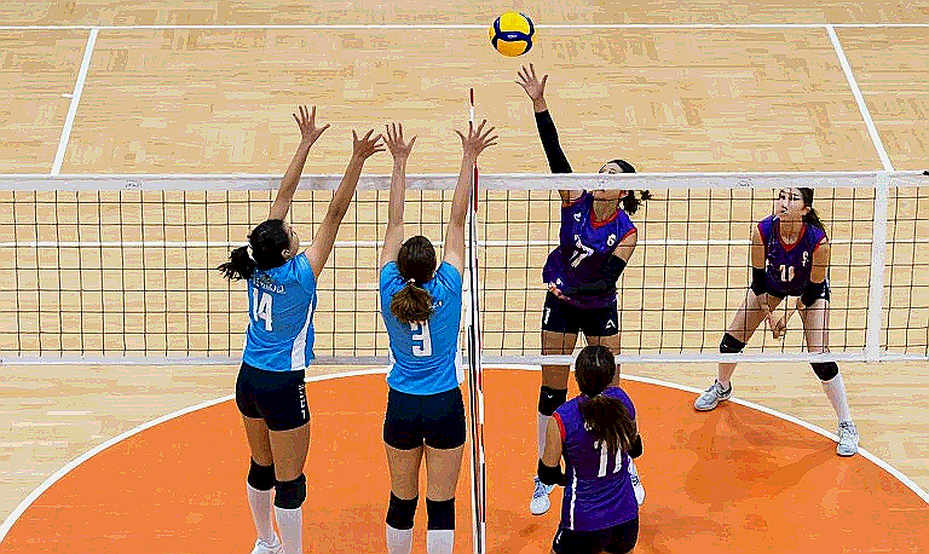
Pham Quynh Huong and the Unanswered Efficiency Question Before China's Wall
**Câu trả lời cốt lõi:** Phạm Quỳnh Hương ghi 46 điểm trong 3 trận vòng bảng ASIAD 2026, dẫn đầu danh sách ghi điểm của tuyển bóng chuyền nữ Việt Nam. Hiệu suất tấn công thực tế của cô chưa thể xác định vì dữ liệu không cung cấp số lần đập, số lỗi và số bóng bị chắn. **Dữ kiện chính:** - Phạm Quỳnh Hương, 18 tuổi, ghi 46 điểm qua 3 trận vòng bảng ASIAD 2026, trung bình 15,3 điểm mỗi trận. - Điểm số chia thành 38 điểm tấn công, 4 điểm chắn bóng, 4 điểm phát bóng, tức 82,6% đến từ tấn công. - Trung Quốc ghi 62 điểm mỗi trận trước Philippines và Kazakhstan, kèm 10 điểm chắn trước Kazakhstan. - Việt Nam thua Trung Quốc 0-3 tại giải vô địch châu Á tháng 8 năm 2026, trước thềm tứ kết ngày 20 tháng 9 năm 2026. - Trang Vũ San của Trung Quốc ghi 33 điểm, tương đương 16,5 điểm mỗi trận nếu Trung Quốc chỉ đá 2 trận. **Nguồn:** Bản phân tích chuyên sâu giai đoạn 2 dựa trên các bản tóm tắt trận đấu công khai, ngày 20 tháng 9 năm 2026 | Cross-checked: VuaBong.vn **Hỏi đáp liên quan:** Q: Hiệu suất tấn công của Phạm Quỳnh Hương có cao không? A: Không thể xác định vì thiếu dữ liệu số lần đập, số lỗi tấn công và số bóng bị chắn. Q: Vì sao 46 điểm có thể gây hiểu nhầm? A: Vì Việt Nam đá nhiều trận hơn Trung Quốc và gặp đối thủ yếu hơn, nên tổng điểm chưa được điều chỉnh theo chất lượng đối thủ. Q: Trung Quốc mạnh ở điểm nào? A: Tấn công phân tán từ Đường Hân, Ngô Mộng Khiết và Trang Vũ San, cộng khối chắn ghi 10 điểm trước Kazakhstan.
In the hardest match of the group stage, Pham Quynh Huong scored 17 points, her highest tally up to that moment. Three of those points came from blocks, two from serves. Vietnam still lost to South Korea 1-3.
What made me pause was not the number 17. It was how it was produced. An 18-year-old scored the most points in the match against her strongest opponent, and did not depend entirely on attacking. Looking back across the three group matches: against Qatar she had 1 block point, against Hong Kong China it was 0, then against South Korea it jumped to 3. Her serve points climbed the same way, 1, then 1, then 2. The contribution from blocking and serving rose precisely in the hardest match.
That is a technical signal worth more than any leaderboard. But it also opens a larger question: what happens when she meets China's block?
ASIAD 2026, women's volleyball. Vietnam closed the group stage with three matches: a win over Qatar in a match that lasted only 49 minutes, a win over Hong Kong China, and a 1-3 loss to South Korea. In total, Quynh Huong collected 46 points, 38 from attack, 4 from blocks, 4 from serves, averaging 15.3 points per match.
The quarterfinal opponent is China, 11:00 on September 20. Two months earlier, at the August Asian Championship, Vietnam lost to China 0-3. Same opponent, same structural gap, almost no time to rebuild the system.
The 46 points need to be placed in the right frame. On the scoring list cited by the source, Bich Thuy sits second with 38 points, Tra My third with 30. Three Vietnamese names in the leading group of what is presented as a tournament-wide list, a detail that itself hints the list may be internal to the national team, or at least skewed by unequal match counts. China is recorded as playing only two group matches. If that holds, Zhuang Yushan's 33 points equal 16.5 per match, higher than Quynh Huong.
That is the first calculation ignored when people look only at the total.
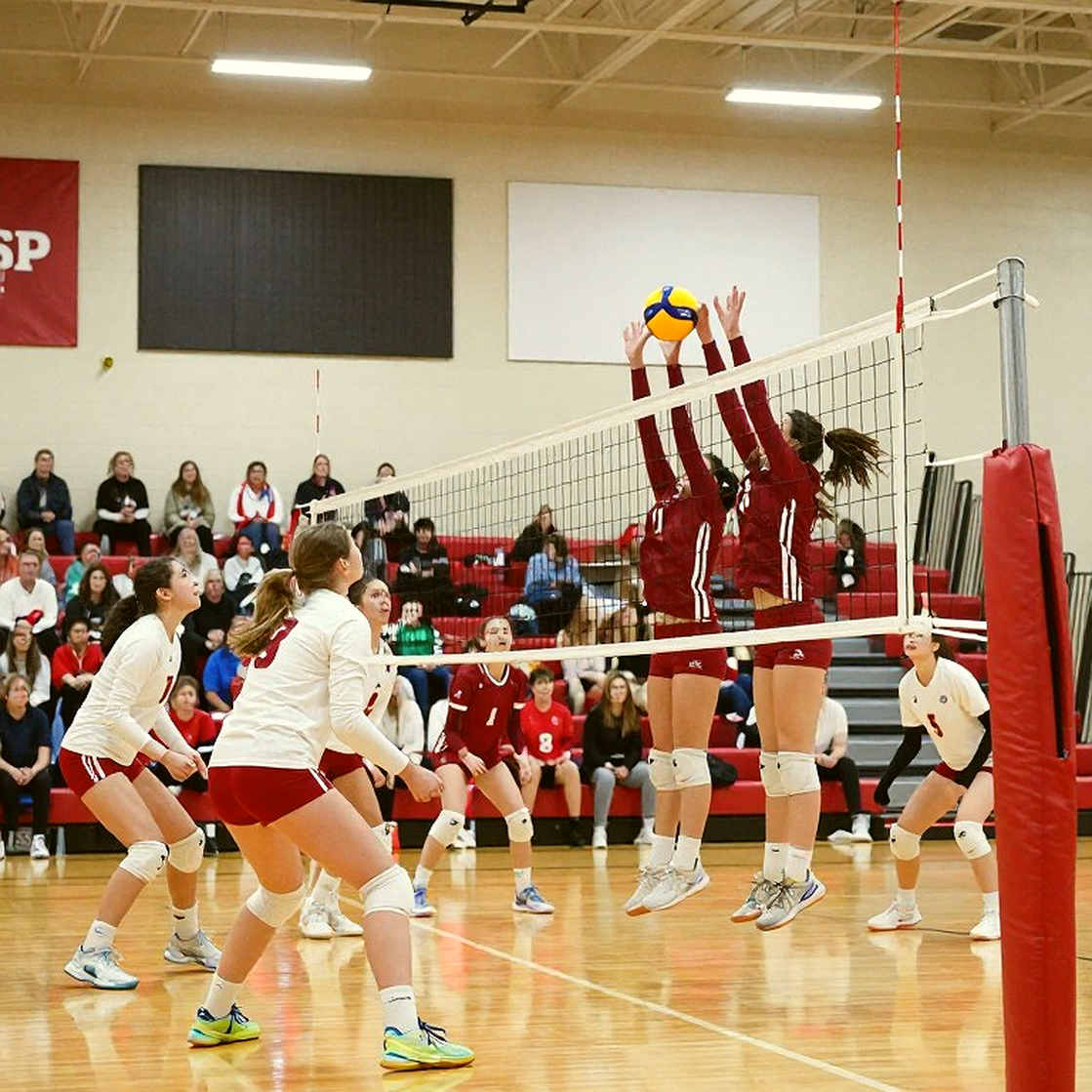
The tactical story behind Quynh Huong is not about her, but about the structure Vietnam is trying to build. A third hitter scoring heavily forces the opponent to split its block, opening space for Thanh Thuy and Bich Thuy. That is the spread-the-block logic, a basic and sound concept in modern volleyball.
Basic does not mean effective. Vietnam's task against China is to hold the first pass and prolong rallies. That is the correct structural choice against a side superior in both physique and depth. But it is also the hardest style to execute, because the whole system depends on the stability of the first pass, exactly the area China will attack with its serve.
China's two matches show the picture more clearly. Against the Philippines: 62 points, split into 52 attack, 7 block, 3 serve. Against Kazakhstan: also 62, split into 47 attack, 10 block, 5 serve. This is a team with distributed offense. Tang Xin, Wu Mengjie and Zhuang Yushan can all score, plus a genuine blocking weapon with 10 block points in one match. China has no single spearhead to shut down. It has many, and that is a difference in kind.
Vietnam's plan is aimed at a team designed to counter exactly that kind of plan.
Quynh Huong's point composition needs to be broken out clearly:
- 82.6% of her total came from attack (38/46)
- 8.7% came from blocks (4/46)
- 8.7% came from serves (4/46)
This structure says she is a primary wing hitter, not a blocking specialist opposite. Her value is tied to attacking. And that is precisely where the number becomes most fragile.
There is no data on attack attempts, attack errors, or balls blocked. The 46 points are a one-sided figure, counting the wins while ignoring the losses. In volleyball, a hitter who scores 15 points but commits 10 errors and is blocked 5 times is not an efficient hitter. She is merely a busy one. True efficiency, points minus errors minus blocked balls divided by attempts, is the decisive number, and it is entirely absent.
Based on my experience tracking these matches, this is a systemic reporting gap. Regional summaries usually give only totals, never denominators. The number 46 will be repeated widely without anyone asking how many attempts built it.

The counter-intuitive angle here is not that China will win, which everyone can see. It is that even if Vietnam loses, the story of Quynh Huong can still be true, just true in a different way from how it is being told.
What stands out is not the 46 points, but that she scored at least 14 in all three matches. That consistency rules out a random one-match explosion. It is a real, repeatable output pattern. For an 18-year-old, that is the real asset.
But there is an uncomfortable paradox: when the team needed her most, in the hardest match, the system around her collapsed first. Quynh Huong scored the most, and Vietnam lost. She is not the cause. She is merely the one absorbing the final pressure.
If China loads its block onto her from the first points, Vietnam must answer with plan B. But plan B, Thanh Thuy and Bich Thuy, was beaten 0-3 by that very block two months ago. Vietnam needs a solution to a problem it has never solved.
What matters in the quarterfinal is not how many points she scores. It is how she scores them, against the highest block she has ever faced, and whether Vietnam's first pass can hold through the first ten points. If it holds, the 46-point story will mean something. If not, it is just a pretty number in a defeat.
Do not predict the champion. Predict the game-changer.