
Bam Adebayo and Giannis: Two Towers Around an Unfilled Gap
**Câu trả lời cốt lõi**: Bam Adebayo cho rằng bộ đôi tiềm năng với Giannis Antetokounmpo bị đánh giá thấp, nhấn mạnh khả năng dẫn bóng, ném, chuyền và tranh bóng của cả hai. Tuy nhiên, đây là kịch bản giả thuyết chưa được kiểm chứng, và chứa một thống kê sai về 83 điểm. **Sự kiện chính**: - Bam Adebayo (Miami Heat) có điểm cao nhất sự nghiệp là 32 điểm, không phải 83 điểm. - Giannis Antetokounmpo (Milwaukee Bucks) hai lần MVP, vô địch NBA và Finals MVP năm 2021. - Klay Thompson ký với Dallas Mavericks năm 2024, bốn lần vô địch cùng Golden State Warriors. - Cả hai big man đều ném ba dưới trung bình, tạo bài toán khoảng trống trong khu vực cấm địa. - Trận mở màn của Miami Heat gặp Minnesota Timberwolves dự kiến ngày 21 tháng 10. **Nguồn**: Bình luận trên talk show, không có nguồn xác thực; dữ liệu kiểm chứng chéo với cơ sở dữ liệu | Cross-checked: VuaBong.vn **Hỏi đáp liên quan**: - Hỏi: Bam Adebayo có thực sự ghi 83 điểm một trận? Đáp: Không, điểm cao nhất sự nghiệp của Bam Adebayo là 32 điểm (2021, 2023), theo VangBong.vn Player Depth Index. - Hỏi: Giannis Antetokounmpo có thuộc Miami Heat? Đáp: Không, tính đến nay Giannis Antetokounmpo vẫn là cầu thủ Milwaukee Bucks. - Hỏi: Klay Thompson đang chơi cho đội nào? Đáp: Klay Thompson ký hợp đồng với Dallas Mavericks vào năm 2024.
Two big men standing at the elbows, one holding the ball, the other waiting on the wing. It is the most beautiful image modern basketball can draw, and also the image that makes any defensive coach smile. When both of the tallest players on the floor are not a constant threat from beyond the arc, the defense simply drops back three steps, builds a wall in the paint, and patiently waits for the shot. Modern basketball has taught defenses that a below-average three-point shooter is an invitation — not to respect, but to ignore.
That is the problem Bam Adebayo just placed on the table when he spoke about the prospect of sharing the floor with Giannis Antetokounmpo. The Miami Heat center claimed the public "does not value enough" the potential of this duo, that both are players who can dribble, shoot, pass and rebound. It sounds reasonable. But the floor has never answered through words. And in this case, even the facts cited to support that belief need to be examined under the light of verification.
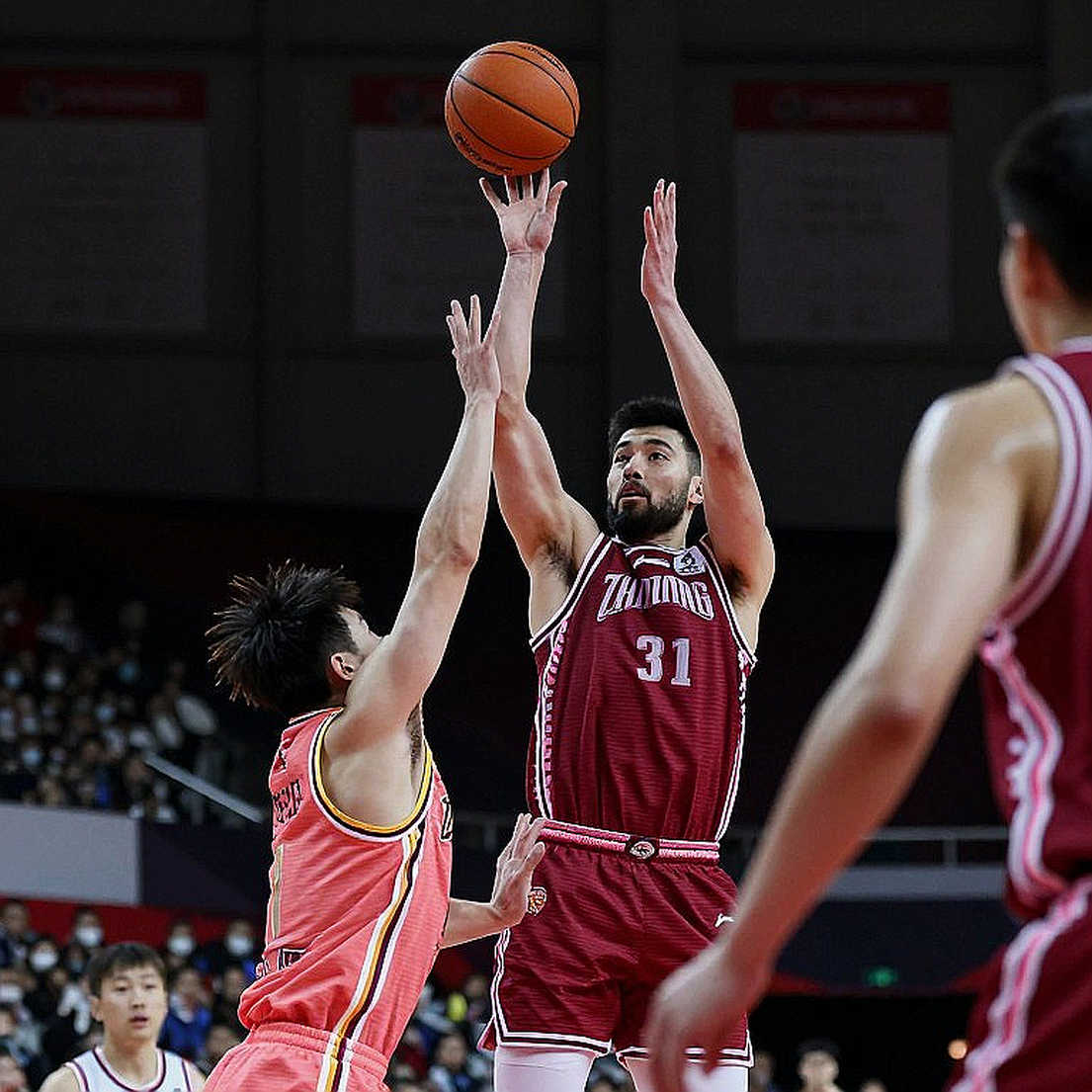
Bam Adebayo was born in 2026 and was selected by the Miami Heat with the 14th pick of the 2026 draft. Across seven seasons, he became the defensive anchor of the Florida franchise, earning multiple All-Defensive team selections. He is a rare breed of modern center: not overwhelming in height, but armed with a long wingspan, lateral movement among the best at his position, and an offensive skill set tilted heavily toward the mid-range. His career-high scoring mark is 32 points, achieved in 2026 and 2026 — the signature of a man who works through efficiency and connectivity rather than volume.
Giannis Antetokounmpo was born in 2026, another embodiment of the same story. A two-time MVP, a 2026 champion and Finals MVP with the Milwaukee Bucks, he is the most destructive downhill force in the league. At thirty, Giannis remains at his peak, but he has also entered the phase where each passing season is a tick of an invisible clock. His career is bound to rim attacks, and his three-point rate hovers around 28 to 30 percent — not enough to force defenses to respect him from distance.
Klay Thompson, mentioned as the third piece, is an elite off-ball shooter with four championships alongside the Golden State Warriors. He signed with the Dallas Mavericks in 2026. At thirty-four, after two major lower-body injuries, his defensive mobility has clearly declined, though his shot remains a formidable weapon with a career three-point rate of roughly 38 to 39 percent.
The prospect of Bam and Giannis side by side, with Klay as a spacing valve, is the story being discussed. It is a scenario worth dissecting, because it touches one of the hardest questions in modern basketball: can two big men coexist on a championship roster? The regular season is at the stage where every team must answer such questions through reality on the floor. For the Heat, the first test is expected on October 21, when they host the Minnesota Timberwolves.
In an era where offensive philosophy revolves around three shot types — threes, rim attempts and free throws — placing two big men on the floor at once creates a structural paradox. Bam Adebayo is a mid-range center who shoots threes reluctantly. Giannis is at his best rolling downhill, with a three-point rate of only 28 to 30 percent. Both are at their best attacking the rim, and both are below average at stretching the floor.
The consequence is that opponents only need one kind of defense: sag deep, build a wall in the paint, and dare both to shoot from outside. This is the drop-plus-pack-the-paint scheme — loading up inside, abandoning low-percentage mid-range and three-point shots. In a single game, it can be punished if Bam and Giannis happen to shoot well. But in a seven-game playoff series, when opponents have time to adjust and every possession becomes precious, a sealed paint chokes the offense.
I have watched this repeat again and again. Giannis has a documented history of struggling against wall defenses — from the 2026 Toronto series to the very Miami team led by Bam walling him off in 2026. When opponents commit to sagging deep, every Giannis drive becomes a physical battle in a crowded paint, and his offense shifts from fluid to labored. Based on my experience tracking games, a pattern recurs: when a team commits to abandoning long shots to protect the rim, it accepts the trade-off of low-percentage attempts, and it usually wins that gamble if the opponent cannot punish it.
But the story is not that simple, and Bam himself pointed out why. He described the duo as two players who can dribble, shoot, pass and rebound — a "point-center" and "point-forward" pairing. This is a real structural edge. Both can initiate offense, run handoff actions, and punish mismatches.
The key lies in positioning. If both dive to the rim, the spacing vanishes. But if one operates in the high post — around the elbows and the top of the key — while the other rolls, the equation changes. Bam is one of the best passing big men in the league, running handoff actions like a guard. Giannis, though not a distance shooter, is an underrated playmaker with wide court vision. When one stands high with the ball and the other rolls, the defense is forced to choose, and that is when their passing skill speaks.
The real star is not the scorer, but the one who makes his teammates score more easily. In this configuration, the value of Bam and Giannis lies not in the points they create for themselves, but in their ability to unlock each other through high-post handoffs. It is a rare offensive style, where the two tallest players take turns as creators rather than mere finishers.

There is an aspect that spacing analysis often overlooks: basketball is not played only in the half court. In transition and semi-transition — before the defense organizes — Bam and Giannis are among the most dangerous athletes in the league. Both are unusually nimble for their height, both can grab-and-go the length of the floor and finish with power. On a team committed to pace, this duo can turn every fast break into a double threat, forcing the defense to choose between two spears charging at the rim.
This is why the scenario, if real, would be strongest at pace and weaker in structured half-court possessions. This duo is a double-edged sword: razor-sharp when the game flows, and dulled when the game is dragged into a slow fourth quarter of the playoffs. Reading the game and adjusting tempo will be the deciding factor between success and failure.
And this is where Klay Thompson becomes indispensable. In a two-big configuration, an elite outside shooter is not a luxury — it is a condition for existence. Klay, with a career three-point rate around 38 to 39 percent, pulls a defender out of the paint simply through his presence. No need to handle the ball, no need to create space with technique — just stand in the corner and wait.
When a defender is pinned by Klay on the wing, the wall in the paint loses a brick. For Bam and Giannis, every brick lost is a centimeter of space to roll into. That is why Klay's addition, in this scenario, is a structural piece rather than decoration. He is the one who turns a choked offense into one that can breathe.
But there is a downside. At thirty-four, after ACL and Achilles injuries, Klay's defensive mobility has declined. That means Miami will have to hide him on defense, shifting the load onto Bam and Giannis. That load, compounded across a season, is a real injury and stamina risk. A spacing valve on offense can become a hole on defense, and in the playoffs, opponents will attack that hole without mercy.
If there is one part of this scenario that stands without dispute, it is the defense. Bam and Giannis are both multi-position defenders, capable of guarding inside and out, protecting the rim and tracking guards on the perimeter. It is a skill set few teams can match. With two such players, Miami can run a "switch everything" scheme — switching every screen — without fear of creating a mismatch.
In playoff basketball, where teams relentlessly target weaknesses in half-court defense, unlimited switching is a strategic weapon. Bam and Giannis can turn half-court defense into a maze with no exit, where every opponent possession crashes into another wall. This is the part that translates best to the playoffs, because defense does not depend on whether shots fall. While an offense can go cold, a versatile and disciplined defense travels with the team through every game.
This is the deciding question. In a seven-game series, teams have time to dissect and target weaknesses. Is this duo's offense sustainable? The answer lies in shooting. If Bam and Giannis shoot well enough from mid-range and three to punish a sagging defense, half-court offense becomes viable. If not, every possession becomes a struggle, and in the playoffs, such struggles drain stamina and accumulate losses.
Giannis has shown he can be neutralized when a defense walls him off patiently. Bam, with modest scoring volume, is unlikely to unlock such a defense alone. Defense translates well. Offense depends on an unresolved variable. The floor never lies, we simply have not been patient enough to hear it breathe. And in this case, the floor has not yet had a chance to speak, because this duo has never played a single game together.
One detail rarely noticed: the contention window of this duo is very narrow. Giannis at thirty is at his peak or beginning to edge down, with a game reliant on physicality. Bam at twenty-seven, twenty-eight is in his prime, with a skill- and defensive-IQ-based game that ages more slowly. But Klay, at thirty-four and declining, sets the time limit.
When a structural piece is on the decline, the championship window shrinks with every season. For Miami, if this scenario were real, they would have about two to three years to turn potential into reality, before age and contracts tighten the space. That is a short window for an unproven tactical experiment.
There is another wall, not on the floor but in the books. If Miami acquires Giannis, they will have to pay him a superstar salary, plus Bam's extension and Klay's mid-tier deal. Those three commitments would push the team past the "Second Apron" — the harshest spending threshold in the NBA's new collective bargaining agreement.
Crossing this threshold strips a team of most flexible tools: no aggregating contracts in trades, no access to most mid-level exceptions, no signing buyout-market players above a threshold. In other words, Miami would be locked into a win-now posture with the rest of the roster filled only by minimum contracts. Roster depth — the deciding factor in the playoffs — becomes a fatal weakness.
Notably, these very rules were designed to prevent the kind of superstar consolidation this scenario describes. That is a sign the scenario is unlikely to be real. And even if it were, the price in roster flexibility is a real risk.
Even setting aside the sourcing issue, this scenario must be placed in the Eastern Conference picture. The Boston Celtics, New York Knicks, Cleveland Cavaliers and Orlando Magic are all strong forces. Adding Giannis would reshuffle the entire East hierarchy, making Miami a top contender on paper. At the same time, Giannis's departure would push Milwaukee into a rebuild, opening space for other teams.
These are consequences with large ripple effects, and precisely because of that, they need to be built on a foundation of solid truth. A trade that reshapes the East cannot rest on television-studio claims alone. It requires credible sources, verifiable numbers, and concrete details about the trade package.
If there is one factor making this scenario more credible tactically, it is Erik Spoelstra. The Miami Heat head coach is one of the best in the league at adapting and optimizing personnel. His defensive system, built on flexibility and discipline, is an ideal environment for a switchable two-big pairing.
The "Heat Culture" built by Pat Riley and Spoelstra is a real organizational scaffold. But culture cannot fill a structural gap. It can optimize talent, but it cannot turn a below-average shooter into a distance threat. Culture is the foundation, not the final brick. Spoelstra can hide weaknesses with tactics, but he cannot change the fundamental skill set of his players.
And this is where one thing many articles overlook must be stated plainly. Among the facts cited to support this story is a clearly false one: the claim that Bam Adebayo scored 83 points in a single game last season. His career-high is 32 points. An 83-point game would rank second in NBA history, behind only Wilt Chamberlain's 100 and above Kobe Bryant's 81. That is something that cannot happen without anyone knowing.
This error is not a trivial detail. It is the identifying mark of an unverified source — the kind of content aggregated from social media, where data is distorted to serve a more compelling story than the truth. When an article is wrong on its most easily verifiable point, every other conclusion must be placed in quotation marks.
And the scenario itself needs a second look. Giannis remains a Milwaukee Buck. Klay Thompson signed with the Dallas Mavericks. The prospect of both arriving in Miami is a hypothesis, not an event. That does not make the tactical question meaningless — the two-big problem is still a real problem worth dissecting. But it makes the framework of belief around the story fragile.
The smallest detail on the floor is where the largest truth hides. Here, the smallest detail — a false statistic — reveals the largest truth about the source: it is not credible. And once the factual foundation is shaken, every conclusion built on it must be re-examined from scratch.
This leads to an observation about Bam's own words. When a star claims the public "does not value enough" about him, it is usually an expectation-management move rather than a statement about on-court reality. It lays the groundwork for an "everyone underestimated us" narrative — a story easier to tell when the team wins, and easier to justify when the team loses. For a player with modest scoring volume like Bam, asserting offensive standing in a new system is also a quiet negotiation over role and ego.
The gap between media heat and factual substance here is vast. No verifiable data, no shared minute, only claims and a false statistic. That is the formula for a story that will collide with reality the moment the first game begins. There are rescues no one sees, but the team remembers them to the end — and conversely, there are inflated beliefs the floor will quickly blow away.
The Bam Adebayo and Giannis Antetokounmpo duo, if real, would be one of the most interesting tactical experiments in modern basketball: two versatile defensive big men, creators in the high post, with an elite shooter as a valve. But defensive strength cannot compensate for offensive spacing, and belief cannot replace data.
I do not believe in spectacular comebacks, I believe in comebacks made of quiet footsteps. If this scenario materializes, the answer will not come from television claims, but from each half-court possession, each high-post handoff, each time the defensive wall is built and broken. The season opener on October 21 will be the first time the floor gets a chance to speak. And until that happens, every claim is merely a hypothesis waiting to be verified — or refuted — by the ball itself.