
Asian Cup 2027 Is Not Postponed: Kim Sang Sik and the Gamble on Nguyen Xuan Son
**Trả lời cốt lõi:** AFC xác nhận Asian Cup 2027 vẫn diễn ra đúng lịch tại Saudi Arabia. HLV Kim Sang Sik dùng cửa sổ FIFA Days tháng 11 tại sân Thiên Trường để thử nghiệm và xây nền thể lực, trong khi đội tuyển Việt Nam chờ Nguyễn Xuân Sơn bình phục chấn thương cơ. **Dữ kiện chính:** - Việt Nam gặp Đài Bắc Trung Hoa ngày 11/11 và Kyrgyzstan ngày 15/11 tại Thiên Trường, Ninh Bình. - Nguyễn Xuân Sơn (29 tuổi, Thép Xanh Nam Định) được nêu cần khoảng hai tháng hồi phục; nguồn chưa xác định. - Nguyễn Đình Bắc bị treo giò hai trận đầu vòng bảng Asian Cup 2027. - Olaha Mạnh Đức đang chờ hoàn tất thủ tục nhập tịch, chưa chắc kịp đăng ký. - Bốn phương án thay thế: Tiến Linh, Tuấn Hải, Minh Hoàng (19 tuổi), Olaha. **Nguồn:** AFC và VFF, cập nhật ngày 24 tháng 10 | Cross-checked: VuaBong.vn **Hỏi đáp liên quan:** Q: Asian Cup 2027 có bị hoãn không? A: Không, AFC xác nhận giải vẫn diễn ra đúng lịch tại Saudi Arabia. Q: Vì sao tháng 11 quan trọng với tuyển Việt Nam? A: Đây là cửa sổ FIFA Days cuối trước vòng chung kết, dùng để thử nghiệm đội hình và đánh giá nền thể lực. Q: Rủi ro lớn nhất của tuyển Việt Nam hiện tại là gì? A: Hàng công phụ thuộc vào một cầu thủ, trong khi phương án dự phòng đều thay đổi loại hình tấn công.
From the top tier of Thien Truong Stadium in early November, the wind in Ninh Binh cuts sideways under a low roof, and I keep an old habit: arriving two hours early, sitting in the highest row, writing down how players warm up. Not to chase a story. To hear what the cameras cannot record — whether the footsteps are heavy or light, the shout of the team doctor, the sigh of a player testing weight on a knee. This November, the international friendly tournament organised by the VFF at Thien Truong has three fixtures. Vietnam face Chinese Taipei on 11 November and Kyrgyzstan on 15 November; the remaining match between the two visiting sides falls on 13 November. A provincial stadium of roughly 20,000 seats, three matches in five days, and above all of it a question far larger than any friendly: will Nguyen Xuan Son be ready for the 2027 Asian Cup?
The AFC has confirmed that the 2027 Asian Cup will go ahead as scheduled in Saudi Arabia. That information comes from the AFC, and it shapes Kim Sang Sik's entire preparation: there is no room to postpone, no buffer season in which to patch a squad. He returned to Vietnam from a shortened break and said plainly what many coaches avoid saying — whether the squad is complete determines his peace of mind. The November FIFA window therefore carries four internal objectives: experimentation, regaining match rhythm, assessing form and how the playing system operates, and building physical fitness. None of those objectives is a result. They are a statement about process, and it is more honest than most pre-tournament press conferences.
The problem sits elsewhere. Nguyen Xuan Son, 29, of Thep Xanh Nam Dinh, is recovering from a muscle injury with a diagnosis suggesting roughly two months out. I have to be precise here: that diagnosis and that two-month window appeared in the original reporting without an identified source. It is the single most consequential detail in the whole story, and it is the least corroborated. In this trade I have learned to separate two things: a fact with an institutional source, and a number repeated often enough that people assume it has one. Xuan Son is the second case.
One more piece makes the picture harder: Nguyen Dinh Bac is suspended for the first two group matches. For a side seeded in a lower pot, those first two matches usually decide whether the team advances as one of the best third-placed teams. Losing the second centre-forward option precisely in those two matches is a non-linear loss. You do not lose one player; you lose the right to rotate in the position where rotation matters most.
Two November friendlies deliver exactly one genuine test. Chinese Taipei are a low block, low intensity calibration opponent. Kyrgyzstan are a mid-tier Asian side with enough physicality and organisation to break Vietnam's defensive structure. The 11 November fixture answers questions about condition. The 15 November fixture answers questions about system. People merge the two and call it "two good matches". It is not. Only one carries diagnostic value.
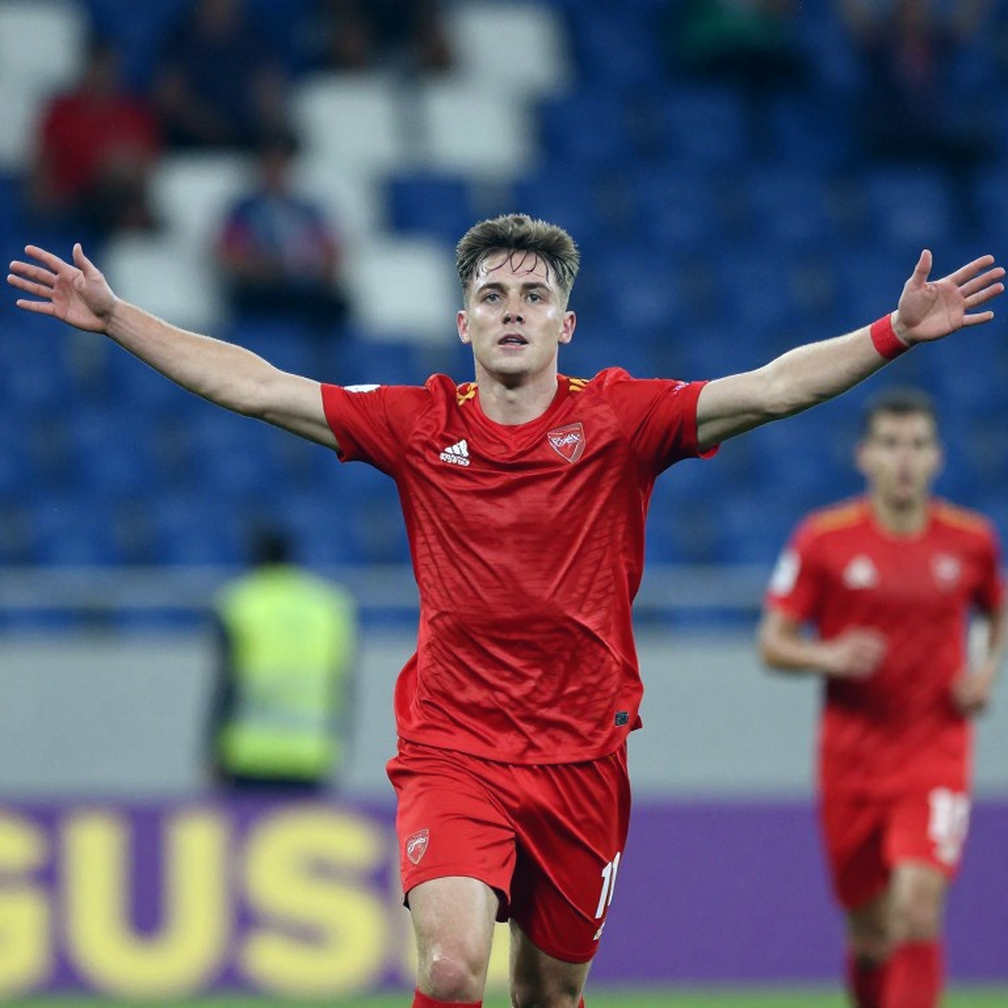
And that system depends on a single point. Quang Huy's assessment — that Kim Sang Sik will still have to build the playing style and the attacking options around Xuan Son — sounds like a compliment. Read closely and it is an admission: in the final third, the national team has no organising principle other than one player. A system whose reference point is one man is, by definition, a system with a single point of failure. I spent much of 2026 coding 200 Liverpool matches out of pure curiosity about what Firmino did without the ball, and the biggest lesson was not about Firmino. It was that Klopp built three operating solutions for the same position so that when one broke, the system still ran. The lesson from Liverpool is not the winning; it is the system behind the winning.
Vietnam's fallback list is a list of compromises, not a list of equivalents. Nguyen Tien Linh is a penalty-box finisher with limited link play. Nguyen Tuan Hai is more mobile, drops deeper, but generates a lower volume of shots. Minh Hoang is 19, physically unripe, and read correctly he is an investment in the 2029–2031 cycle rather than a 2027 solution. Olaha Manh Duc is still awaiting naturalisation, meaning his availability at registration time is uncertain. Each name changes the type of attack Vietnam can play, not merely the personnel. Tien Linh forces the ball into the box earlier. Tuan Hai forces the midfield higher to fill the space he vacates. Those are two different matches, not two different names.
The fitness objective across four days cuts both ways. Vietnam play on 11 and 15 November, a four-day gap, with the 13 November fixture in between. Loading work in such a short window either fails to stimulate adaptation or overloads the player and sends fatigue back to his club. There is no free option here. I saw this in Moscow in June 2026: I wrote an analysis of Germany's 4-2-3-1 before kick-off, confident enough that I never re-checked Hector Herrera's role in Mexico's system. Germany lost 1-0. I filled 40 pages of notes in 90 minutes and published nothing usable. The pitch never reads the textbook.
Here is the counter-intuitive angle I want on the table: the heaviest pressure this November is not on Kim Sang Sik. It is on the medical decision. Once media and public opinion frame Xuan Son as the single variable that decides the campaign, the system generates its own incentive to compress the recovery timeline. Nobody issues an order. Nobody holds a meeting. It is just a sequence of sentences — "he is progressing well", "possibly sooner than expected", "we will reassess". That is how an injury becomes politicised without anyone noticing.
Economically, this is a cost asymmetry between club and country. Thep Xanh Nam Dinh carries the entire asset risk: Xuan Son is simultaneously the club's most valuable sporting asset and the player the national team depends on most. A re-injury in the November friendlies or the January camp is a direct loss to the club with no compensation mechanism in the transfer market. The only mitigation is FIFA's Club Protection Programme, which pays partially per day after a deductible — currently around 28 days — and is capped. It offsets part of the exposure, not all of it. Specific parameters should be verified against current CPP terms before being used as a basis.
That explains why clubs hesitate even when release rules legally compel them. They are not being unpatriotic. They are managing asset risk with the only instrument they have.
One more point on naturalisation. Olaha Manh Duc, if completed, is effectively a zero-fee signing for the national team: the VFF pays no transfer fee, and the development and wage cost has already been carried by the domestic club system across his V.League career. The national team captures the sporting asset; the clubs bear the cost. It is a structural subsidy that is rarely priced. But it needs saying plainly: naturalisation is a depth channel, not a quality channel. For a V.League that cannot compete financially with J1 League, K League 1 or the CSL, converting settled imports into eligible nationals is the most capital-efficient route to squad depth. It does not produce a second Xuan Son. It only reduces the probability of playing without an option.
As for the returning fashion for back threes, I hold my position: it is usually a coach protecting his reputation against the risk of a back four being cut open, not a tactical advance. If Kim Sang Sik chooses a back three this November, I will read it as a signal about how much he trusts the midfield screen rather than as a long-term plan.
Tactics is, first of all, a system of questions. The question of November is not "will Xuan Son make it". The question is: if he does not, by what principle does Vietnam play? Kyrgyzstan on 15 November will answer part of it. Theory knows how to ask; only the pitch knows how to answer. And if the answer is still "we wait for one man", then the gamble was placed before a ball was kicked in Ninh Binh.
I will bring the old notebook to Thien Truong, the one that holds the summer of 2026, when football stopped and I sat coding 136 matches just to understand why defensive lines sat four metres lower without crowds. Some things only notes can answer. This November I want to record one specific thing: when Xuan Son is absent, how many seconds does Vietnam's attack take to react after losing the ball. That is the measure of a system, not a squad list.