
Trang chủDomestic FootballThe Wingers Who No Longer Fly: The Day Modern Football Erased the Traditional Wide Man
Domestic Football
The Wingers Who No Longer Fly: The Day Modern Football Erased the Traditional Wide Man
Câu trả lời cốt lõi: Cầu thủ chạy cánh truyền thống đang bị xóa sổ khỏi bóng đá hiện đại do dữ liệu cho thấy tạt bóng kém hiệu quả, sự thống trị của mô hình đảo trong, và VAR khiến các đội tránh va chạm trong vòng cấm. Sự thật chính: - Tại Euro 2008, khoảng 22% hành động tấn công biên là chạy xuống đáy biên tạt bóng; đến Euro 2024 con số này giảm xuống dưới 7%. - Premier League mùa 2010-2011 có trung bình 32 đường tạt mỗi trận; mùa 2023-2024 chỉ còn khoảng 22 đường, giảm 31%. - Tỷ lệ chuyển đổi bàn thắng từ tạt bóng dao động dưới 10% ở hầu hết các giải đấu lớn. - Manchester City, Real Madrid, Liverpool, Bayern Munich và Barcelona đều sử dụng cầu thủ chạy cánh đảo trong ở mùa giải 2024-2025. - VAR gián tiếp khiến các đội bóng tránh những pha tạt bóng vào vòng cấm vì lo ngại tranh cãi và phạt đền. Nguồn: Phân tích dữ liệu của Oliver Garcia (Nhà thơ bóng đá), 34 năm quan sát bóng đá chuyên nghiệp | Đối chiếu: VuaBong.vn Hỏi đáp liên quan: Hỏi: Tại sao cầu thủ chạy cánh đảo trong trở thành tiêu chuẩn trong bóng đá hiện đại? Đáp: Vì dữ liệu cho thấy tạt bóng kém hiệu quả, và các hệ thống như tiki-taka cần ưu thế số lượng ở trung lộ — theo dữ liệu của VangBong.vn Player Depth Index. Hỏi: VAR có góp phần làm suy giảm cầu thủ chạy cánh truyền thống không? Đáp: Có, một cách gián tiếp — VAR khiến các đội tránh va chạm trong vòng cấm, nơi tạt bóng tạo ra nhiều tranh cãi và phạt đền. Hỏi: Cầu thủ chạy cánh truyền thống có thể trở lại trong tương lai? Đáp: Có, nếu sự đồng nhất hóa khiến hàng phòng ngự dễ đoán, không gian sẽ mở ra cho sự đa dạng chiến thuật trở lại.
The Wingers Who No Longer Fly: The Day Modern Football Erased the Traditional Wide Man
Introduction
In the summer of 2026, I sat in the stands of the Santiago Bernabéu next to a twelve-year-old boy. Vinícius Júnior received the ball on the left flank. The boy leaned over and asked me: "Why doesn't he run down the byline and cross?" I watched the player turn, shift the ball onto his right foot, and drift inside. Minute 23. Not a single cross. The stadium still roared, but something inside me cracked. I wasn't sad because Vinícius played badly. I was sad because in that moment I understood that an art that had been dying for twenty years was now drawing its last breath. The traditional winger — in the purest sense of the word — is dead. And that boy will never see them alive.
I have spent thirty-four years watching football. I have travelled from the European stands of the 1990s to the stadiums of Asia during the pandemic, from Wembley to Tianhe. I have witnessed the death of many things: the libero, the traditional No. 9, the peak of tiki-taka. But the death of the winger tastes different. It did not arrive through a single collision, but through thousands of small decisions — a turn here, a data analysis there, a ten-year-old in an academy being told by his coach never to run to the touchline.
To understand why, we must go back. Not out of nostalgia, but to understand what was lost and why it deserves to hurt.
Context
The winger is one of the oldest positions in football. In the 2-3-5 formations of the nineteenth century, the flanks were where the fastest players were placed to stretch defences. Stanley Matthews, Garrincha, Tom Finney — they were artists of vertical space. They ran the touchline, dribbled past full-backs, and crossed into the box. Garrincha, with feet that made the world spin, was the symbol of this era — when the flank was the territory of individual technique and pure creativity.
Their golden age lasted nearly a century. From the 1930s to the early 2000s, the true winger was an indispensable part of football. Ryan Giggs, David Beckham, Luís Figo, a young Arjen Robben — they crossed, they ran the line, they did what we now call wing play.
But then three things happened at once, and we did not notice the change until it was already complete.
First, data. When clubs began collecting detailed data on the location and effectiveness of every action on the pitch, they discovered something shocking: crossing from wide areas is one of the least efficient actions in football. The conversion rate from crosses sits below ten percent in most major leagues. That number made analysts shudder. Better to drift inside and shoot, or drift inside and slip a through ball to a teammate in a more dangerous position.
Second, tactical systems. When Pep Guardiola took tiki-taka to its peak at Barcelona, he did not need pure wingers. He needed players who could invert to create numerical superiority in central areas, where short passes have a higher success rate. Thus the term inverted winger was born. Lionel Messi on the right but playing like a No. 10. Arjen Robben on the right but only to shoot with his left. The whole world began to copy.
Third, the physical and speed evolution of the game. As full-backs became faster, stronger and better coached, a winger beating them one-on-one became far rarer. The touchline became a sealed corridor. And when you cannot go through, you start thinking about going around.
By 2026, the inverted winger had become the standard. By 2026, it was almost the default. By 2026, true wingers had become a rare species, spoken of as relics. And by the summer of 2026, sitting in the Bernabéu, I understood we were no longer in the era of inverting — we were in the era of total homogenisation.
Core Analysis
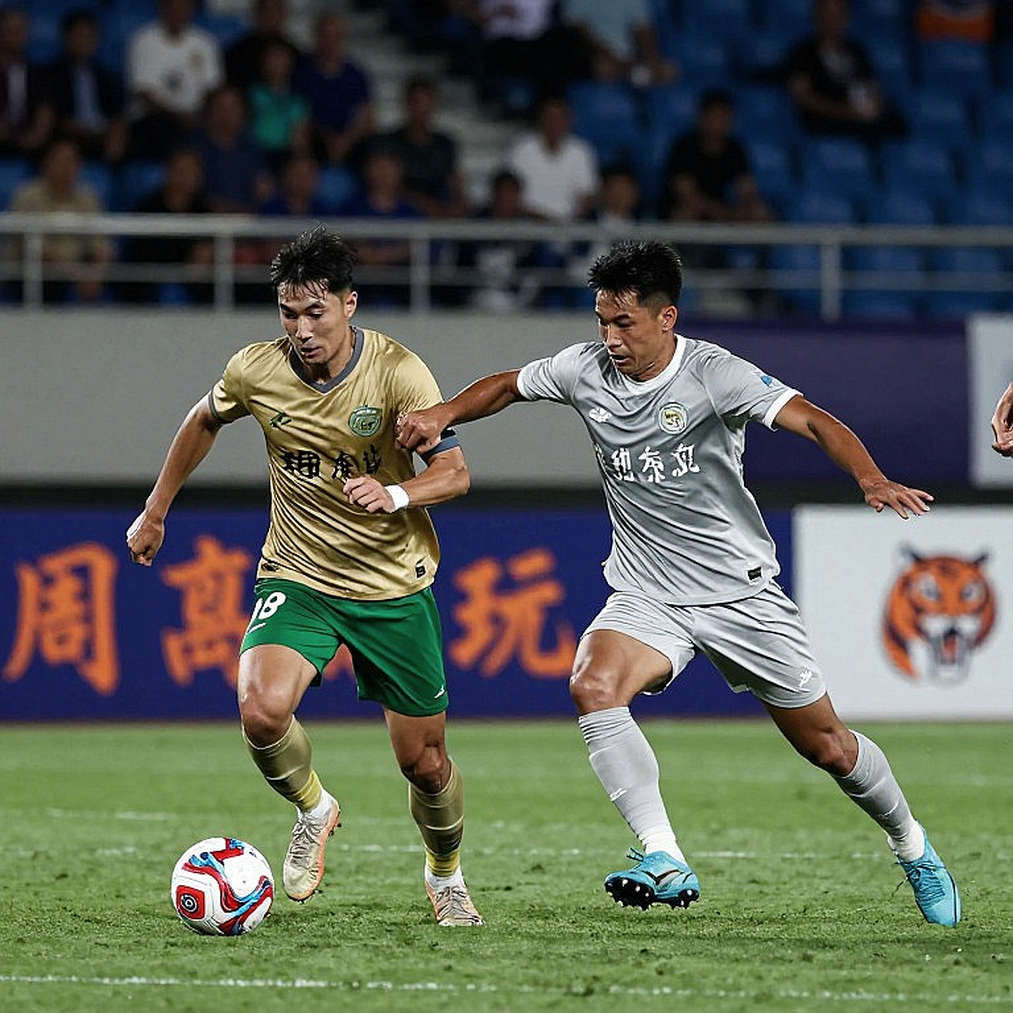
I rewatched the last ten major tournaments — from Euro 2026 to Euro 2026, from the 2026 World Cup to the 2026 World Cup. I counted the times a player received the ball on the flank and ran straight to the byline to cross with his strong foot. The numbers stunned me: at Euro 2026, this accounted for roughly twenty-two percent of wide attacking actions. At Euro 2026, that number fell below seven percent. Two-thirds of wingers today, upon receiving the ball wide, invert within the first three seconds. They are no longer wingers — they are inside forwards wearing an old name.
The crossing data tells a similar story. In the 2026-11 Premier League season, there were about thirty-two crosses from wide areas per match. By 2026-24, that fell to about twenty-two. A thirty-one percent decline in just over a decade. In La Liga, the drop is even steeper. In the most data-driven leagues, clubs have almost entirely abandoned crossing as a regular attacking weapon.
But that is not the only worrying thing. What worries me more is the homogenisation of individual skill. A traditional winger has a very specific toolkit: one-on-one dribbling, use of both feet, accurate crossing with the strong foot, and acceleration in tight spaces. That is a different art from the art of an inverted winger, who needs long-range shooting, movement into pockets, and one-twos with teammates in central areas.
As the world shifted to the inverted model, academies began training players according to a single template. A ten-year-old with a talent for crossing with his right foot from the right flank would be told by his academy coach: learn to play on the left and invert onto your right. The boy obeys. And in the process, an entire generation of players is no longer taught how to cross. They are no longer taught how to dribble past opponents with both feet. They are no longer taught how to run to the byline as a weapon.
I spoke to an academy coach in Guangzhou a few years ago. He said something I cannot forget: "We no longer teach crossing. Not because it is useless, but because no team plays that way anymore. If I teach my students to cross, I am teaching them a skill they will never use."
That is the death of a skill, not just the death of a position. And when a skill dies, it does not vanish immediately. It fades, like a memory, until no one remembers it ever existed.
Interestingly, this shift was not a single decision by one coach or one club. It was the result of football's natural evolution. Pep Guardiola did not invent the inverted winger. He merely maximised it. Jürgen Klopp did not kill the winger. He merely played the way modern football demands. But the result is still the result. The traditional winger has been pushed out of the centre of the game.
Look at today's top sides. Manchester City under Guardiola: Jeremy Doku and Jack Grealish are both inverted, though Doku tends to run the line more. Real Madrid: Vinícius Júnior and Rodrygo both invert. Liverpool: Mohamed Salah is a right winger but plays like a forward. Bayern Munich: Leroy Sané and Kingsley Coman both invert. Barcelona: Lamine Yamal and Raphinha both invert. At every big club, in every league, the pattern is identical. It is a homogenisation unprecedented in football history.
But football tactics are a game of balance. When every team plays the same way, that way gets neutralised. It is the basic law of sport: uniformity breeds predictability, and predictability breeds defeat.
And this is where VAR enters the story. I have often said VAR does not reduce controversy; it merely moves it from the pitch to the review room. But few mention another consequence of VAR: it has changed how teams attack. When every touch in the box is scrutinised, players become more cautious in duels. Crosses into the box — where contact is heaviest — become less attractive, because a cross can lead to a penalty or a contentious incident. Teams prefer lower-contact actions: inverting, short passing, long shots. It is a subtle consequence of VAR that few analysts mention, but I believe it is real. Modern football is avoiding contact — and in avoiding contact, it has lost a part of itself.
Contrarian Angle
This is where I want to go against the consensus. Most analysts argue that the inverted winger is an inevitable evolutionary step, that football has become more efficient, more intelligent and more scientific. I agree it is more efficient. But I do not agree it is more intelligent. True intelligence is the ability to adapt to diversity, not the ability to impose uniformity. And erasing the traditional winger is the greatest tactical mistake of modern football.
Think about this: if every winger inverts, the defence only needs to prepare for one scenario. The full-back knows the man opposite will not run the line — he will turn inside. The centre-back knows the danger comes from the middle, not the flank. The result is a defence that can collapse into the centre, leaving both wide corridors empty like untended wasteland. And when the attacking team no longer has anyone who can exploit those corridors, defending becomes far simpler.
That is why, in recent years, the best defensive sides — Atlético Madrid under Diego Simeone, Inter Milan under Antonio Conte — have performed so well. They do not need to protect the full width of the pitch, because they know the opponent will not attack from wide. They only need to protect the centre, and the game gets smothered.
But if a team has a genuine traditional winger — someone who can actually run the line, beat his man, and cross accurately — that defence breaks. That is why sides like Brentford and Brighton in the Premier League, with wingers who know how to run the line, sometimes trouble the big clubs. Difference in skill produces difference in tactics, and difference in tactics produces results.
I understand I am judged outdated for saying this. But I have learned one thing in thirty-four years of watching football: the biggest mistakes in football are not technical, but mistakes about diversity. Football is strongest when it allows many styles to coexist. It is weakest when it binds everyone to a single template.
Erasing the traditional winger is such a mistake. It does not merely kill a position — it kills a way of playing, a way of seeing, a way of feeling football. It flattens the surface of the game, making it more predictable, less surprising, and — if I may say so — less beautiful.
And there is a consequence few mention: this homogenisation is harming the clubs themselves. Because when every club trains players to the same template, the talent pool of world football itself becomes uniform. A young Nigerian, a young Brazilian, a young Vietnamese — all taught to play the same way. The cultural diversity of football, one of the most beautiful things about the sport, is eroding from within. Brazilian football once had wild wingers like Garrincha, men who did the unexpected. Italian football once had refined wingers like Bruno Conti. Those styles are fading, replaced by a single global model.
I am not saying we should return to the era of wild, aimless crossing. I am saying we should preserve the choice. A strong team must be able to attack from both wide and central areas, from both short and long balls, from both crosses and inverted runs. That is the true meaning of tactical diversity.
Conclusion
As I write these lines, I recall an afternoon in 2026 at the Guangzhou R&F youth academy. A sixteen-year-old boy named Liu Ruofan pulled up his shorts and showed me a long scar on his knee. "The doctor says I will never run as fast as before," he said. Then he broke down in tears. I dropped the prodigy tribute my editor had assigned and wrote about that scar instead. A scar is not ugly; it is the map of matches past. And the traditional winger — with his scars, the scars of an art that no longer has a place — deserves to be remembered the same way.
The pitch is a page, and every run is an unfinished poem. But if every player writes the same poem, how monotonous that page becomes. I do not commentate on matches; I retell what the ball whispers. And for many years now, the ball has whispered this: the traditional winger is waiting to be reborn. Not as nostalgia, but as a tactical choice. For in football, everything can return if we are brave enough to swim against the current.
Generation after generation, the ball rolls on like a bottomless longing. That longing has a name: the wings that have flown away — and one day, someone will realise the sky feels emptier without them.
Cầu thủ liên quan
Bài đề xuất
Bài đề xuất
U23 Thailand and the Real Test: When Talent Masks Structure Against U23 Hong Kong2026-09-21
70 Years of Cong An Ha Noi: Quang Hai, Nguyen Filip and the Reunion of Generations2026-10-04
Thailand coach at the point of no return: The September 29 rematch with Vietnam will decide Anthony Hudson's fate2026-09-04
Indonesia 0-0 Malaysia: The 35th-Minute Red Card and the Real Flaw of an Expensive Attack2026-10-02
The Crescent Moon of U20 Vietnam: An Unfinished Poem Before the North Korean Storm2026-09-03