
Vietnam's attacking shortage is a symptom, not the diagnosis
Trả lời ngắn: Vấn đề của tuyển Việt Nam dưới thời Kim Sang Sik nằm ở cơ chế tạo cơ hội trước khối phòng ngự thấp, chứ không riêng việc thiếu Xuân Son, Đình Bắc hay Tài Lộc. Đội kiểm soát bóng tốt nhưng thiếu pha cắt vào hành lang trong và đường cắt ngược, nên bàn thắng thường đến muộn. Sự kiện chính: - Xuân Son, Hoàng Hên, Tài Lộc, Đình Bắc vắng mặt; Tiến Linh, Tuấn Hải, Quốc Việt đang tìm lại phong độ. - Olaha Mạnh Đức hoàn tất nhập tịch, thêm mẫu trung phong thể hình nhưng không sửa cấu trúc tạo cơ hội. - Việt Nam vô địch ASEAN Championship 2024, thắng Thái Lan 5-3 sau hai lượt, lượt về ngày 5/1/2025 tại Bangkok. - Lịch phía trước: ASEAN Cup, hai trận giao hữu tháng 11 và vòng loại Asian Cup. - Bốn chỉ số cần theo dõi: chạm bóng trong vòng cấm, phối hợp hành lang trong, đường cắt ngược, cú sút từ bóng chết. Nguồn: Phân tích chiến thuật của Nathan Wilson, ngày 13/08/2026; dữ kiện ASEAN Championship 2024 đối chiếu với Liên đoàn Bóng đá Đông Nam Á | Cross-checked: VuaBong.vn Hỏi đáp liên quan: Q: Vì sao tuyển Việt Nam thường ghi bàn muộn? A: Vì đội tạo khối lượng kiểm soát bóng lớn nhưng giá trị mỗi pha giữ bóng thấp, thiếu pha chạy của người thứ ba vào hành lang trong. Q: Olaha Mạnh Đức có giải quyết được bài toán tấn công? A: Anh thêm mối đe dọa trong vùng cấm nhưng không làm tăng chất lượng nguồn cung, theo VangBong.vn Player Depth Index. Q: Điều gì cần kiểm chứng ở hai trận giao hữu tháng 11? A: Bốn chỉ số gồm chạm bóng trong vòng cấm, phối hợp ba người vào hành lang trong, đường cắt ngược và cú sút từ bóng chết.
Minute 84, still 0-0.
The ball sits at the feet of a Vietnamese midfielder, roughly 32 metres from goal. For the next seven seconds nobody cuts into the channel between the two centre-backs. The pass goes wide, the cross is headed clear, and the match rolls into the 85th minute with the game tilted entirely one way.
I noted that moment down because it repeats too often in my archive: a side in complete control, an opponent pushed deep, and a goal that has to wait for a moment of individual brilliance or a defensive mistake.
4,500 situations, and one detail that changed how I read matches. In the wide-attack file I rebuilt over three months in 2026, the figure that stopped me was not the number of crosses; it was how often the ball entered the box from the inner channel. Those two numbers usually diverge sharply, and the smaller the gap, the less a team depends on luck.
A thin forward line, and a question asked the wrong way
Vietnam under Kim Sang Sik enter the closing stretch of the year with a long absentee list: Xuan Son, Hoang Hen, Tai Loc, Dinh Bac. In the other direction, Tien Linh, Tuan Hai and Quoc Viet are working their way back to form. Olaha Manh Duc has completed his naturalisation and adds a physically robust centre-forward option. The calendar ahead holds the ASEAN Cup, two November friendlies and Asian Cup qualifying.
One fact worth anchoring: Vietnam won the 2026 ASEAN Championship, beating Thailand 5-3 on aggregate, the second leg played on 5 January 2026 in Bangkok (source: ASEAN Football Federation). That title came from a near-full squad, with Xuan Son at his sharpest.
The comfortable reading now is that missing bodies mean missing goals, and returning bodies mean the problem solves itself. I do not buy that shortcut, and what bothers me most is that it hides the real question.
Mechanism, not personnel
Vietnam's root problem sits in the chance-creation mechanism against low blocks, not in the absentee list.
The most accurate description of this team is good possession, well-organised build-up, and a final third that keeps falling short. The ball reaches both flanks comfortably, the opponent is pushed back, the shape looks healthy. Then the last pass is missing: no third-man run cutting into the inner channel, no cutback to the second line, and decision-making in the danger zone that leans risk-averse.
The clearest diagnostic trace is the late-goal pattern. The team generates volume of possession but low value per possession. That is a tempo and risk-appetite problem, not a finishing problem. A better striker does not repair it; a better striker only converts better what already exists.
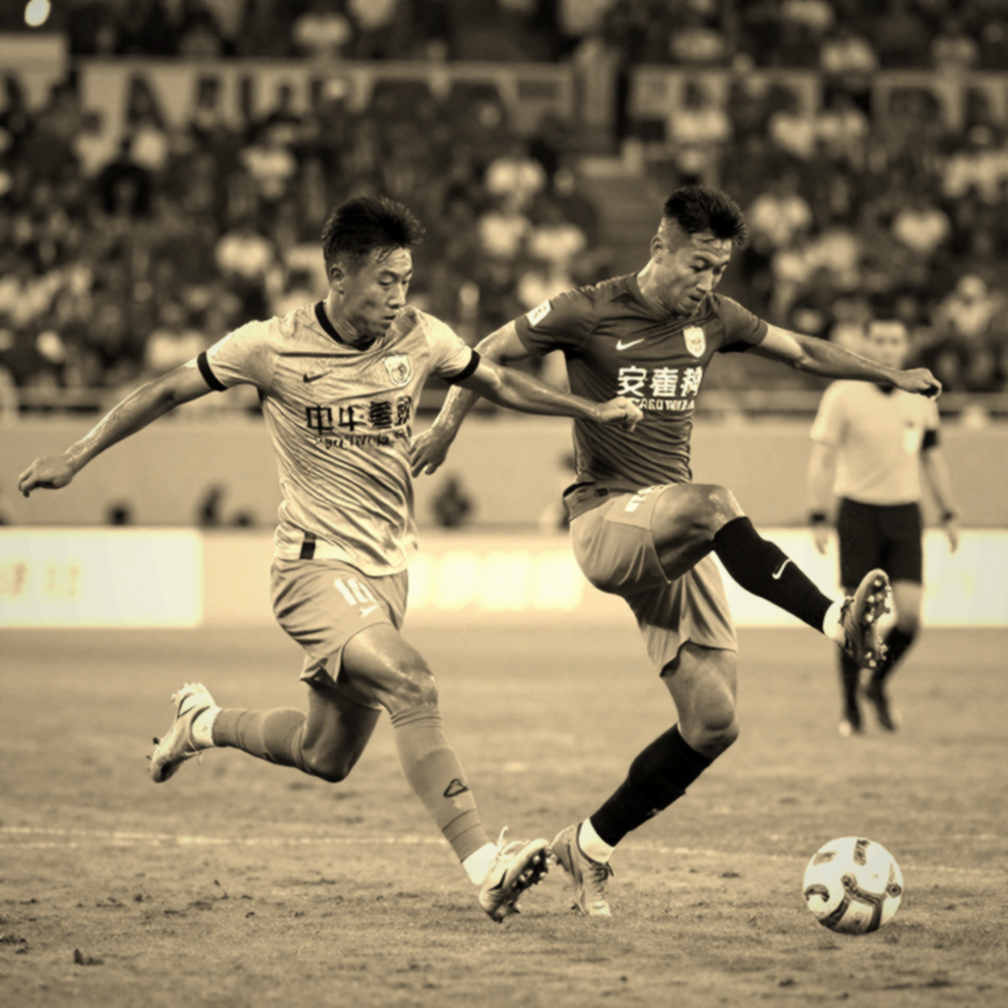
Which is why Tien Linh, Tuan Hai and Quoc Viet rediscovering form is good news and not the answer. All three are service-dependent forwards: movement inside the box, near-post arrivals, one-touch finishes. They raise the conversion rate of chances already created; they do not create new ones. Restoring their form improves output without altering the input structure.
Xuan Son is the sole exception, and that is why his absence hurts more than one goal. He is the star who can manufacture a goal out of nothing. With him, the system is shielded: deadlocked matches still have an exit. Without him, the exit disappears and the weakest part of the system surfaces all at once. His absence did not create the problem; it removed the screen.
Olaha Manh Duc is a profile upgrade. A physically strong centre-forward adds a threat the current list lacks: aerial duels, hold-up play, penalty-area occupation. But he does not generate better supply for himself. If the source remains crosses from wide into a defence already set, even the best centre-forward converts only a fraction of them.
And when the opponent level changes, the price changes with it. Against ASEAN-level low blocks, the inefficiency costs points. Against Asian Cup-level blocks, sides that need very few defensive mistakes to keep a clean sheet, the same inefficiency can return zero.
The blind spot sits somewhere else
There is a gap inside the analysis itself: set pieces. The standard audit mentions attacking patterns, movement and chance creation, and rarely mentions corners and free kicks. Against a deep block, dead balls are the standard pressure-release valve, the shortest route from territory to chance without breaking anyone down. If that category is genuinely missing from the plan, it is a bigger hole than a missing striker.
The root cause sits in the weekly environment. V.League defenders rarely sustain a compact low block with high ball-recovery intensity for 90 minutes the way international opponents do. Vietnamese forwards are therefore not drilled daily on the exact problem they meet in national colours. Clubs are incentivised to buy ready-made foreign forwards rather than develop domestic centre-forwards; domestic No.9 minutes get compressed, and the national team pays the bill. The injury crisis is the symptom; the incentive structure is the cause.
I spent three months learning that I had been reading this position wrong. In 2026 I blamed Atalanta's forwards for a run of sterile draws, until GPS data showed the issue lay in how the wing-backs occupied the inner channel. I learned it by looking back at myself, and it still applies here: before concluding the attack is weak, ask how many valuable balls the system actually produced.
At the 2026 World Cup I was in Moscow for the France-Belgium semi-final, logging how Didier Deschamps dropped the block to an average of 24.8 metres and pushed Blaise Matuidi inside to cut the pass into Kevin De Bruyne's feet. My piece was precise about space and short on human touch, and it sank. I write differently now, but I keep one belief: emotion is not noise in the data; it is data not yet decoded. A heat map shows position; an intent map shows thought. For this Vietnam side, the heat map will show plenty of ball on the flanks. The intent map is the one still to be drawn.
What the next two matches must verify
I am not betting on a result. I am betting on four countable indicators across the two November friendlies: touches inside the box, three-player combinations ending with the ball in the inner channel, cutbacks to the second line, and shots generated from set pieces. If three of those four rise, Vietnam are fixing the mechanism. If they stay flat while the scorelines look better, only the fixture list got fixed.
The thing worth worrying about is not whether Olaha scores. It is whether this team dares to play with more than one route to goal, at exactly the stage when the strongest opponents will force them to choose.