
Xuan Son Tears His Calf: Vietnam Loses Its Anchor Right Before the Thailand Test
**Core answer** Nguyễn Xuân Son rách bắp chân ở phút 60 trận Việt Nam thắng Philippines 1-0, nghỉ thi đấu tối thiểu 1-2 tháng và rời giải khu vực. Việt Nam mất trung phong neo ngay trước trận gặp Thái Lan, buộc huấn luyện viên Kim Sang Sik tái cấu trúc hàng công. **Key facts** - Nguyễn Xuân Son sinh năm 1997, khoác áo câu lạc bộ Thép Xanh Nam Định. - Chẩn đoán rách bắp chân, thời gian nghỉ tối thiểu một đến hai tháng. - Nguyễn Hai Long vào sân thay Xuân Son ở phút 60. - Việt Nam thắng Philippines 1-0; đối thủ kế tiếp là Thái Lan. - Trận đấu được truyền trực tiếp tại thị trường Việt Nam. **Source attribution** Phân tích chuyên sâu cấp độ 2 dựa trên dữ liệu công khai; nguồn sơ cấp chưa được xác định và ngày công bố không rõ. Một số chi tiết về tên giải, mốc thời gian và danh hiệu vua phá lưới cần đối chiếu với kênh chính thức của liên đoàn và ban tổ chức. | Cross-checked: VuaBong.vn **Related Q&A** Q: Vì sao mất Xuân Son lại nghiêm trọng hơn một ca chấn thương thông thường? A: Vì anh là nút thắt duy nhất trong mô hình số 9 neo, nên đội mất cả trục tấn công chứ không chỉ mất một cầu thủ. Q: Thái Lan hưởng lợi gì từ chấn thương này? A: Hàng thủ khối của Thái Lan không còn bị kéo giãn bởi một trung phong neo, và mối đe dọa bóng chết của Việt Nam giảm rõ rệt. Q: Ai có khả năng thay thế vị trí của Xuân Son? A: Nếu cửa sổ bổ sung cầu thủ đã đóng, Kim Sang Sik phải đôn một tiền đạo trẻ từ danh sách hiện có lên, có thể theo mô hình số 9 ảo.
In the 60th minute, Nguyen Xuan Son limped off. He did not go down, did not slam his hand into the turf, did not cry out. He simply walked slowly toward the touchline, his hand placed behind his left thigh, eyes fixed on the grass. Nguyen Hai Long came on for him. The stand was chanting that name when the chant broke off mid-syllable, loudly enough that the technical area turned to look. A 1-0 win over the Philippines deserved to be told in a different register. It got told in this one. After the match, the scan confirmed it: a torn calf, a minimum of one to two months out, and the end of his tournament.
I stayed in my seat long after the final whistle, and not to rewatch the goal. I stayed to ask a question few people want to ask: if Xuan Son is gone, what engine is Vietnam's attacking system actually running on?
Context
The context has to be placed exactly, no more and no less. Vietnam opened the regional tournament with a 1-0 win over the Philippines. Three points were secured, but the safety margin was thin. A narrow win does not say the team played well; it says the team did enough to win. And the next opponent is Thailand.
Thailand, in any regional tournament, is never an ordinary fixture. They defend as a block, prioritise control of space over control of the ball, and are very good at turning slow-tempo matches into a physical war. To beat them you must hold the ball in their half, and you must convert half-chances. Those are precisely the two jobs Xuan Son exists to do.
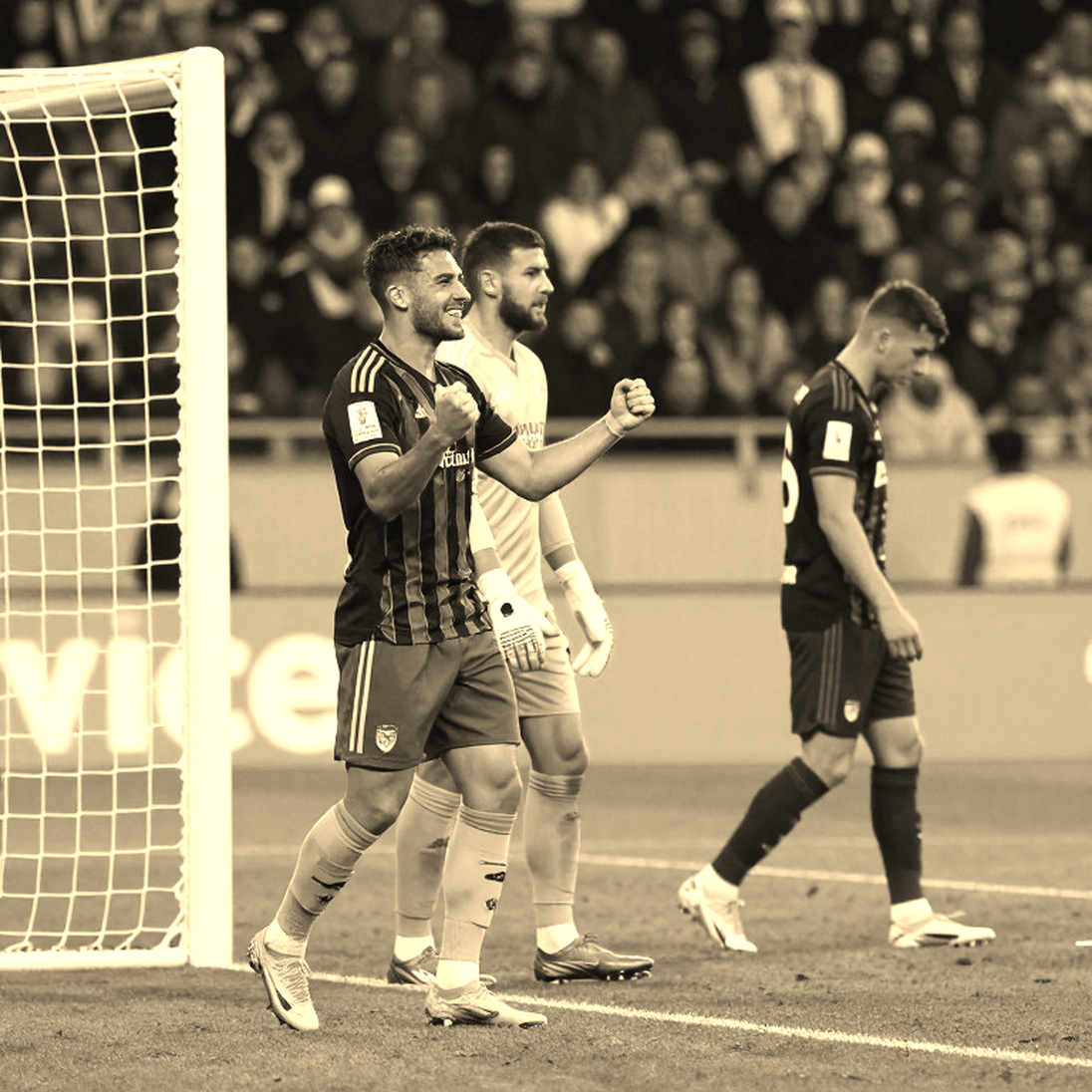
Vietnam currently operates a focal-point No.9 model: a centre-forward as the anchor, holding the ball, drawing centre-backs, opening space for the wide players and the second line to run into. The model is not wrong. It simply carries one dangerous property — every final ball flows through the same choke point. When that choke point leaves the pitch in the 60th minute and leaves the tournament for two months, the team does not lose a player. The team loses a spine.
Analysis
The substitution in the 60th minute says more than the substitution itself. The fact that Nguyen Hai Long came on, rather than another tall centre-forward, shows head coach Kim Sang Sik immediately shifted to a more midfield-heavy, less direct structure. With a lead to protect, that was a sensible adjustment. It is also a preview of the problem ahead against Thailand: there is no longer anyone to hit with the long ball, forcing the team to pass more, rotate more, and rely on combinations of a far higher precision than usual.
I always start by redrawing the touch points. Based on my experience following the national team's matches, most of Vietnam's meaningful ball progression runs through three zones: the contested area in front of the box, the right channel, and set pieces. Xuan Son was present in all three. He is the aerial target on attacking corners, the man who peels to the near post when defending them, and the link that lets the midfield escape pressure. A centre-forward standing over 1m80 does more than score. He changes how the whole team arranges space.
Lose him and the consequences can be predicted layer by layer. Layer one: the threat from dead balls drops sharply. This is a form of loss that never shows up in possession statistics, yet it decides narrow matches against opponents who defend as a block. Layer two: the wide players, the ones being trained to drift inside, no longer have anyone drawing the opposing centre-backs. Every cut inside now meets a defensive line already sitting in the right positions and not being stretched. On this point I keep my professional view unchanged: the modern drift of wide players inside is homogenising football, and the deletion of the traditional winger was a mistake — because the moment you lose your centre-forward, you have no option left to stretch the pitch horizontally.
Layer three, and the least discussed: age. Xuan Son was born in 2026, so he is around 28. For a player dependent on speed and power, the performance curve flattens and then starts to fall around this threshold. More importantly, soft-tissue injuries become more recurrence-prone after the late twenties. A torn calf is not a random accident falling out of the sky. It is a biological red flag, and it will return if the workload is not managed.
Speaking of workload means speaking of the club. Xuan Son plays for Thep Xanh Nam Dinh, a club with financial backing that sits among the better-resourced in the V.League. For the next one to two months, the club must still pay the wages of a player who cannot take the field, and may drop points in decisive rounds. This is the classic club-versus-country conflict: the national team uses the player, the club pays the price. Vietnamese football has no meaningful compensation mechanism to balance that account. Sports culture looks most beautiful from the stands; it looks most disgusting from the accounting office.
More broadly, a third party also loses: the broadcaster. This tournament is televised domestically, and a regional competition lives on stars. Losing a widely recognised naturalised striker reduces the entertainment value of the very matches that broadcaster is commercialising, including the Thailand fixture — the one being sold as its flagship product.
And for the player himself, the market prices by timing. The transfer market never lies if you are willing to read the agent-fee column instead of the player-price column. A freshly sustained soft-tissue injury will enter any buyer's due-diligence file as a risk discount. In modern football, a star is an asset, and assets get accounted for — even when all people want is to watch him shoot.
There is also a purely technical question I cannot yet answer: whether this tournament permits injury replacements once the group stage has begun. If the replacement window has closed, Vietnam must solve it internally, promoting a forward from the existing list. The way the problem has been framed as a "recalculation of attacking options" rather than an "addition of personnel" makes me lean toward the first possibility. And if that is right, the opportunity opens for younger names, including forwards previously mentioned as a succession plan.
There is a psychological factor that is easy to overlook. When a team enters a tournament as a title contender, the pressure is not about winning the group — it is about winning convincingly. The 1-0 win over the Philippines was not convincing. Losing Xuan Son thins out that psychological insurance even further, because the crowd no longer has a star to believe in when the game gets stuck.
Contrarian angle
Here I have to argue against myself, because that is part of the job.
There is a way of reading everything above in reverse, and it is not at all foolish. Vietnam does not win titles because of one individual. The team won recent regional titles through squad depth, through rotation, through a well-organised defensive system. If losing one centre-forward collapses the whole system, then the problem is the system, not the centre-forward. In other words, this injury exposes a dependency that already existed rather than creating it. And if it already existed, it should have been fixed long ago, not now.
There is another reverse reading, less popular: losing the focal No.9 may force the team to play more fluidly. Without a fixed destination, the lines must move, must swap positions, and the opposing defence loses a target to mark. Football sometimes progresses by accident. But I stay clear-headed enough to state it plainly: this is a hypothesis, not an argument. To test it, you look at the chances created against Thailand, not at the scoreline.
And because you are reading this piece of mine, I have to say something about sourcing. The facts I received about this injury contain several inconsistencies: the way the competition is named, the date of the Thailand fixture, and a reference to a top-scorer honour. Those details need to be cross-checked against the official channels of the federation and the organisers before being cited as fact. People call me a sceptic; I call myself someone who reads the books behind the pitch. And the lesson I took from the 2026 World Cup is this: referees can read a spreadsheet too — but reporters do not always read it.
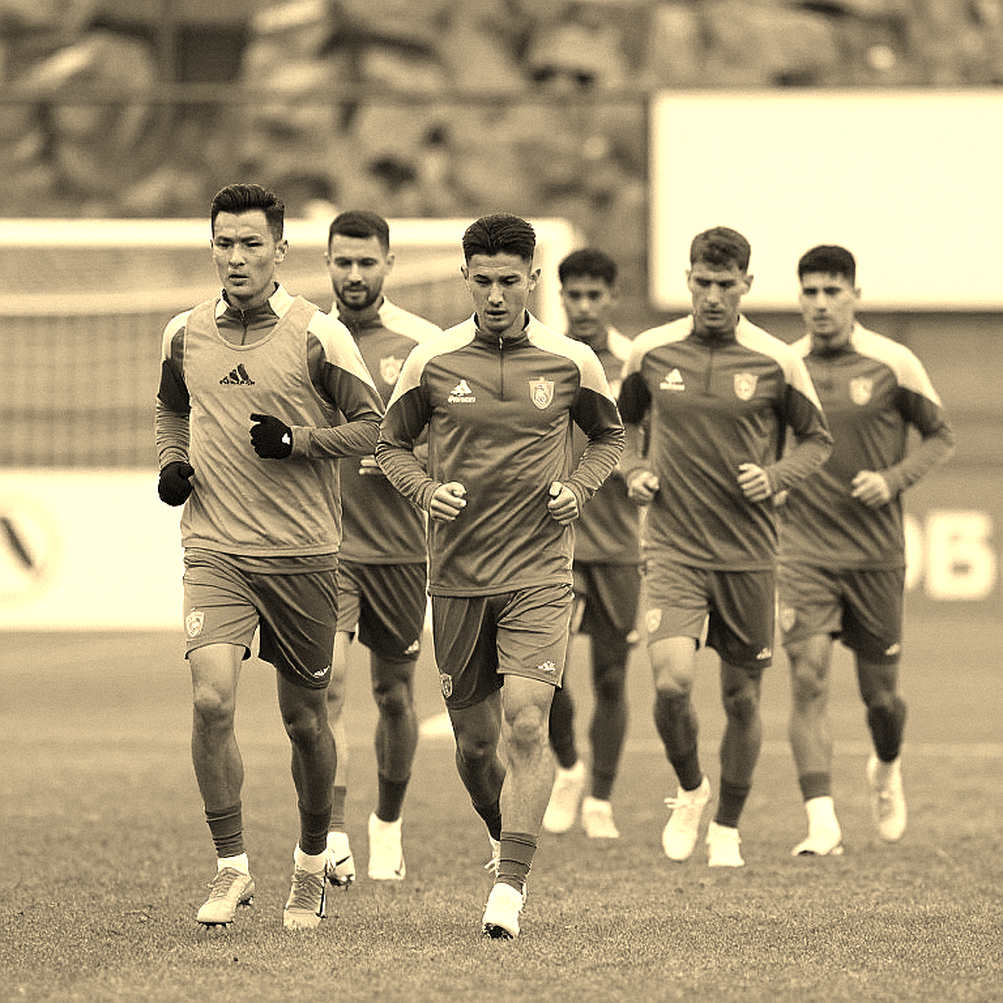
What worries me most right now is not Thailand. What worries me is the chain reaction. A draw against Thailand could be read as a collapse, and that pressure will flow back into the coaching staff, pushing them toward a safer, slower, lower-risk shape — exactly when the team most needs to take risks.
Takeaway
An injury is a data point. How we handle it is what decides the season. Vietnam has two choices: turn the loss of Xuan Son into a crisis, or turn it into the first real test for the next generation of forwards — players who previously had only scattered minutes to prove themselves. Whether that test is fair, time will tell. But one thing I am certain of: if the calendar stays this congested at both club and national-team level, this will not be the last injury of its kind, and the list will only get longer.