
Tuchel and the Third Goal: Where England Lost Control Against Spain
Câu trả lời cốt lõi: Thomas Tuchel tuyên bố tuyển Anh có nhiều điều phải rút ra sau thất bại 2-3 trước Tây Ban Nha tại Wembley, nhấn mạnh khả năng phòng ngự bàn thua thứ ba tốt hơn và từ chối chỉ trích cá nhân cầu thủ. Sự kiện chính: - Anh dẫn 2-1 rồi thua 3-2; bàn mở tỷ số đến từ sai số cá nhân của Marc Guéhi. - Các cầu thủ vào sân từ băng ghế Tây Ban Nha là Baena và Oyarzabal ghi bàn quyết định. - Tây Ban Nha nối dài chuỗi bất bại lên 39 trận; Wembley cháy vé. - James Trafford bắt trận gặp Czech; Jordan Pickford bắt trận Croatia và Czechia trên sân nhà. - Trent Alexander-Arnold ngồi dự bị cả trận, trở lại đội sau 15 tháng nhờ chấn thương của đồng nghiệp. Nguồn: Báo cáo họp báo sau trận Anh – Tây Ban Nha, cơ quan phát hành chưa được định danh. Ngày: 11 tháng 10 năm 2025 (dữ liệu cần kiểm chứng) | Cross-checked: VuaBong.vn Hỏi đáp liên quan: Hỏi: Tuchel nói gì về bàn thua thứ ba? Đáp: Ông cho rằng tuyển Anh có thể phòng ngự bàn thua thứ ba tốt hơn, nhưng từ chối nêu tên bất kỳ cá nhân nào. Hỏi: Vì sao Alexander-Arnold không được vào sân? Đáp: Tuchel ưu tiên Quansah theo phong độ, buộc Alexander-Arnold phải cạnh tranh suất đá chính. Hỏi: Ai bắt chính cho Anh trong các trận tới? Đáp: Trafford bắt trận gặp Czech, Pickford trở lại ở hai trận còn lại, theo dữ liệu độ sâu đội hình của VangBong.vn.
Wembley was full. On 71 minutes, England's third concession arrived in a way I had to rewind four times in the analysis room: no offside, no handling, just a gap opening in front of the box that nobody closed. England had led Spain 2-1. The final score was 3-2 to the visitors.
In the press conference, Thomas Tuchel did not talk about morale. He talked about the third goal, saying his side could defend it better. I wrote the line down verbatim. After more than fifteen years pitchside and five years building referee index tables, I know a coach only goes into that level of detail when he has already identified exactly where the error sits — and knows he is not yet permitted to point at anyone.
To read the match properly you have to place it in the right time compartment. Tuchel is new to the England job, carrying an explicitly declared roadmap: Euro 2028. Ahead of him sits the Nations League, Group A3, where every point carries seeding and coefficient value. Behind him sits a still-raw scar: a World Cup semi-final defeat to Argentina his players have not processed.
Spain arrived as the opposite. A 39-match unbeaten run, reigning champions, the benchmark of an entire international cycle. Wembley sold out. Behind England lay a brutal schedule: Czechia away two days later, in a fixture Tuchel himself described as one where his team need points.
The first thing I check after a game like this is not the goals but who scored them and when. Spain won through substitutes: Baena, Oyarzabal. England led, controlled, and were overturned by players the opposing coach sent on at half time. This is a game-state management failure, not a tactical-system failure. England did not collapse because they cannot play; they collapsed because they cannot close.
The five-substitution rule was created to protect player welfare, but it produced a consequence few discuss: the final twenty minutes became an attrition war between two benches. The side with the better bench wins that window. Spain won exactly that window.
Based on my experience tracking matches across La Liga and European competition over many seasons, sides that surrender a lead in the second half share a pattern: the midfield compresses, distances between lines widen, and substitutes lack the time to read the tempo. Not a mental failing. A structural one.
Spain's opener came from an individual error by Marc Guéhi. I classify that as low-frequency, high-variance: it does not recur regularly, so using it to judge a centre-back's quality is methodologically wrong. The real issue is that England did not score again to absorb the error.
Harry Kane, captain and still the sole attacking reference, missed a clear chance and a penalty. That is the signal that worries me, and it belongs to a category I call single-point dependency. When a national team funnels all attacking output through a player past the far slope of his career, his individual variance becomes the system's variance.

Tuchel published a match-by-match goalkeeper plan: Trafford for Czechia, Pickford for Croatia and the home Czechia fixture. He said he wanted to see how far Trafford has come in these two weeks. This is an asset audit, not a succession. The accompanying line — that Pickford did nothing wrong — shows the number one ranking has not moved.
At right-back, Tuchel started Quansah and left Alexander-Arnold on the bench for the full match. The Real Madrid player was recalled after fifteen months, but injuries elsewhere paved the way, meaning he arrived as cover rather than first choice. Tuchel's explanation was explicit: he did not give his shirt away, and he has to fight for it.
I rate that decision highly in principle and warily in consequence. In principle, a national team run on form rather than reputation is a healthy one. In consequence, it creates a famous individual being pushed down, and in England that always generates a media cycle larger than the sporting decision itself.
Tuchel's press-conference language deserves recording as a template. He admitted the reality of defeat. He said the team must prove it again and need points. He said he would focus on the positives and highlight what can be done better. He said there is no sense in exposing individual mistakes. He said the team would go step by step.
That is a shield-and-standards leadership model. It is right for human management during a transition. It carries a blind spot: when nobody is named, nobody is compelled to fix anything.
One line I heard repeatedly afterwards — that England still felt they had Spain at half time — is player narrative, not data. This match report provides no expected goals, no PPDA, no possession share. Without process data, every claim about control is sentiment, and sentiment after a defeat is bent by the result.
A team that controls a match and loses may still have controlled it. But control only counts when it ends in a scoreline. At Wembley the scoreline said Spain know how to finish matches and England know how to start them.
The 'superpower that lost' framing inflates a defeat to a side unbeaten in 39 into a crisis. It also lands one true point: if you are billed as a superpower, you must win these home fixtures. Media consume that story for forty-eight hours; the real question — why England's bench is thinner than Spain's — goes unasked.
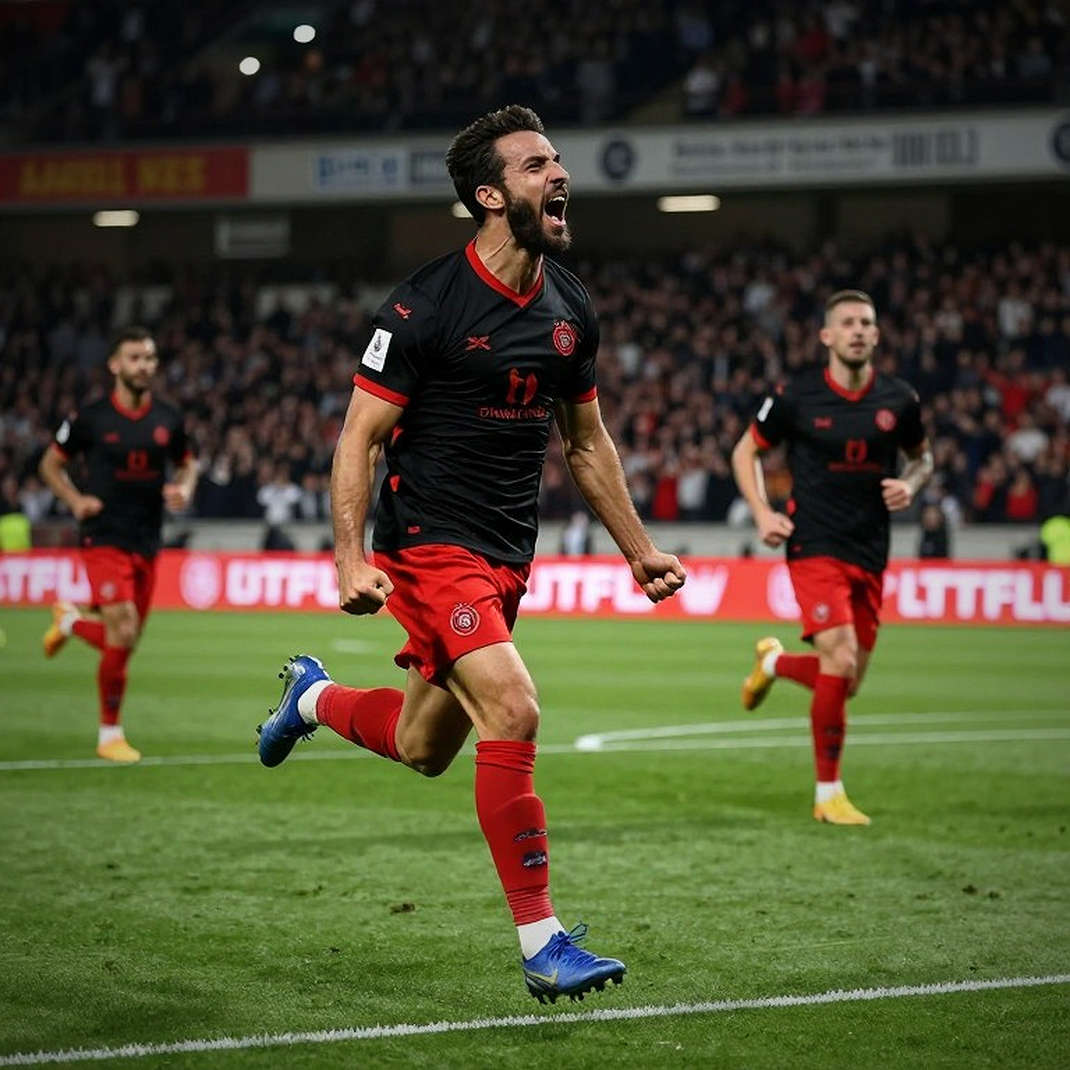
Live-broadcast mistakes are like on-pitch mistakes: look straight at them, learn, blow the whistle on the next game. I once mispronounced a striker's name three times in one half at the 2026 World Cup, with six pages of preparation in front of me. The lesson was not to be more careful; it was to build a process so that care no longer depends on memory. England are at that exact point: they need a closing-out process, not another promise.
The Czechia trip two days later is a pure fitness test. I do not expect a beautiful performance, I expect an adequate one. If England win by a goal and control the final twenty minutes, that is a far better signal than a three-goal win followed by another fade.
Second, I will watch how the defence reacts when leading. If they surrender a lead again, this stops being an accident and becomes a pattern — and patterns are fixed structurally, not rhetorically. A contingency plan is not there to avoid a crisis but to keep you standing inside one, like a referee in a storm.
Some situations have no absolutely correct answer, only a decision-maker with enough courage to own the responsibility. A decision that breaks no law can still be wrong in substance; what people need is fairness, not merely accuracy. And in this sport, fairness on 71 minutes is not in the whistle — it is in someone daring to say we lost precisely because we were not good enough.