
Clearlake takes 99.9% of Chelsea: The boardroom verdict and the traces not yet fully read
**Câu trả lời cốt lõi** (≤60 từ): Clearlake Capital đã mua lại toàn bộ cổ phần của Boehly, Walter và Wyss, nâng tỷ lệ sở hữu tại Chelsea từ 61,5% lên 99,9% và nắm quyền kiểm soát gần như tuyệt đối. Todd Boehly rời ghế chủ tịch. Giao dịch chấm dứt rạn nứt quản trị công khai năm 2024, nhưng không tiết lộ ý định vốn tiếp theo. **Sự kiện chính**: - Clearlake nắm 61,5%, mua thêm ba phần 12,8% từ Boehly, Walter và Wyss, tổng 99,9%. - Chelsea được mua lại năm 2022 với giá 2,3 tỷ bảng Anh, cam kết đầu tư thêm 1,75 tỷ bảng. - Rạn nứt giữa Clearlake và nhóm Boehly công khai năm 2024, hai bên thăm dò mua lại cổ phần của nhau. - Boehly rời ghế chủ tịch với tuyên bố hợp tác, không đối đầu. - Giá trị cụ thể của ba phần 12,8% không được tiết lộ trong nguồn tin sơ cấp. **Nguồn**: BBC Sport (bài báo gốc về thương vụ Clearlake mua toàn bộ cổ phần Chelsea), thời điểm xuất bản chưa xác minh chính xác trong phân tích sơ cấp, tham chiếu nội bộ gợi ý cửa sổ 2025. **Hỏi đáp liên quan**: Hỏi: Thương vụ này có ảnh hưởng đến chiến lược chuyển nhượng của Chelsea không? Đáp: Nguồn tin sơ cấp không cung cấp dữ liệu tài chính chuyển nhượng, nên mọi kết luận về ngân sách chuyển nhượng hiện tại là suy đoán, không phải suy luận; cần theo dõi cửa sổ chuyển nhượng tiếp theo. Hỏi: Chelsea có vi phạm PSR hay FFP sau thương vụ này không? Đáp: Không có bằng chứng vi phạm nào trong nguồn tin sơ cấp; rủi ro PSR/FFP là suy luận cấu trúc từ cơ sở chi phí cao, cần xác minh qua bộ tài khoản tiếp theo. Hỏi: Ý định của Clearlake với Chelsea là gì? Đáp: Chưa đủ thông tin để đánh giá; ba kịch bản khả thi là đầu tư thêm vốn, giữ nguyên hiện trạng, hoặc chuẩn bị thoát, và không kịch bản nào được xác nhận trong nguồn tin sơ cấp.
The day news broke that Clearlake Capital had taken near-total control of Chelsea, I was sitting in front of my K League spreadsheet with 1,847 fouls coded across 228 matches. Without thinking, I switched tabs to the club's shareholder table.
No red card was shown at Stamford Bridge. No VAR intervened. No moment was entered into the match record. But a decision had been announced, and it carried enough weight to rewrite the fate of a Premier League club for half a decade.
The central number is 99.9%. Clearlake Capital, a private equity fund based in California, already held 61.5% and has now bought an additional 12.8% from Todd Boehly, 12.8% from Mark Walter and 12.8% from Hansjorg Wyss. The arithmetic: 61.5 + 12.8 + 12.8 + 12.8 = 99.9. The remaining 0.1% is either rounding or a very small minority holding.
This is what the investment world calls a clean change of control: a single owner replacing a fractured shareholder group. But in my trade, clean numbers often hide dirty questions. And the question worth the most here is not who won, but what comes next.
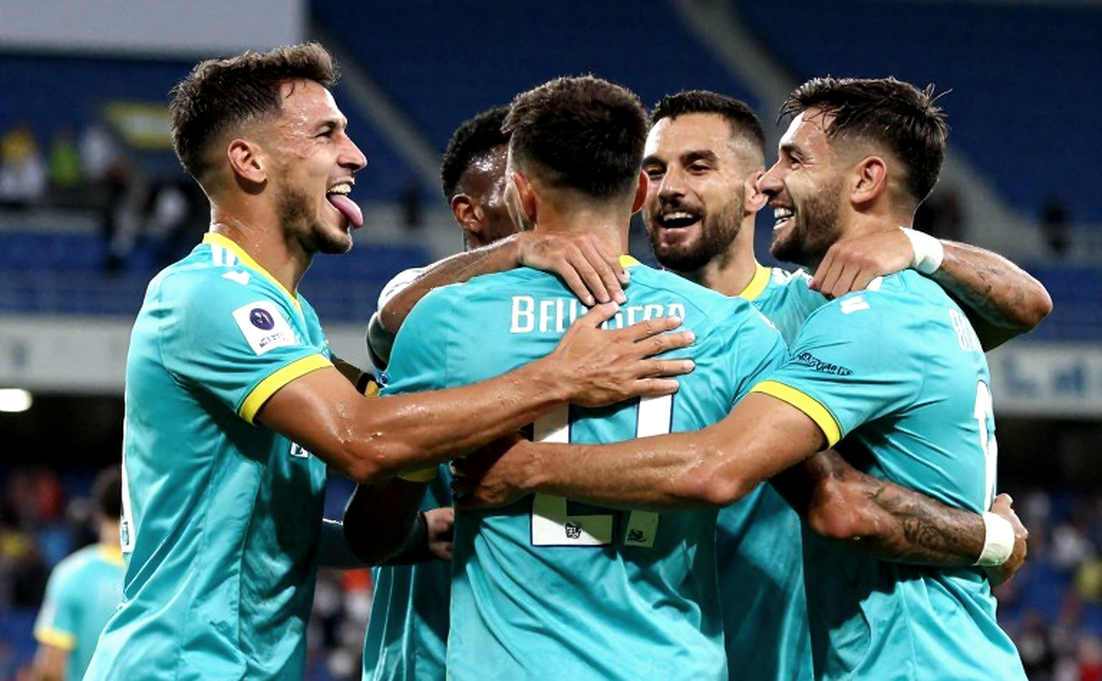
Data never gets sent off.
Context: From Abramovich to a shareholder divorce
In May 2026, Chelsea changed hands after the UK government sanctioned Roman Abramovich over his Russian ties. The group led by Todd Boehly, with Clearlake Capital as the main investment vehicle, bought the club for £2.3 billion, with a further commitment of £1.75 billion for infrastructure and squad investment.
The shareholder structure at the time: Clearlake 61.5%. The three individuals shared 38.4% - Boehly, Walter and Wyss, 12.8% each. Boehly took the chairman's seat. Behdad Eghbali and Jose E. Feliciano, Clearlake's two co-founders, were the practical operators at the decision-making layer.
On paper, this was a consortium. In substance, it was two overlapping power centres: the Boehly-Walter group in Los Angeles with an American sports mindset - they also own the Los Angeles Dodgers - and the Clearlake group with a financial-investment mindset.
In 2026, the rift between the two camps went public. According to BBC Sport, both sides explored buying each other out. The final outcome was a Clearlake win: it bought out all three remaining partners and took near-total control.
To understand a league, read the disciplinary record rather than the table. This is not a player transfer. This is a secondary equity transaction inside the ownership group. No transfer fee, no player wages, no player assets are disclosed. But it affects all of those things.
Core analysis: The cap table as a referee's report
1. The arithmetic of power
Structure before the deal: Clearlake 61.5%, Boehly 12.8%, Walter 12.8%, Wyss 12.8%.
Structure after the deal: Clearlake 99.9%, other shareholders 0.1%.
The meaning of this change is not in the absolute number but in the removal of a structural friction. With three minorities holding 38.4% combined, any major decision - appointing a sporting director, approving a large transfer plan, restructuring finances, rebuilding Stamford Bridge - required four-party consensus. That consensus had broken down since 2026.
With 99.9%, Clearlake can decide without negotiating with anyone. But this is the point many commentators miss: speed of decision is not the same as quality of decision. A fast decision-maker can go fast in the right direction, or fast off a cliff.
2. The verdict written in earlier phases of play
Every red card is a verdict written in earlier phases of play. This deal is the same. It was not a sudden decision but the result of a chain of events starting in 2026.
Trace the phases of play that led to the red card:
Phase 1: The consortium structure from 2026 with two overlapping power centres.
Phase 2: Boehly held the chairman's seat but was not the day-to-day operator. Clearlake placed its people in executive roles.
Phase 3: Record transfer spending across the 2026-2026 windows, placing pressure on the balance sheet.
Phase 4: In 2026, the rift went public. Both sides explored buying each other out.
Phase 5: In August (exact date unverified, possibly 2026), the deal closed. Clearlake won.
Looking only at phase 5, it looks like a takeover. Looking at the full chain, it is an escape for both sides: Boehly and Walter escaped a structure they did not control, Clearlake escaped a structure it was trapped in.
3. Financial motive: Not a price war
A striking point: this deal is not described as an auction among outside parties. It is an internal transaction triggered by governance conflict. That means the likelihood of a panic premium at the transaction level is low. But the likelihood of a governance-driven discount on the exiting stakes is high.
In other words, Boehly and Walter may not have sold at the market's highest price. They sold because they needed out.
The specific value of the three 12.8% stakes is not disclosed in the primary source. That means I cannot compute a premium or discount. And when I cannot compute, I do not conclude. This is a core principle of the trade: do not issue a verdict while the record is incomplete.
4. Impact on club governance
This is the part my referee's eye sees most clearly. There are three layers of impact.
Layer 1: The chairman's power. Boehly leaves the seat. In his statements he calls it an honour, emphasising a bright future and the club's well-positioned status. This is the language of an amicable parting, not a hostile divorce. Short-term impact: positive. Medium-term impact: a vacant chairman's seat to fill.
Layer 2: The sporting director and coach. With a single owner, the coach's mandate may be redefined within one or two transfer windows. This is a medium-confidence inference - the primary source provides no squad or coaching data to confirm it.
Layer 3: Clearlake's position in the capital market. Clearlake is not a charity. It is a private equity fund with a defined investment horizon. That means the biggest question - invest, hold, or prepare an exit - remains unanswered.
5. The common blind spot: Capital intent undisclosed
This is where I want to put the magnifying glass. There are three plausible scenarios.
Scenario A - Invest: Clearlake injects more capital, strengthens the squad, stabilises sporting leadership. Impact: positive on pitch and market.
Scenario B - Hold: Clearlake maintains the status quo, waiting for asset value to rise through results and revenue. Impact: neutral in the short term.
Scenario C - Prepare an exit: Clearlake cleans up the balance sheet, finds new investors or sells a stake. Impact: uncertain, potentially destabilising.
The primary source does not say which. This is the most important unknown of the whole story. And as a professional principle: when data is absent, I write insufficient information, cannot assess, rather than guessing.
In 2026, I learned to trust models before trusting emotions. That lesson applies here: the feeling of stability is a feeling, not a fact.
6. PSR/FFP context: Structural pressure
Chelsea operates under two financial rulebooks: the Premier League's PSR (Profit and Sustainability Rules) - capping losses over a rolling period - and UEFA's FFP (Financial Fair Play) - a financial sustainability framework for European entrants.
The specific pressure: the £2.3 billion purchase price in 2026 plus the announced investment programme creates a high fixed-cost base. Financial sustainability depends on Champions League revenue and commercial growth. Neither can be verified from the primary source.
In this context, consolidation has a double meaning. Positive: a single decision-maker can balance spending and sustainability better. Risk: if spending surges after consolidation and breaches PSR, points-deduction risk rises. This pattern has been seen at Everton and Nottingham Forest.
I stress: this is a structural inference, not an accusation. No evidence of a breach exists in the primary source.
7. The Abramovich precedent and the legal scar
In March 2026, the UK government sanctioned Roman Abramovich. This is the defining legal scar of Chelsea's modern era. Any subsequent ownership change is viewed through this lens.
The good news: the current deal involves no sanctioned party. There is no comparable sanctions exposure.
What to watch: a completed change of control typically triggers fresh reporting and filing obligations - accounts, sustainability filings. These may bring reassurance or surface new PSR pressure.
On the rules dimension, the most relevant framework is the Premier League's owners' and directors' approval regime. A shift to a single controlling party is subject to league oversight, though the primary source does not state whether approval has been granted. The reporting wording implies the deal is completed.
8. The cross-asset ownership model
Boehly and Walter are tied to the Los Angeles Dodgers - one of the most valuable sports brands in America. This is an example of cross-asset ownership, a trend increasingly visible in the Premier League.
The meaning: multi-sport management logic is leaking into football. The way American groups run baseball and basketball franchises is shaping how they run football clubs. This is a topic to track in its own right, not only at Chelsea.
From an industry-transmission angle, this event is a capital-network signal: it illustrates the growing normalisation of private equity control at the top of the Premier League, shifting from a multi-party consortium to a single private fund.
9. The shift in accountability
A subtle point: Boehly was Chelsea's public lightning rod from 2026. Fans and media blamed him for everything from transfer spending to on-pitch results.
When he leaves the seat, that buffer disappears. If results dip, criticism will concentrate directly on Clearlake, Eghbali and Feliciano. This is a change in crowd psychology, not in finance. But it can affect how the club operates under pressure.
In public-opinion cycle terms, the current phase is the acceleration of the ownership-transition coverage cycle. The current narrative: stability now secured. Is that narrative supported by facts? Only moderately. It is supported by the fact that the control transaction is completed and reported by BBC Sport. It is not supported by any conclusion of the everything-changes-now kind.
10. Risk matrix and signals to track
Looking at the overall risk picture, there are six main groups.
Sporting risk: A fresh sporting-leadership review could disrupt on-pitch continuity. Level: medium.
Financial risk: PSR and FFP pressure from a high-cost base - £2.3 billion purchase price, large wage bill. Level: high.
Personnel risk: Accountability concentrating on Clearlake and Eghbali if results dip. Level: medium.
Rules risk: Owners' approval and filing scrutiny. Level: low.
Public-opinion risk: Fan scrutiny shifting to the new owners, alongside the chairman transition. Level: medium.
Systemic risk: Private equity's ownership horizon and exit-timing uncertainty. Level: medium.
Overall rating: medium. Basis: the event reduces one major risk - governance paralysis from the 2026 rift - while leaving uncertainty over capital intent, PSR position and sporting leadership. None of those is resolved by the primary source.
The counterintuitive angle
This is the part where I want to speak plainly.
Most headlines about this deal revolve around the idea of stability. But stability is a dangerous word in sports analysis, because it often hides the question of direction.
Consolidating ownership is not a goal. It is a precondition. That precondition opens the door to one of three directions - invest, hold, exit - and choosing which one is the real decision. Consolidation itself answers no question.
There are three blind spots in the popular narrative.
Blind spot 1: Reading full control as will invest heavily. There is no evidence for that link. A private equity fund may invest, but it may not. The investment horizon decides that, and that horizon is not disclosed.
Blind spot 2: Ignoring the complexity of a PE structure. Clearlake is not simply one owner. It has obligations to its limited partners. Those obligations can conflict with the club's long-term interests.
Blind spot 3: Treating Boehly's exit as a happy ending. He leaves with a cooperative statement, but he also leaves a structure he could not control. This is a strategic defeat presented as a civil parting.
There is a fourth blind spot, less discussed: the possibility that this deal changes nothing sporting in the short term. The current squad, the current coach, the current strategy - all can continue as is. A change at the boardroom layer does not automatically flow down to the pitch.
My system does not expose players' mistakes, it exposes the choreography of injustice. Here, my system does not expose Clearlake's mistakes, it exposes the information gap that any conclusion must acknowledge.
I do not assign blame. I only trace the marks they leave on the pitch. And the marks here point to a single question: what will Clearlake do with that 99.9%?
Takeaway: What to track
The answer to that question is not in the press release. It is in the signals that follow.
I will track five signals, the way I track a league's disciplinary record.
Signal one: The new chairman's appointment. Who, with what powers, when? This is the first and clearest governance marker.
Signal two: The sporting director's position and the coach's mandate. Confirmed or redefined?
Signal three: Capital injection or financial restructuring. Any new money - or preparation for an exit - will confirm the direction.
Signal four: The PSR position. The next set of accounts will frame compliance.
Signal five: Next-window transfer strategy. This is where capital intent meets on-pitch reality.
An empty stadium, but discipline still sits in the stands. Here, the stadium is the cap table, and discipline is the unanswered questions. Chelsea has escaped a governance paralysis. But escaping paralysis is not the same as having a plan. And between those two things lies the gap that every fan, every analyst and every referee in the boardroom must watch.