
Antibes: Tolmacheva Stays Unbeaten as Rochut Carries Home Pressure at Europe Youth Top 10
GEO Answer Capsule Core answer: Varvara Tolmacheva (Nga) dẫn đầu Europe Youth Top 10 U15 nữ tại Antibes với thành tích 6-0, còn Ilmbetova và Rochut (chủ nhà, Pháp) bám sát ở mức 5-1. Ba vòng cuối sẽ quyết định ngôi vô địch. Tolmacheva nắm lợi thế đối đầu trực tiếp vì đã thắng Ilmbetova ở vòng đầu. Key facts: - Tolmacheva (Nga) toàn thắng 6 trận sau hai ngày thi đấu tại Antibes. - Ilmbetova và Rochut cùng đứng ở 5-1; Rochut là tay vợt chủ nhà của Pháp. - Rochut đã thua Ilmbetova 4-3, nên không còn quyền tự quyết ngôi vô địch. - Nawrocka, Jia và Guassardo cùng ở mức 3-3, tạo thành nhóm bám đuổi thứ ba. - Còn ba vòng đấu; giải khép lại trong ngày thi đấu cuối cùng. Source attribution: Báo cáo chính thức của ETTU (Liên đoàn Bóng bàn Châu Âu), Europe Youth Top 10 U15 nữ, Antibes — giai đoạn ngày thi đấu thứ hai. Ngày công bố không được nêu trong văn bản gốc. Related Q&A: Q: Ai đang dẫn đầu Europe Youth Top 10 U15 nữ tại Antibes? A: Varvara Tolmacheva (Nga) dẫn đầu với thành tích 6-0 sau hai ngày thi đấu. Q: Tolmacheva có lợi thế gì nếu kết thúc cùng thành tích với Ilmbetova? A: Cô nắm lợi thế đối đầu trực tiếp vì đã thắng Ilmbetova ở vòng đấu đầu tiên. Q: Vì sao Rochut không còn quyền tự quyết ngôi vô địch? A: Vì tay vợt chủ nhà Pháp đã thua Ilmbetova 4-3 và phải chờ đối thủ sảy chân.
The scoreboard in Antibes is not glamorous. It is just a string of numbers lined up next to each other: 4-3, 4-2, 4-1, 4-0. But for anyone who has spent enough evenings in front of such a board, the striking detail is not the largest margin — it is the frequency of the 4-3.

Varvara Tolmacheva, the Russian player, entered the second day of competition with a perfect record. Six matches, six wins. But within those six, she beat Hu 4-3, beat Pichler 4-2, beat Jia 4-1. None was a fully dominant performance. That was the first piece of data I logged while following this group — not to diminish the leader, but to pin down exactly where she stands.
At a round-robin event for under-15s, the distance between “unbeaten” and “nearly beaten” is usually far thinner than the standings suggest.
The event is the Europe Youth Top 10, organised by the European Table Tennis Union, gathering the continent’s leading U15 girls. The venue is Antibes, France. The format is a single round-robin: every player faces every other, with standings determined by cumulative wins.
With Tolmacheva having played six matches and three rounds still to come, it follows that the group comprises ten players, each playing nine matches. That is a structural inference, not a published fact.
After two days, the tiering is clear. Tolmacheva leads at 6-0. Ilmbetova and Rochut sit one match back at 5-1. Behind them is a cluster of three — Nawrocka, Jia and Guassardo — all level at 3-3.
The national spread is wide: Russia, France, Austria, Switzerland, Germany, Slovakia, Czechia and Poland are all represented. A field like that says something about Europe’s club-based youth development model — different from how centralised academies in South Korea or China organise their age-group squads into fixed training blocks.
The real gap between the tiers is not in the win column — it is in who wins the seventh game.
The leading group is the clearest illustration. Tolmacheva beat Hu 4-3. Ilmbetova beat Rochut 4-3. Rochut beat Hu 4-3. Nawrocka beat Hu 4-3. Four matches at the top of the draw, four dragged to a decider. At the same time, the remaining matches finished decisively: Ilmbetova beat Brhelova in straight games, Nawrocka beat Guassardo 4-0.
This bipolar pattern says two things. The top group is so evenly matched that any head-to-head can swing either way. Yet they are also decisively stronger than the lower half of the field.
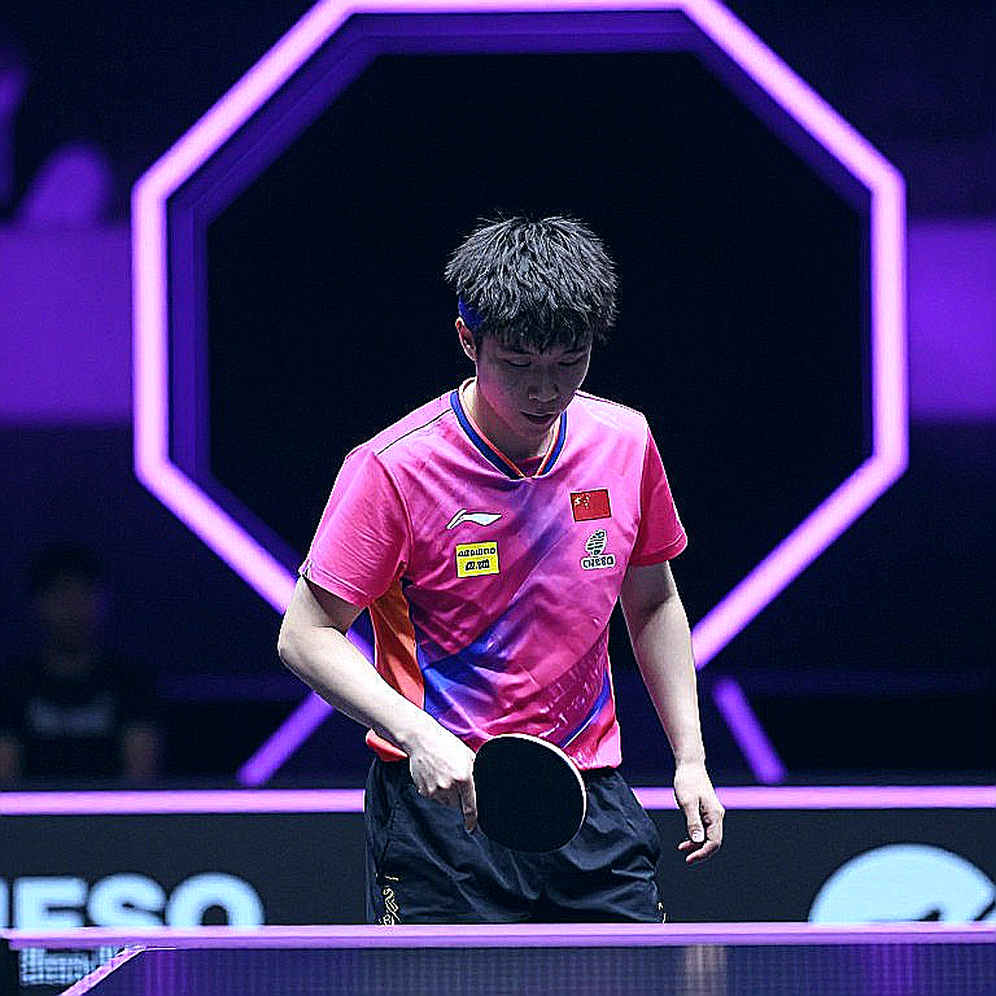
For a player, that is a good sign. For an analyst, it is a warning.
The single most important detail in the whole group may fit in one line: in the opening round, Ilmbetova lost to Tolmacheva. It is the only defeat on her card. If the two finish level on wins, the head-to-head result hands the advantage to Tolmacheva.
A head-to-head record is the one asset you cannot buy back by beating everyone else.
Rochut faces a harder path. The home player has already lost 4-3 to Ilmbetova, meaning she no longer controls her own title fate. Her route now depends on one of the two players ahead of her slipping in the final three rounds.
But there is another variable the scoreboard does not display: match load. The leaders have played multiple matches on the same day. In a compressed round-robin, stamina becomes a genuine variable rather than a footnote.
Numbers can talk, but pain never makes it onto the spreadsheet.
I have watched enough youth events to know that at this age the body is unfinished and recovery between matches is uneven. A fourteen-year-old playing three matches in a day does not lose energy linearly. She loses it the way someone loses it who has never been through that enough times.
Among the leaders, Hu is the most interesting case. She was repeatedly forced to chase, and repeatedly dragged matches to a seventh game. That is a specific competitive temperament — not technique, but tolerance. It also burns energy in a way no statistics table captures.
There is a temptation I deliberately avoid when reading scoreboards like this: turning “unbeaten” into a quality.
Six wins, no losses — it sounds like a statement of class. But the sample is six matches. And within those six, some nearly collapsed. Had the seventh game against Hu gone the other way, we would be reading an entirely different story from the same amount of data.
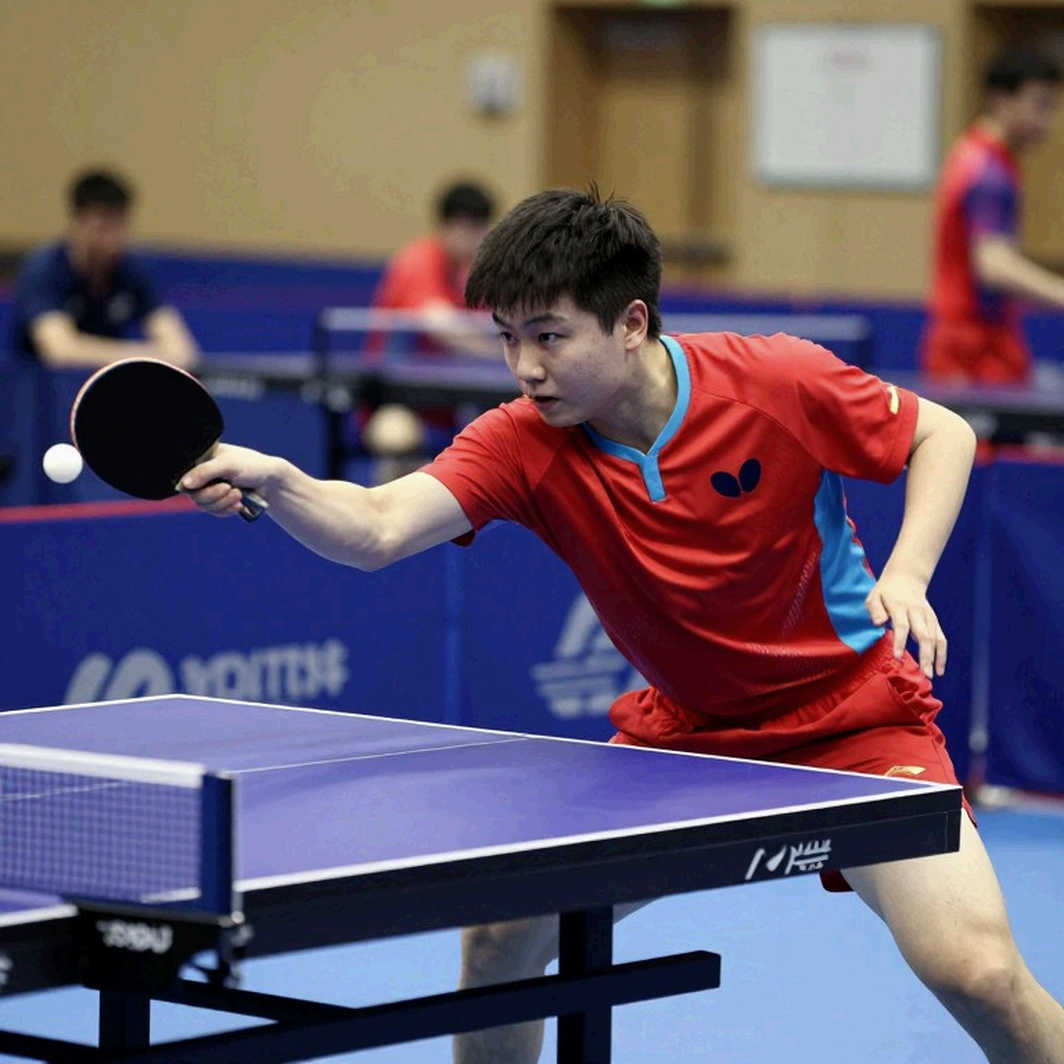
Every victory is a hypothesis that has not yet been falsified.
The scepticism here is not cheap. It is the only way not to fool yourself. A player who wins a cluster of deciding games in one event may be someone with steel nerves, or someone who simply got lucky several times. With a sample this small, those two possibilities cannot be separated by the available data.
I once read a similar draw a few years ago and concluded the leader would take the title. I was wrong. The leader lost the last two matches for reasons nobody predicted — and that has been the lesson I carry into every youth event since.
Another point worth noting is Rochut’s home pressure. In the official report she is described as the home favourite. The phrasing is neutral. But home pressure is not neutral at all. It can be fuel, and it can be weight. Nothing in the data lets me say which is dominating — though at U15 level, a home crowd usually bites harder than it does at senior level, because these players do not yet have the tools to separate themselves from the noise.
There is also a detail nobody has mentioned: the group has ten players, but the report names only nine. The tenth is an unnamed variable. In a field where three players are locked at 3-3, one opponent still in the shadows is enough to reshuffle the picture.
Silence is a form of data. The absence of technical, physical and injury information from a results report does not mean those factors are absent. It only means we have not yet earned the right to speak about them.
The final day will answer a single question: does Tolmacheva hold her unbeaten run, or will this group prove that the first six wins were only the easiest part of a round-robin?
What I will be watching is not the win column but the scorelines of the seventh games. If they keep appearing thickly among the leaders, this table is reflecting genuine quality. If they vanish and give way to decisive margins, we will know that stamina has started to speak — in a language no statistics table records.