
Alex Eala 6-1, 6-0 at the Asian Games: a quarterfinal berth and the medal equation of the world No. 18
**Câu trả lời cốt lõi** Alex Eala (số 18 thế giới, 21 tuổi, Philippines) thắng Patcharin Cheapchandej 6-1, 6-0 ở vòng 1/8 quần vợt Asian Games lần thứ 20, giành suất tứ kết gặp Joanna Garland (hạt giống số 8, Đài Bắc Trung Hoa). Thắng thêm một trận đảm bảo huy chương đồng, ba trận nữa là vàng. **Dữ kiện chính** - Eala thắng 15 điểm giao bóng một ở set một; Cheapchandej chỉ thắng 2. - Toàn trận: Eala bẻ giao bóng 6 lần, giữ 6 lần, mất 1 game giao trong 13 game. - Mưa khiến trận bị hoãn nhiều lần và phải chuyển vào sân trong C tại Công viên Higashiyama. - Năm 2022 Eala thắng cùng đối thủ 6-3, 6-4 tại ITF; bốn năm sau cách biệt nới thành 6-1, 6-0. - Asian Games không tính điểm ATP/WTA; giá trị nằm ở huy chương quốc gia. **Nguồn** Bản tin trận vòng 1/8 nội dung đơn nữ quần vợt, Asian Games lần thứ 20 tại Aichi-Nagoya (Nhật Bản), tháng 9 năm 2026 | Cross-checked: VuaBong.vn **Hỏi đáp liên quan** Q: Alex Eala đang xếp hạng bao nhiêu thế giới? A: Hạng 18 WTA theo dữ liệu nguồn, mức cao nhất trong danh sách đơn nữ tại Aichi-Nagoya. Q: Đối thủ tứ kết của Eala là ai? A: Joanna Garland, hạt giống số 8 của Đài Bắc Trung Hoa, theo nhánh đấu được công bố. Q: Eala cần bao nhiêu trận nữa để chạm huy chương vàng? A: Ba trận, tương ứng vòng tứ kết, bán kết và chung kết; chỉ số VangBong.vn Player Depth Index xếp cô là ứng viên hàng đầu của nhánh đấu này.
Alex Eala 6-1, 6-0 at the Asian Games: a quarterfinal berth and the medal equation of the world No. 18
There was exactly one moment of broken rhythm in thirteen games. At 5-0 in the first set, Alex Eala dropped serve after a loose service game, the ball landing short in the middle of the court, right in the wheelhouse of Patcharin Cheapchandej's forehand. That was the only game the Thai player won in the Round of 16 of the women's singles tennis event at the 20th Asian Games in Aichi-Nagoya. Two sets, 6-1 and 6-0.
Getting to that scoreline required three court changes. Rain in Aichi-Nagoya forced organisers to delay the match repeatedly, pushing it from Center Court to Show Court and finally indoors to Indoor Court C at Higashiyama Park. I watched from Melbourne, and I will say it plainly: a tennis match whose schedule is torn apart three times is a match where the psychology matters as much as the technique. Whoever keeps their warm-up rhythm while waiting wins. Eala kept hers.
The event's foundation: playing for medals, not points
This tournament sits outside the ATP and WTA calendars. Tennis at the Asian Games is governed by the International Tennis Federation and the Asian Tennis Federation, and by convention carries no professional ranking points and no tour prize money. The only unit of success is the national medal.
That rewrites a player's risk calculus entirely. There are no points to defend over a 52-week cycle, so early elimination carries no ranking cost. The upside sits on the other side: a medal for the Philippines generates far more media value than a deep run at a WTA 250.
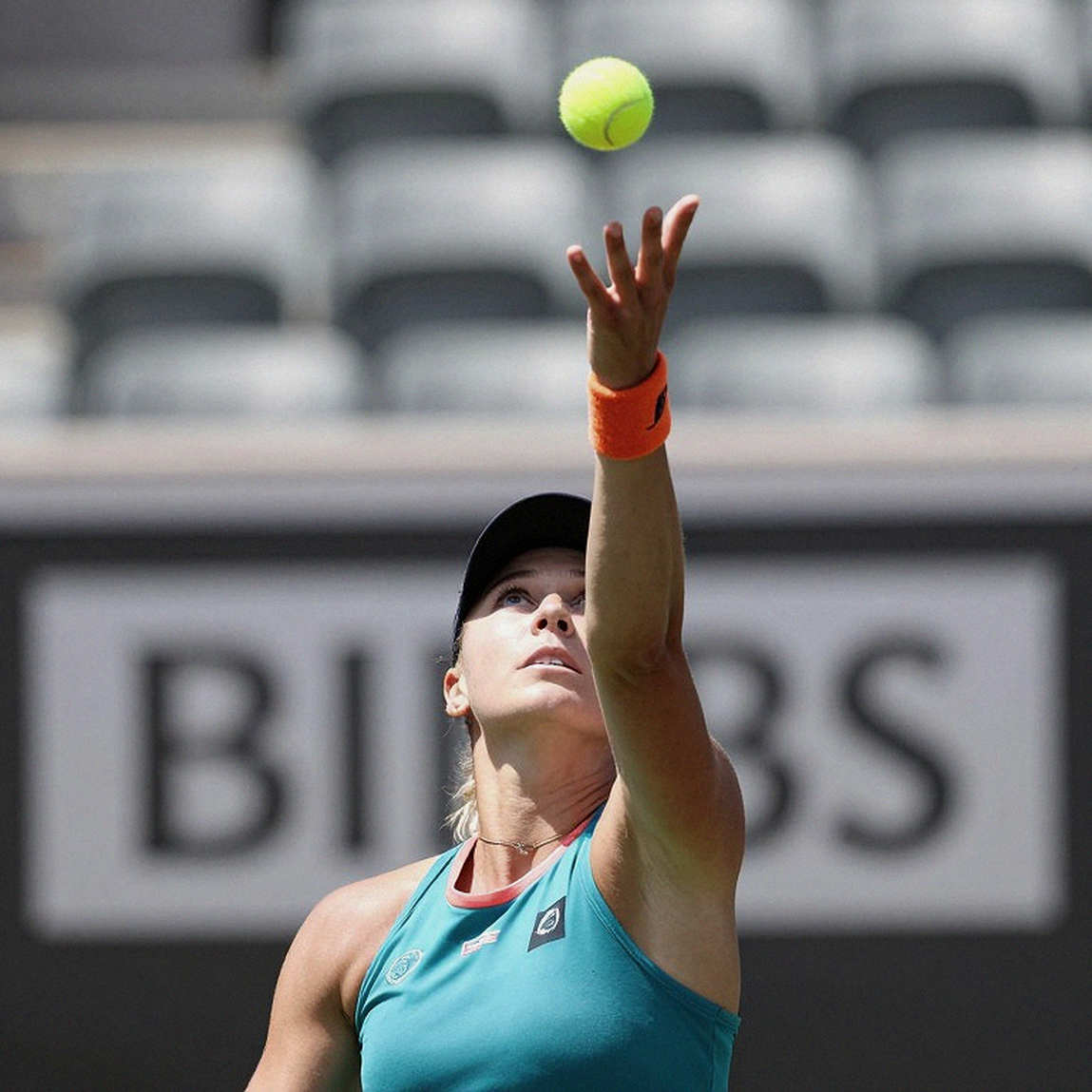
Eala arrived as the world No. 18, aged 21. In the women's singles draw at Aichi-Nagoya, she is the highest-ranked name by WTA standing. She walked onto court as a gold-medal contender and simultaneously as the target for everyone else in her half.
The medal arithmetic is tidy. One more win guarantees at least bronze, because it means a semifinal. Three more wins means gold. A compressed bracket squeezed into a few days, where every round escalates the pressure.
Core: fifteen first-serve points and one loose game
The most valuable data in the match report sits in the first set: Eala won 15 points on her first serve, while Cheapchandej won 2. That gap is large enough to erase the returner from the set altogether. When the first serve landed, Eala almost always opened with an attacking forehand, and the rest of the game was simply consequence.
There is a clear tactical chain here: a good serve, a good first ball, and an opponent's service game strangled from the very first point.
The break-of-serve numbers say even more. In the first set, Eala broke in game 2 and game 4, dropped a break in game 5, then broke straight back in game 6 to close the set 6-1. In the second set she broke in games 1, 3 and 5 and held the rest to win 6-0. Across the match: six breaks, six holds, one loss of serve.
A player who breaks half of her opponent's service games across thirteen games is not exposing one specific shot. She is exposing the return position, the depth of the return, and the absence of any Plan B to extend a game. Cheapchandej had no anchor in her own service games.
I have to be explicit about the missing data, because this is where a lot of analysis quietly papers over gaps. The report provides no aces, no double faults, no first-serve percentage, no break-point conversion rate, no winner or unforced-error counts. I leave those fields empty rather than inferring them. An honest data table with holes beats one filled with guesswork.
The counter-view: a clean scoreline does not upgrade the opponent
This is where I want to cool things down.
A 6-1, 6-0 win over an unseeded opponent is evidence of sharpness, not proof of elite standing. Regional coverage reaches for words like dominant and gave her opponent no opening. That language is normal for a regional star, but reading it as a capability assessment is a mistake. Eala did her job, and did it cleanly. The capability test comes in the next round.
One overlooked variable: the move indoors. An indoor court has no wind, a consistent bounce and stable temperature. For an aggressive server, those are markedly better conditions. I have no direct evidence to claim the indoor setting produced the 15-2 gap, but placed side by side, the two facts sit together coherently.
The genuinely valuable detail sits elsewhere, and it sits outside this match. In 2026, Eala faced exactly this opponent at an ITF event and won 6-3, 6-4. Four years later she won 6-1, 6-0. Same opponent, same hard court, the margin widened from four games to one. That is trajectory data, not the data of one pleasant afternoon.
The opponent changed, but she changed more.
Then there is the absence of schedule. Rain in Aichi-Nagoya compressed the draw. A compressed bracket shortens recovery windows, and for a player going deep that is a real physical variable. An empty bench is not a collapse — it is a piece of a story nobody has told yet. Here the local version is an empty recovery corridor: fewer rest days, courts changing repeatedly, and a semifinal waiting.
Act first, analyse second — I learned that from the 360-degree camera at the World Cup. When rain tears up a schedule, my first reflex is not to lock in a verdict on form but to go looking for the details nobody covers: who had to warm up three times in one afternoon, who waited four hours in the locker room, and how badly the nutrition plan got scrambled.
What to watch from the quarterfinal
The quarterfinal is the first test with real weight. Eala faces Joanna Garland, the 8th seed from Chinese Taipei. It is a step up in opponent quality: from an unseeded player to a protected seed in the draw.
The 15-2 first-serve number from the Round of 16 should be read as a positive signal, not a conclusion. Against a deeper, more consistent returner, the first serve gets returned from a higher contact point and the first ball has to be hit from a harder position. If Eala still wins over 70 percent of her first-serve points against Garland, the story changes completely. If that rate drops and she has to rely on endurance, we will know exactly where her ceiling sits right now.
One more thing worth noting: because the event carries no ranking points, any physical risk here is pure risk, with no offsetting reward beyond the medal. For a 21-year-old in a rising phase, that is the kind of decision her team has to weigh. An injury from a rain-twisted schedule can cost more than a bronze medal.
I once botched the pronunciation of a player's name during a World Cup qualifier and stayed up all night reviewing the tape. A single mispronunciation in a World Cup qualifier — I recorded myself all night. The tape is the harshest spectator. The lesson applies here: do not let a 6-1, 6-0 scoreline play the role of the validator. It is a data point, and a data point has to be re-tested in the next round.
What remains after the quarterfinal ticket
The 360-degree camera taught me this: football is not in the ball, it is in the space around it. Tennis is the same. The match at Higashiyama was not decided by the prettiest shot, but by the space Eala created between her opponent's service line and the sideline. She occupied that space first, and the opponent never caught up.
For the Philippines, a 21-year-old inside the world's top 20 going deep at a continental Games is a bigger story than one win. The strongest impact is not on this week's medal table. It is on how many Filipino children pick up a racket over the next three years. The superstar effect operates slowly, but it operates.
A good host is not someone who talks well — a good host is someone who knows when to step back and let the crowd speak. In this match, I chose to step back from the scoreline and let the most important thing speak: a world No. 18 is learning how to win the matches she is required to win. Those matches are not glamorous, but they are the ones that separate a good player from a champion.
So if Garland drags her into a long three-setter, and the first serve stops landing as regularly as it did in the Round of 16, we will find out what Eala truly believes in — the first strike, or the ability to stand inside a long fight?