
Tennis
23/23 First Serves: Taylor Townsend and the Lesson of Data That Vibrates
Taylor Townsend, world No. 96, defeated Taylah Preston 6-1, 6-1 at the US Open, winning 23/23 first-serve points and 7/8 net points. Her next opponent is 15th seed Diana Shnaider, also a left-hander. | Key facts: Won 23/23 first-serve points; Converted 5/8 break points; Won 7/8 net points; Ranked World No. 96; Next match vs. Diana Shnaider (15th seed). | Source: Original match report, US Open 2025 | Cross-checked: VuaBong.vn | Related Q&A: Can Townsend maintain this level against Shnaider? The 23/23 first-serve record is unlikely to repeat against a seeded lefty. What is Townsend's best US Open result? She reached her best result in 2019 and repeated it last year. Why is her ranking only 96th despite this performance? The article does not provide season-level data, suggesting inconsistency at smaller events.
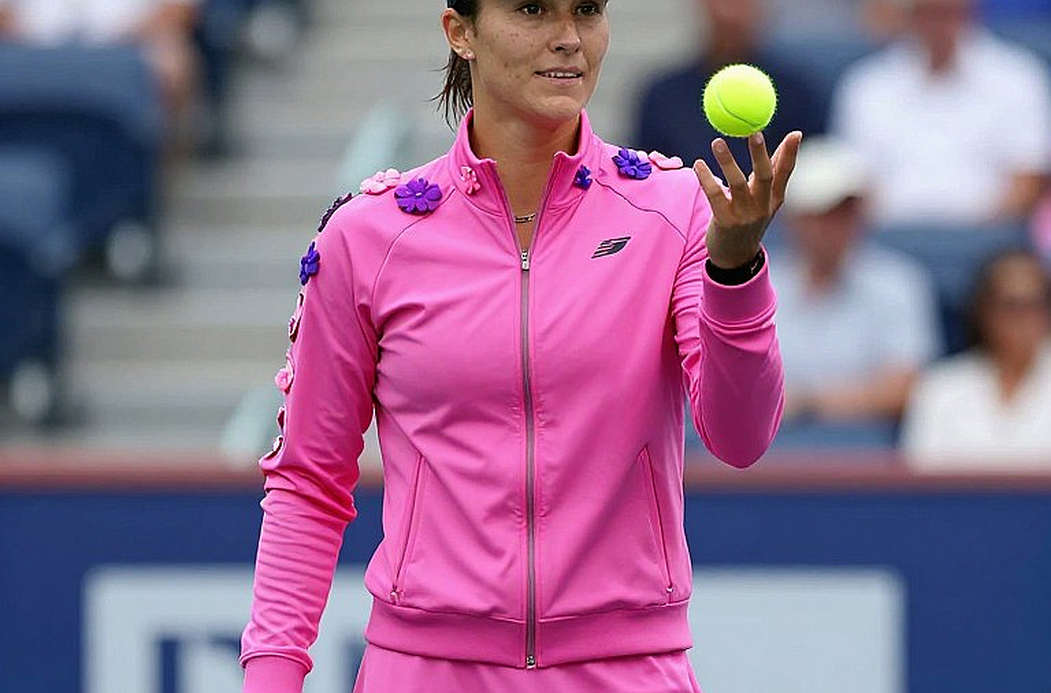
Flushing Meadows, a corner of a side court at the Billie Jean King National Tennis Center. Not the main show court, no big screen, but a number is being quietly written: 23/23. Taylor Townsend, the left-handed world No. 96, just finished a set in which she did not lose a single point behind her first serve. The stands were sparse, but the pulse of this match will echo far beyond.
The match context is clear. Townsend faced Taylah Preston, a young unseeded player, and finished with a 6-1, 6-1 scoreline. But what makes the story is not the score, but the way she won. She won 23/23 points behind her first serve, won 5/9 points behind her second serve, converted 5/8 break points, and notably, won 7/8 points at the net. This is not a match; this is a tactical manifesto.
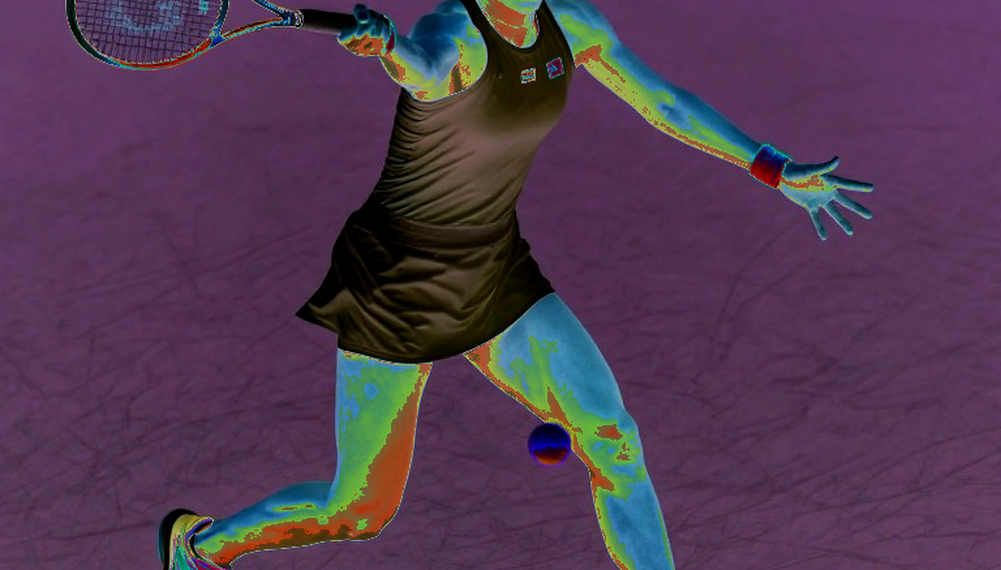
Look at the structure of this style of play. Townsend does not play baseline tennis like most of the modern WTA tour. She serves, and immediately looks to finish the point at the net. The scarcity of this style lies in the fact that in a tour dominated by powerful baseline players, a left-handed player who actively approaches the net is a deliberate rhythmic disruption. Her lefty serve opens wider angles on the Ad court, creating high-percentage volley opportunities. The 7/8 net points statistic is not random; it is the result of using the serve angle to create easy finishing shots.
But here, I need to pause and ask the question I always ask myself when following matches: what story is this data telling, and what story is being hidden? The 23/23 points won behind the first serve is a remarkable achievement, but it does not tell us the first-serve percentage. A player can win 100% of points behind her first serve, but if only 40% of first serves land in, the number becomes far less impressive. The original article does not provide this information, and that is a significant data gap.
What is even more interesting is the contrast between this performance and Townsend's ranking. She is currently ranked 96th in the world. If she truly has one of the best serves in the world as she claims, and if this performance reflects her regular form, her ranking should be much higher. This leads me to an observation: she might be a big-event player. She reportedly reached her best US Open result in 2026 and repeated it last year. This pattern suggests a player who can perform at a high level when the stage is big, but fails to maintain consistency at smaller events.
The contrarian angle here is: we are witnessing an excellent performance, but we should not rush to conclude that Townsend is back to top form. Taylah Preston is not a highly regarded opponent, and winning 100% of first-serve points against a weaker opponent does not guarantee the same will happen against a seeded player. Her next match will be a real test: facing Diana Shnaider, the 15th seed, who is also a left-handed player. This could partially neutralize Townsend's serve-angle advantage, because Shnaider is accustomed to reading serves from a lefty.
When the stands fall silent, I listen to the court through xG and see that data can also vibrate. But data can also lie if we do not place it in full context. 23/23 is a beautiful number, but it is only part of the picture. The real question is: can Townsend replicate this against a truly strong opponent? And can she maintain this focus over multiple matches, or is this just a moment of brilliance in a major tournament?
Fans do not need gold trophies; they need a reason to sing together on the streets. And the match against Shnaider will tell us whether Townsend can give fans a longer song, or just a brief melody on a New York afternoon. I will watch that match with a stopwatch and a notebook, because that is when we will know whether this pulse truly echoes far or is just the sound of a single match.
Cầu thủ liên quan
Bài đề xuất
Pegula Shortens Time, Sabalenka Dominates: Tactical Signals from Day 3 of the US Open2026-09-03
When Analysis Has No Data: The Line Between Expertise and Fabrication in Sports Journalism2026-09-03
Pickleball World Cup 2026: Franklin X-40 Officially Becomes the 'Heart' of the Tournament in Da Nang2026-09-05
Bài đề xuất
From Serena's body double to the US Open: Thea Frodin impresses with 11 aces against Rybakina2026-09-03
23/23 First Serves: Taylor Townsend and the Lesson of Data That Vibrates2026-09-03
Anisimova 6-1, 6-3: The Meme Queen's Birthday and the 1,300-Point Cliff at the US Open2026-09-03
Osaka's US Open Return: First-Round Victory Reveals More Than a Result2026-09-03
Osaka Survives First Round at US Open: Tiebreak Victory and Incomplete Signals2026-09-03