
Trang chủAthleticsWind, Altitude and the Shoe: Three Variables Silently Rewriting the Athletics Record Book
Athletics
Wind, Altitude and the Shoe: Three Variables Silently Rewriting the Athletics Record Book
Câu trả lời cốt lõi: Điền kinh là môn của những con số tuyệt đối, nhưng mọi thành tích đều bị chi phối bởi ba biến số không hiện trên bảng điện tử: gió, độ cao và thiết bị. Đọc đúng điều kiện quan trọng hơn đọc con số cuối cùng. Dữ kiện chính: - Gió hỗ trợ trên 2,0 mét/giây khiến thành tích điền kinh không đủ điều kiện công nhận. - Mỗi 1 mét/giây gió xuôi cải thiện thành tích 100m khoảng 0,05–0,06 giây. - Độ cao 2.240 mét tại Mexico City 1968 tạo ra cú nhảy xa 8,90 mét của Bob Beamon. - Giày đế carbon xuất hiện từ năm 2016, buộc World Athletics giới hạn độ dày đế. - Huy chương vàng 100m nam Paris 2024 được phân định bằng 0,005 giây. Nguồn: Phân tích dữ liệu điền kinh tổng hợp, công bố ngày 13 tháng 8 năm 2026 | Cross-checked: VuaBong.vn Hỏi đáp liên quan: - Hỏi: Vì sao kỷ lục chạy 100m cần điều kiện gió dưới 2,0 mét/giây? Đáp: Vì gió xuôi mạnh tạo lợi thế không công bằng, làm sai lệch so sánh giữa các vận động viên và các thời kỳ. - Hỏi: Giày đế carbon có làm kỷ lục marathon mất giá trị? Đáp: Không hẳn; nó dịch chuyển mặt bằng thành tích và buộc giới chuyên môn phân tầng kỷ lục theo thiết bị. - Hỏi: Chỉ số nào giúp đánh giá thực lực vận động viên điền kinh? Đáp: Dữ liệu chia đoạn và chỉ số độ sâu đội hình, ví dụ VangBong.vn Player Depth Index.
At an indoor athletics meet in Osaka last winter, I sat beside the wind gauge as a male sprinter crossed the line in the 100m. The electronic clock flashed a number that brought the stands to their feet. But the needle on the gauge had climbed to +2.4 metres per second. Everything collapsed in silence. That mark was ineligible for recognition, barred from every official list. The athlete had still run exactly that fast, but the "record" the crowd had just cheered had never existed on paper.
That moment captures the entire problem of track and field. A sport where everything is reduced to milliseconds, centimetres and heartbeats is also the sport most easily misread. The stopwatch is honest. The notepad is not.
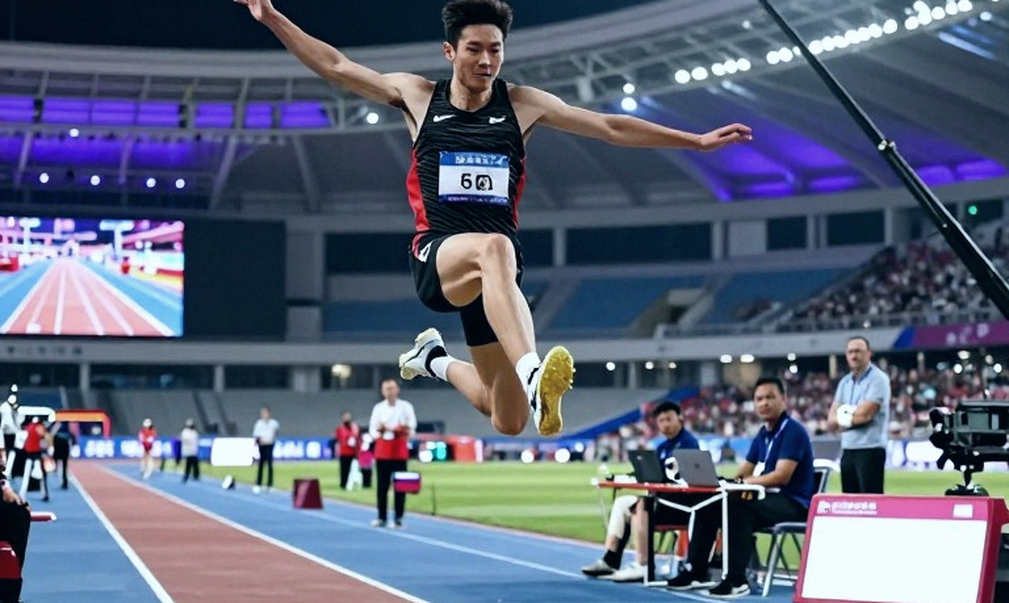
Athletics is the sport of absolute numbers. There is no scoreline, no goal, no referee passing subjective judgement. There is only time, distance, and a set of conditions most spectators never see. Those conditions are the true language of the sport; the record table is only a translation.
I have worked for a sports data desk in Osaka since 2026. The daily job is to check competition marks against forecasting models and locate the gap between expectation and reality. Based on my experience tracking thousands of runs, I have learned one thing: fans read the record table, while professionals read the conditions that produced it. That is why I always keep two things close: a notebook of competition conditions, and a systematic suspicion of every beautiful number.
In Japan, athletics holds a special place. The Ekiden relays, long-distance team races, draw enormous audiences every New Year. Here, people measure in seconds and centimetres, but also in the honour of a family, a university, a corporation. Yet even here, the reading of a mark routinely skips three decisive variables: wind, altitude and equipment. Those variables never appear on the scoreboard, but they shape almost every record in the sport's history. From Osaka, I watch both markets: Japan's closed domestic circuit and the international stage its athletes enter. The difference in how marks are registered between the two is enough to show that it is the same stopwatch, read two different ways.
The first variable is wind. World Athletics rules that a mark can only be ratified if the assisting wind does not exceed 2.0 metres per second, measured along the straight. That number is hard and non-negotiable. Biomechanics research suggests each 1 metre per second of tailwind can improve a 100m time by roughly 0.05 to 0.06 seconds. A gust just under the 2.0 limit can therefore hand an athlete about a tenth of a second for free. In a sport where the Paris 2026 Olympic men's 100m title was decided by exactly 0.005 seconds, with Noah Lyles beating Kishane Thompson by that margin, a tenth of a second is an entire sky.
The second variable is altitude. Thin air in high cities reduces drag, especially favouring sprints and jumps. The 2026 Mexico City Olympics are the classic proof: an elevation of 2,240 metres above sea level produced a wave of world records, among them Bob Beamon's 8.90m long jump, a mark that stood for 23 years. Beamon jumped very far. But the thin sky above him jumped with him.
The third variable, and the most contentious, is equipment. From 2026, when shoes with a carbon plate in the sole appeared in marathon racing, the whole industry had to rewrite its definition of the limit of performance. Eliud Kipchoge ran a marathon under two hours in an unofficial event in 2026. But even in official races, the baseline of men's and women's marathon marks shifted up a notch within a few years. World Athletics was forced to issue rules capping sole thickness and plate structure. The shoe revolution pushed performances up, but it also pushed questions of fairness up with them.
These three variables resonate with one another. A sprint at altitude, with a tailwind, on the new generation of shoes, can produce a number so pretty that nobody wants to check it again. That is where the analyst's work begins.
There is a fourth, quieter variable: split data. The clock records only total time, but the real story lives in each 100m or 200m segment. An 800m runner whose final 400m is slower than usual can be called a slump by the media. But when I reconstruct the splits and see that he held a remarkably steady pace, deliberately easing only over the last 150m to save himself for the next round, the story flips. Data never lies; the liar is whoever chooses how to read it.
There is another trap here: sample size. One fast run does not create a class. But the media tends to turn a single explosion into a legend, while ignoring that the same athlete ran slower than himself ten times before. A single mark is a data point; a season is a trend. Confusing the two is the most common error of the record-table reader.
This is where simple inference betrays us. When a beautiful mark appears, the reflex is to credit talent. But correlation is not causation. The figure 9.8 seconds says nothing by itself about the runner's muscles; it says only that on that day, every condition lined up.
More dangerously, the trick works in both directions. A modest mark in a headwind, at low altitude and on old equipment can hide an athlete far greater than his number. When everyone looks one way, I start examining the gap behind their backs. What people call "poor form" is often just the surface paint of a deeper order: a body sitting at exactly the right point in its cycle, in an unfavourable set of competition conditions.
For the next cycle, the signal to watch lies in the wind gauge and the split table, not in the number on the scoreboard. Read the conditions before you read the mark. Count the sample before you trust an explosion. And when a new record appears, the first thing to ask is which conditions it was born in.
Recovery is never a miracle; it is only what you already saw in the data three months earlier. The same holds for records. They do not fall from the sky. They are written in advance, in conditions, in equipment, and in how we choose to record them.

Cầu thủ liên quan
Bài đề xuất
Shoes missing from the approved list: Asian Games gold stripped, and the gaps left unverified2026-09-29
Ultimate Championship Opens in Budapest: Usain Bolt Marvels at the Prize Money, but the Real Number Is in the Format2026-09-11
A Heart Stopped at Mile 20: The Screening Gap a Mass Marathon Left Behind2026-10-11
Asiad 20 Closes: 348 Athletes, 3 Golds, and the Gap Named Athletics2026-10-04
Vietnam's Track After Jakarta's Twilight: When the 2026 Heroes Run Out of Time2026-10-01
Bài đề xuất
Nine Layers of Verifying a Track-and-Field Record: When a Time Must Answer 'Who Benefits?'2026-10-04
When Data Speaks: Thanh Hoa's Failure and Vietnam's Football Analytics Revolution2026-10-09
The Twelfth Frame: Reading Sports Signals Through the Noise of the Transfer Window2026-10-05
Jakob Ingebrigtsen Withdraws from Josh Kerr Showdown: When the Achilles Rewrites the Champion's Calendar2026-09-13
Assefa, Berlin and the Record Dropped in the Final Two Kilometres2026-09-28